'Fast and Furious' Director Justin Lin Finds Clarity in 'Last Days'
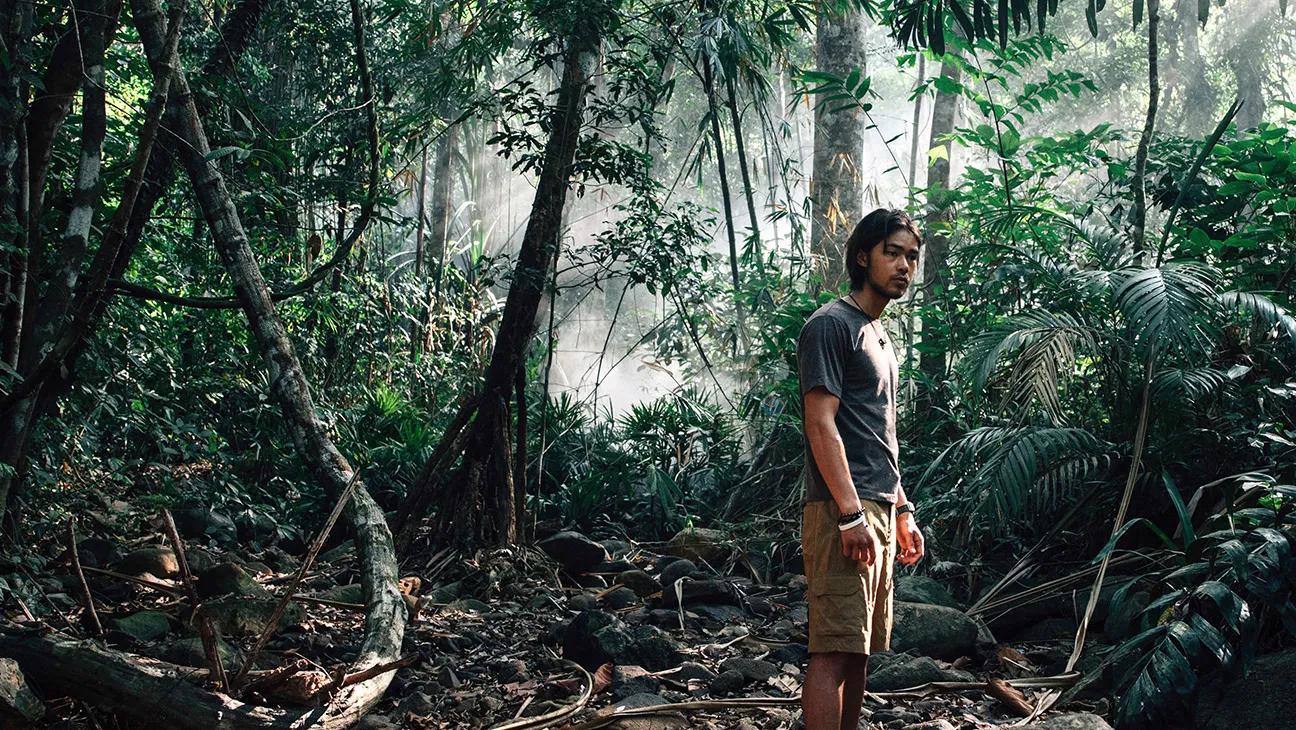 Sky Yang in 'Last Days' | Vertical Entertainment
In the fall of 2018, John Chau was a 26-year-old American missionary, motivated to share the Gospel message with anyone he could encounter. So zealous was his quest that Chau would go to great lengths to help others, all while being a messenger of peace. But very few people could understand what motivated him to kayak to North Sentinel Island, a place known for indigenous tribes shut off from the world. A day later his body was spotted along the shoreline of the island, an apparent casualty of clashing cultures. No one really knows what happened other than Chau likely became a martyr for his faith in proclaiming God.
Unlike past missionaries who lost their lives in lands far away, the story of Chau’s mysterious demise traveled quickly via broadcast news and social media. Among those who couldn’t quite grasp why someone would strike out in a flimsy canoe to share their faith with a people group known for their hostility was movie director Justin Lin. Known for piloting hi-octane franchise movies from The Fast and the Furious series, Lin just couldn’t wrap his head around why someone would risk their life and future to talk to complete strangers about God.
Rather than letting go and refocusing on regular projects, this young man’s tragic story led Lin on a three-year journey to make an independent movie not just about Chau’s life but also about his own biases toward faith and finding personal identity.
The end result is a new movie in theaters now called Last Days. Starring Sky Yang (Tomb Raider), Radhika Apte, and Ken Leung (LOST), the film chronicles Chau’s mission to convert this isolated tribe while authorities attempt to intervene before it’s too late.
I recently sat down with Lin to discuss what motivated him to dig so deeply into this young man’s life, why Chau was so driven to take the Gospel message to the ends of the earth, and what he learned about the rigors of faith as a non-believer.
If you were trying to convince a friend to take the time to get out to the theater to see Last Days, what would you say to encourage them?
I love immersing myself in character journeys when a film is trying to not place any kind of judgment except trying to connect with the humanity of the character. And for this film, it's something that's very intimate. But at the same time, this character goes on this grand journey, that I think experientially on the big screen is much different than on your phone or something smaller.
For every director, there always seems to be a moment where you say to yourself, “I have to make this movie! It is non-negotiable!” For Last Days what was that moment for you?
It really was when the news broke in 2018. I was at the airport, I heard the news, and I had a very strong reaction to it. It showed John's face. And then I was placing all my Asian-American personal issues onto this face. And it wasn't until the newscaster said, “John Allen Chau, 26-years-old,” that something hit me. That's somebody's son. That's somebody's brother. And for me to kind of judge and dismiss someone, it just didn't sit well with me. It wasn't until I read Alex Perry's Outside Magazine article about him that it really moved me. Perry really got a window into John, through his father. I have a teenage son. And it was at that moment; I thought that I would love to try to understand John better.
But it was pretty clear to me that this journey of trying to connect with John's humanity was going to be met with a lot of obstacles. And to me, it was worth it. And I'll tell you, I would say in the first six months, I probably met some of the worst in humanity when it comes to our business. But slowly, I started meeting people of like mind. And I think that's what's so fulfilling in doing an indie movie. It doesn't matter if it's a financier or the lead of the movie, they come on because they either believe in me or the project. They are bound by this passion of wanting to tell this story. I would say talking to you now, I'm very grateful, because if you see the end credits of this little indie movie, it's probably the longest crawl in history because it took pretty much everyone that I've met in my 23 years of moviemaking from around the world to come and help bring this film to life.
Please tell me about John Chau. There has been a lot written about him online as well as his social media presence. Even with that, there are still some gaps about his journey to North Sentinel Island. As a director, how did you blend fact and fiction in creatively telling John’s story?
He left us his journal, and he left us his social media posts. When you go through it right away, the first question is, did this really happen? Because he is a story. It has that kind of vibe.
I think that my first way of connecting with John was as a filmmaker. I'm trying to tell the story, and he was trying to tell the story. And so, everybody that came on crew wise, their first question was always, how do we know if this happened or not? Did this really happen? That's always the question that everybody would bring up. And I would have to tell them that I went through that same phase. I did the same thing. I was questioning it. And ultimately, I felt like that's not going to be this journey. I'm on this journey. I'm going to take everything John shared with us and left for us at face value. Let's use that as pillars in our story. And there's going to be a lot of gaps. And for those gaps, it's up to us to see how we're going to be able to fill it, but also in trying to connect with his humanity. One of the first things was that it was clear to me that he was heavily influenced by adventure novels and Hollywood films. So, I thought if we honor that, let's use the same devices in trying to connect with humanity. That became a two-year journey of revising the script by saying, ‘Okay, so that's what he did.’ Instead of questioning it, really trying to figure out why it happened and try to kind of connect that with the same kind of approach.
John Chau has been described by those who knew him as being idealistic. Digging into his story, why do you think this was so?
There's an earnestness about John that I think in our world today is probably so rare, right? There's an unbelievable kind of quality about it, because I think right now, it almost feels like we're required to have to take sides on everything. And everything's moving so fast to judge and dismiss. But with John, there was this sincerity of wanting to do good. He is someone that was born into a very warm and loving Christian family community. And as a non-Christian myself, I was kind of curious. How did he start there and end up in a kayak going to North Sentinel Island?
I think we had to go find our version of John. What does that look like? It was a really interesting exercise. I think a lot of times having made all these films, that most actors just want to talk about the scenes. But I would say 90% of the conversation I would have with the cast is actually about stuff that's not in the movie. And so, that became kind of part of the process for us because we shot this in 38 days in five countries. We were moving so fast that I needed to make sure I had the buy-in. I feel very fortunate to have this amazing cast who went all in with me.
In doing a little bit of research on John’s backstory, I can see how some people might dismiss him as a fanatic or a religious zealot. What are your thoughts on why he went to that fateful island in the first place?
To me, I made a promise to myself to share my inspiration and why I wanted to make the movie. I've been trying really hard not to give answers. But the one thing I would say is that in exploring John’s world, what I found really kind of compelling, and what I can connect with is the fact that he's just a kid. He's a human being. He has layers. He has ambition. He wanted to stand out. He yearned to be able to connect and to find his purpose. I think I have a better understanding of what drove him with his love and his connection, with his faith, with his family, with his friends, all that to me is just very human.
Are there any lessons of value that can be learned from John’s story?
I think the one thing is how fragile our livelihood and our journey as a human being is. This is something that I can connect with him. It's been part of a lot of my work, and I think we can all relate to our good intentions. We make decisions, and we have people that are around us. We have our ups and downs, and it's amazing how fragile all of that is and how easily as we navigate through life, how it can kind of push us into different scenarios. It could be adventures, but it could be other scenarios. So, that’s something I feel like we can all connect with John.
After audiences have had a chance to see Last Days, what would you like them to take away from the viewing experience? What is your greatest hope for the film?
I think this movie's not about changing people's minds, it's to remind people that there's a human being that went on a journey. Whether you feel that's okay, you have a right to it, but maybe you could find someone with a different point of view and have a dialogue. And I feel like nowadays, everything has to be buttoned up and wrapped up, and you are supposed to feel and think a certain way. I went to film school and I love the movies where I get dropped into a situation. I remember watching Goodfellas and the first half of the movie I wanted to be a gangster, and then I finished the movie. I go on this whole emotional journey and that's what I love about cinema. I do hope that people will seek out dialogue. And that's something that I feel like we need more, more than ever as a society.
WATCH A TRAILER FOR LAST DAYS: