'I Never Knew': Phyllis Robertson Thomas on Trauma, Truth, and Healing
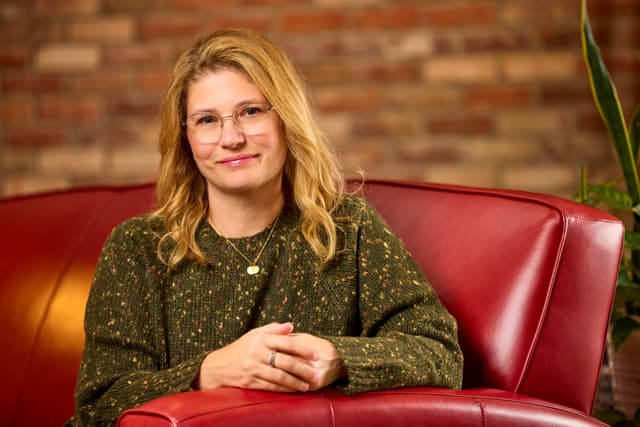
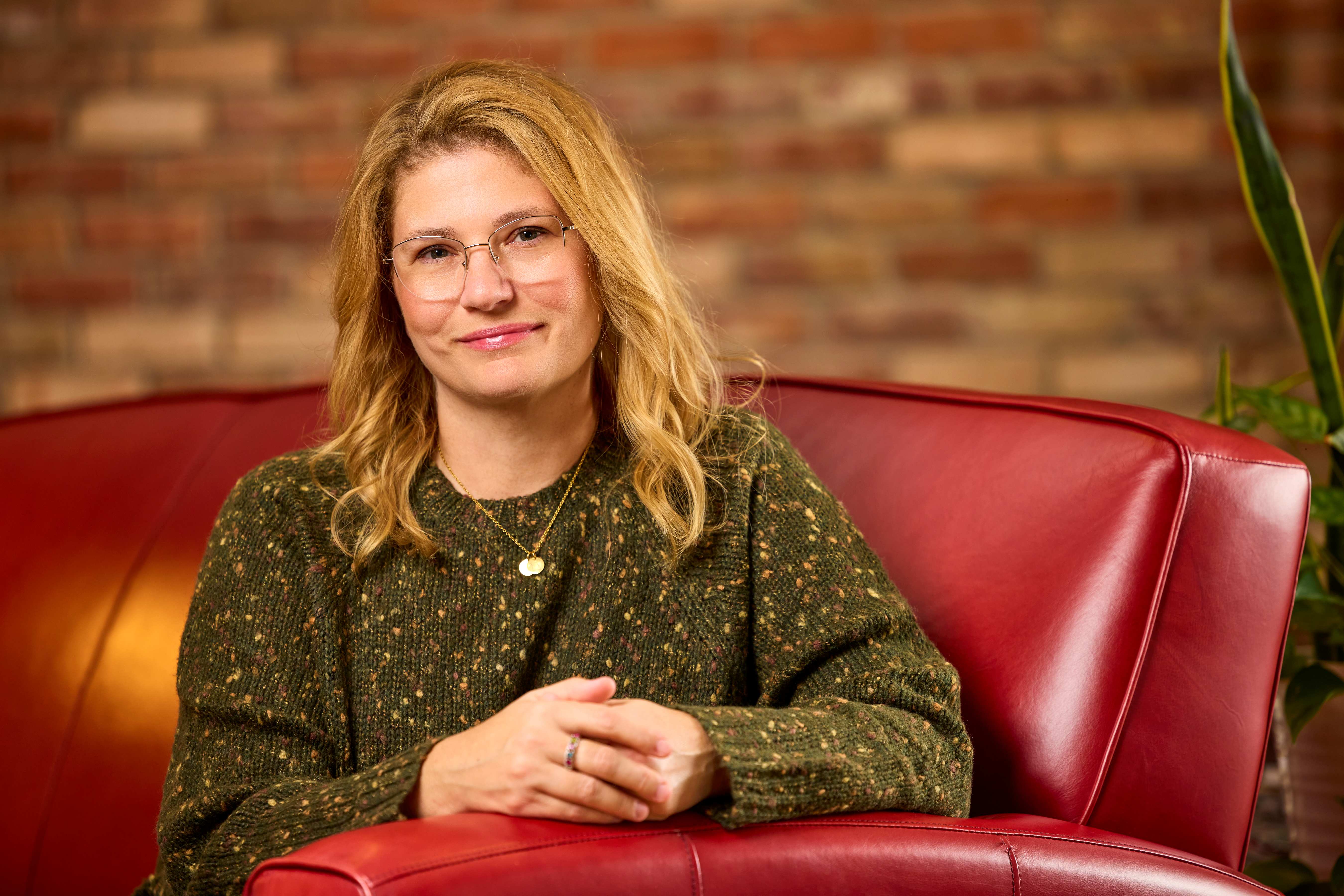 Phyllis Robertson Thomas | Photo image courtesy of Tetelestai Consulting
A licensed professional counselor and former psychiatric nurse, Phyllis Robertson Thomas was 45 years old when she discovered the identity of her biological father. This type of revelation, while jarring to be sure, becomes even more complicated and intense when it is revealed this man just so happens to be one of the most famous people in America. For you see, Duck Dynasty star Phil Robertson is her dad.
Thomas has authored a book about her experience of learning this life-changing information in middle age, called I Never Knew: Finding Healing and Renewal after Trauma (available now). In the book’s 282 pages, she shares the deeply personal story of that life-changing discovery while courageously exploring some of the most painful chapters of her life.
I recently sat down with Thomas to discuss her journey toward healing, the power of truth, and the importance of understanding and processing our wounds.
For every author, there always seems to be a moment where you say to yourself, “I have to write this book!” For I Never Knew, what was that moment for you?
I've been a nurse for 20 years, so I'm an RN, and then after I found out who my dad (Phil Robertson) was, having lived 44 years before I met him, and all of that experience but my background was pretty dysfunctional. I started having people by the hordes reach out to me. I'd never had any kind of platform. There was never this opportunity to share my story. So many were like, this is my story, ‘Phyllis, this is my story.’ ‘Phyllis, I heard your story.’ And so, it prompted me, being a psychiatric nurse, what are we doing in the mental health realm? We prescribe a lot of pills, and I'm not opposed to medication. But are we getting to the heart of the matter? Are we addressing trauma? And so, I'm hearing all of these people's heartbreaking stories, and felt like I could do an even better job of helping others and guiding them if I do one-on-one counseling. So, I went back to graduate school. I went to Liberty University online there, and enrolled in their clinical mental health counseling program. I became a therapist, and then just as I learned there, even more, my mind was blown. As I started following Christian neuroscientists and therapists, I thought, look at all of this that's available. I didn't even know, and that's the reason why I titled this book, I Never Knew. My dad first said that to me. And like you said, I never knew, but I never knew how much opportunity for growth, change, and transformation there was in the Lord, through therapy, and through neuroscience.
I knew your dad a little bit in his later years, having interviewed him many times about Duck Dynasty or some of the books he had published. I found him to be a wonderful man who I really appreciated for his down-home folksiness and charm. Many people know the story of discovering Phil Robertson was your biological father, but what do you most want people to understand about the journey behind that headline?
Oh, goodness. I grew up with a dad (stepfather) who loved me, but he had suffered a traumatic brain injury. He was already of low socioeconomic status, and not well educated. He went through ninth grade before dropping out of school. His dad went through the third grade. So there was a lot of poverty, a lot of dysfunction, and really a lack of competence. I became a parent of sorts to him at a very young age, and took care of him in a lot of ways.
I was kind of this natural at being controlled, because that's what people who go through a lot sometimes do. That's one of their coping skills that works really well in the moment. But then it doesn't serve you very well later in life. And so, when I met my dad (Phil Robertson), I first thought I had a dad that I didn't know about. I'm fine without him. I know the Lord, I have my Father in Heaven, I've got a husband and my boys. Things are great. But then I was super curious, and I reached out to him. And one of the first times I actually heard him speak, we had driven down to Louisiana, because I heard he was going to be speaking at Whites Ferry Road Church. And I thought, I'm just going to go. I think this guy is my dad, but I don't know it for sure. But I’m pretty sure. And I should note that I had been so different from my siblings growing up. My personality was different. My physical features were different. But I always went to church. My family didn't go to church at all. My parents never took me to church, but I was in church. I had my Bible. I loved it. I was reading all the time, reading things like the dictionary. I was super nerdy.
And so, when I sat down at that church, he walked out, and he opened his mouth, he was sharing the Gospel. And I thought, I think this is my dad. So many things just kind of started to make sense.
Did you feel like it was a natural connection, or did you feel drawn to him for reasons that are unexplained?
Everything just started making sense. Then we met, and everything sort of unfolded. It was so strange to me to have a competent father. I was the person I'm used to being in my family, but in this family, he was reading to me. He was picking up his Bible and reading Scripture to me, and I'm like, they don't need me to do anything for them. This was so very different and strange. It was just little things. And this is stuff that families can relate to, right? When you marry into a family, or become part of a blended family, there is that tension of what do you want me to bring for the Christmas meal. And I should note, we were talking about food and the Robertsons. They didn't want me to bring anything. However, I said I would bring something delicious. They're like, ‘Bring a bag of salad. Bring the rolls.’
So, there was just this interesting tension, discovery, and the awe of, I have this dad who's so intelligent, who's so capable, and it really did have an impact on how I viewed my father in heaven. It really did. He role-modeled living a simple life, and that wasn't just something he said, he really did it. And in my overanxious, hypervigilant mind, I'm watching him thinking that I need to take this one day at a time. We're not going to overthink it. He'd tell me that all the time … don't overthink it. I didn't even realize how much I did that. And so, I got to watch him and look at him as a role model in so many ways. I wasn't used to doing that.
It took a lot of that healing, and for me, it was a very positive story. It makes me feel a little bit guilty, because there are so many out there who don’t have the same experience. And so, I've really tried to make a case in the book about what forgiveness looks like, and what reconciliation looks like. It's not the same for everybody, but the themes of the Bible are true for everybody. I may not have had your story and it's not like everything's a Cinderella ending. It still was a struggle. But there were so many beautiful things that he role modeled for me, and I learned from him at his feet, literally. It was amazing.
What would you say to someone who feels trapped by their past and wonders whether true healing is actually possible?
My tendency is to point out the facts, the statistics, and the science. For me, I lean into my professional letters. There was a debate whether to put letters after my name on the cover of this book. And we all decided, I think we need to do that, because I've studied a lot, I've learned a lot, I know a few things about this, not everything, by a long shot. But I first share the facts with people, not this abstract idea of God. God is faithful, He's going to see you through. People have heard that a lot, and it's true, but I think that when you lead with some statistics, and explain to people the why, then how their brains are made, and how God created our brains to work. That we can work with. That's how He designed us, and that's where all those struggles we see in the Bible with people. God didn't just deliver them from it. He led them through it, and that's where that change happened. So that's what I lead with.
Many Christians are told to simply 'move on' from their past. Why do you believe it's important to understand and process our wounds instead?
It goes back to that deeper conversation of why God designed our brains and our minds to inform our brains. The pathways in our brain are formed from neurons. They fire together, wire together, and whatever you repeat is reinforced. So, when you repeat unhealthy behaviors, whether that's smoking, drinking, cussing, arguing, or being angry at the drop of a hat, those are all patterns that have been created in our brains. And so, you can be born again, but unless God touches your brain, that does not undo all of those pathways that are already in place. It takes time to rewire your brain. And that's what we see on a functional MRI, which is so cool that science is kind of catching up to what the Bible's been saying all along.
On a functional MRI, when you scan the brain, like, there's a pathway. When you start doing something different intentionally, a new pathway starts lighting up, and the old one goes away. It’s super cool stuff, but it takes time. We just don't turn around and become different people. God molds us from our hurt and our past and shapes us. That takes time, it takes awareness, and it takes work and intentionality.
In your journey over the last 10 years or so, I’m sure that God has taught you many valuable lessons about yourself. How did writing I Never Knew change or impact you?
It's a big question, and I want to make sure I give you the best answer. I think even as I was writing it, I realized that what you repeat gets reinforced. Even as I was writing the book, I'm studying those scriptures. I learned a lot from my dad's brother-in-law, Jim Dasher, who helped me write the book. He was there for all of those things. It was so healing to hang out with him and hear him say, “Oh, that's a Robertson thing.” So, he was sharing Biblical wisdom with me over and over again, and I was sharing biblically-based therapeutic principles with him that he didn't know. That synergy really informed the book, because we were able to take a deep dive into the intersection of faith, psychology, and science.
Teachings in the church, sometimes, are just getting it wrong. It's just uneducated and uninformed. For me, even after studying at Liberty University, just the process of writing the book over and over again, validated what I believed in my heart and mind, and that science is not a dirty word. Psychology isn't bad. There's a lot of hoo-ha in psychology, no doubt about it. But, the power of finding truth in the Word and a Bible-believing, biblically-based therapist has merit. And even sometimes medication, when used responsibly, is okay for us, and we don't have to stay the same. And I continue to learn that, even though I already believed it. It just kept getting reinforced, and it was a beautiful thing.
TO PURCHASE I NEVER KNEW: FINDING HEALING AND RENEWAL AFTER TRAUMA:
Watch Phyllis Robertson on the Unashamed Podcast with Alan and Jase Robertson: