Pope Francis said he saw the devil three times and peered into the gates of hell, newly published diaries reveal
Report by Duncan Williams
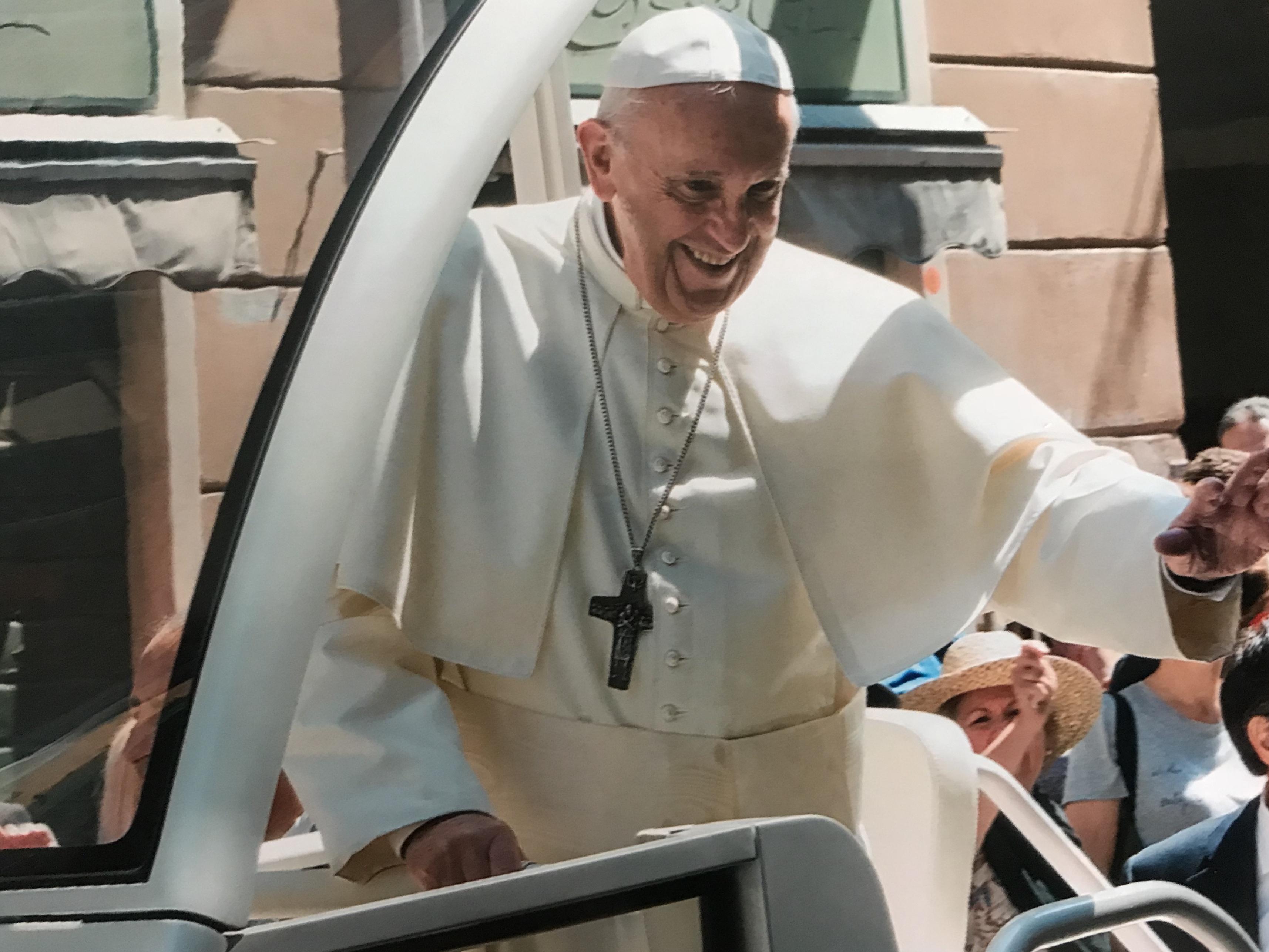
Pope Francis described three encounters with the devil, including one after his election as pontiff, and claimed to have glimpsed the gates of hell, according to newly published extracts from his private diaries.
The late pope's journals, compiled in a new book entitled 'The Private Diary of Pope Francis', describe Satan as having "eyes of fire" and a powerful, raspy voice.
Francis, who died aged 88 in April 2025 after leading the Catholic Church for 12 years, wrote of three encounters which he interpreted as meetings with the devil.
Two took place while he was Archbishop of Buenos Aires, with the third occurring after he had been elected pope, during a meeting with Vatican officials in Rome.
In an entry from August 2024, Francis recalled the first two experiences.
"I can't forget his eyes the first two times – from the car when I was returning to the house, and in the choir loft during Mass. However, he always reappears in different situations," he wrote.
The second encounter was described as taking place inside a Carmelite chapel, where Francis said the devil looked at him with "menacing" eyes.
"He looked at me with flaming eyes... more intense than the previous one. They were like flashes of fire," he wrote.
The third encounter reportedly occurred during a meeting in Rome in January 2021.
"I saw him and heard his voice, triumphant, possessing everything: 'Now I've gotten everything I wanted'," Francis wrote.
He added: "Just as I can't forget his eyes from the previous two, in this case, I can't forget the powerful raspiness of his voice. The Lord granted me an opportunity to leave that meeting, and he thus freed me."
The diaries also contain an account of a disturbing vision of hell.
In June 2018, while preparing to go to sleep, Francis wrote that he had seen its entrance.
"Last night I saw the entrance to hell. I peeked in to look a little, and it terrified me. It was before going to sleep. I grabbed the Rosary as a weapon," he wrote.
He added: "I thank the Lord for this help."
In a separate account, Francis warned of the danger of approaching the gates of hell.
"It's dangerous to get close to the gates of hell, because flames can spring out and burn," he wrote.
The 160-page book draws on journals kept by Francis over more than three decades, from 1992 until August 2024. They were edited by Cardinal Víctor Fernández, a longtime friend of the pope and head of the Vatican's Dicastery for the Doctrine of the Faith.
The diaries are the first by a pope to be released publicly since the 1960s.
The reality of evil
Francis frequently spoke about the devil during his papacy, insisting that Satan was not simply a metaphor for evil but a real being.
In 2017, he told Catholic television channel TV2000:
"He is evil, he's not like mist. He's not a diffuse thing, he is a person."
The newly published accounts have surprised some who knew the pope well.
Austen Ivereigh, Francis's biographer, said: "Francis often talked about the devil during his papacy but I was surprised by those accounts in the diaries. This is the first time I have seen him talk about the devil as a physical presence to the point where he describes what his eyes look like and what his voice sounds like. That to me is a real revelation. It's exceptional."
Robert Mickens, a veteran Vatican analyst based in Rome, said the devil was very real to Francis as the embodiment of evil.
"For him, the devil is a real entity, a creature. It comes from the mystical traditions of the Catholic Church," he said.
He added that such language might seem antiquated to many contemporary Catholics, but that Francis understood evil in profoundly spiritual terms.
A spiritual battle with power
The diaries also reveal that Francis experienced a two-year spiritual crisis during his papacy, from 2021 to 2022.
He wrote about the temptation to wield the considerable power of the papal office and his determination not to become someone who manipulated others for his own purposes.
Cardinal Fernández recalled an occasion when a bishop asked Francis why he had not dismissed a senior Vatican official who had publicly criticised him.
"After an interminable silence, he responded by explaining that he felt a strong sensation in his heart that God did not want him to become a puppeteer who uses and manipulates people according to his own convenience," the cardinal wrote.
"He explained that, for this reason, he preferred to let that person remain in his position."
Francis's struggle with the temptations of power was reflected in the humble style of his papacy. He rejected elaborate papal dress, carried a battered black briefcase, wore scuffed orthopaedic shoes and chose to live in a Vatican guesthouse rather than the grand apostolic apartments.
Mickens said: "Francis was struggling with the temptations of power, the omnipotence of being pope. He was going through a spiritual battle. He was tempted by his ego."
Regret over Chile
The journals also revisit Francis's controversial 2018 visit to Chile, which was overshadowed by criticism that he had failed to take seriously allegations of clerical sexual abuse.
In a 2021 entry, he expressed deep regret over the situation.
"Devastated because of the situation in Chile," Francis wrote.
"It was hard for me to admit what happened in Chile; I didn't think it was so serious."
Francis later apologised and summoned the country's bishops to Rome, where they all offered to resign.
The diaries also record his election as pope in March 2013, with a brief entry written four months afterwards:
"They elected me pope on March 13."
They further reveal his thoughts about his eventual successor, Pope Leo XIV, whom Francis knew as Robert Prevost.
According to Cardinal Fernández, Francis described him as "a great pastor, a generous missionary, and an irreproachable man".
( Photo: Pixabay Library 📸 )