You Have Not Lost Hope —You Just Don't Know Where It Is
There are moments when all the usual reasons to keep going go quiet — one by one — and a single question is left hanging in the air: what is all of this actually moving toward?
A Tiredness That Has Nothing to Do With Being Busy
Have you ever had a moment like this — not particularly busy, not in acute pain, but suddenly overtaken by a feeling you can't quite name? A sense that something is missing, though nothing obvious is wrong?
It isn't despair. It's more like a quiet hollow. You've done what needed doing, reached what you set out to reach, and life by most measures is fine. But that question — and then what? — keeps echoing, unanswered, just beneath the surface.
Philosophers call this "existential emptiness." But that phrase is too clinical. The more honest way to say it might be: you are living, but you've lost the sense of what you are living toward.
We've Been Misreading the Word "Hope"
Most people understand hope as a kind of wishing — hoping for a promotion, hoping to find the right person, hoping next year will be better than this one. These are real and legitimate longings. But they share one quality: once fulfilled, the emptiness comes back.
You get what you wanted, and find yourself standing in the same place. So you set a new target, hope again, reach it, feel empty again. The cycle is familiar.
There was a German thinker in the twentieth century named Moltmann who spent time in a prisoner-of-war camp as a young man, and saw despair in its most unguarded form. It was there that he began asking a question that stayed with him for the rest of his life: what is genuine hope? And how is it different from wishing?
His answer was simpler than expected. A wish depends on circumstances cooperating. Hope does not. A wish says: if things go well, I will be alright. Hope says: even now, when nothing has resolved, I still know what I am walking toward.
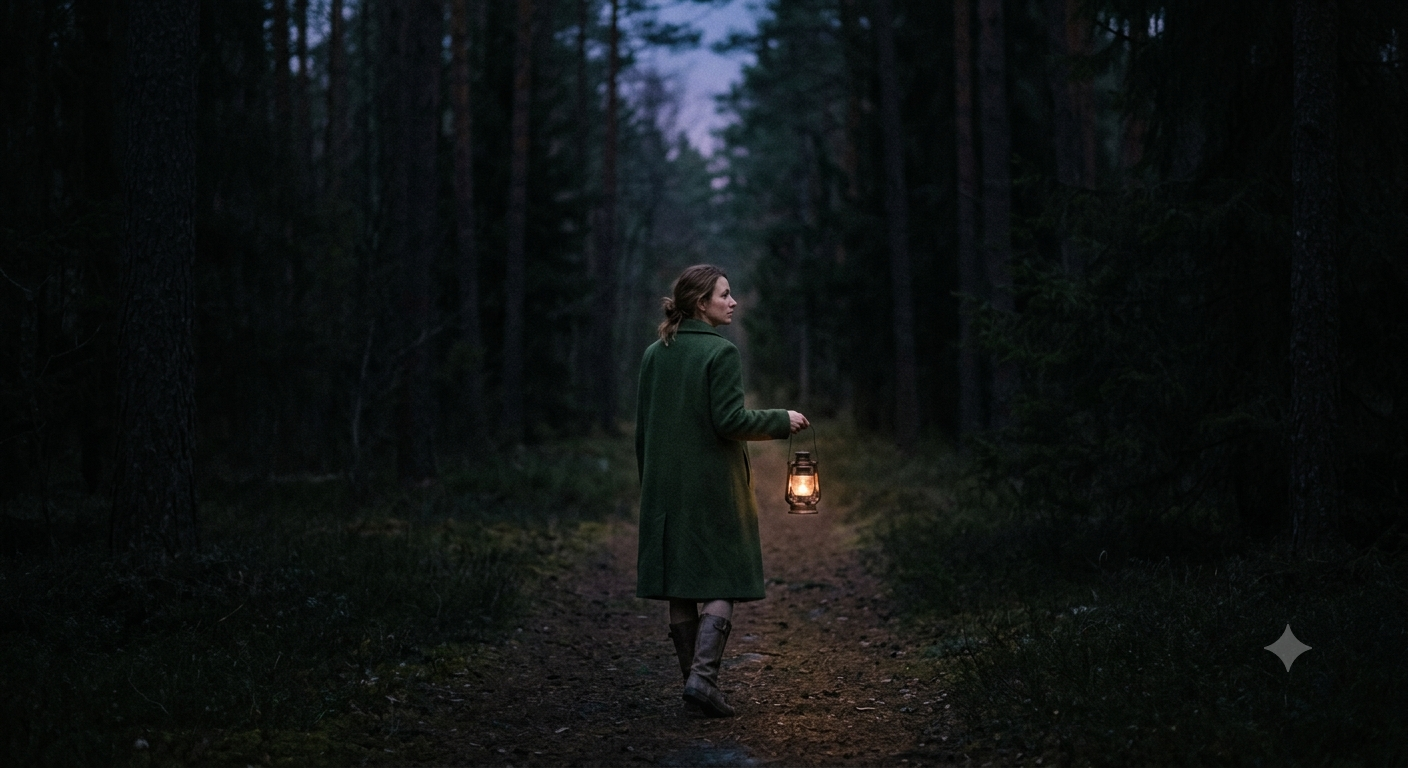
"Hope is not a prediction about the future, nor a gloss painted over the present. It is an orientation — knowing what you are moving toward, and because of that, being able to keep walking in the dark."
— Moltmann, Theology of Hope
Direction Is the Substance of Hope
Think of the moments in your life when you genuinely found the strength to go on. More often than not, it wasn't because the problem disappeared. It was because something shifted in you — a sudden quiet certainty that this is not the end.
A person can keep moving through deep darkness not because they can see the light, but because they know that light has a direction. That sense of direction is more sustaining than any explanation. You don't need to understand why. You only need to know which way to walk.
At its root, feeling lost is not about having too much pain. It is about losing your bearings. For many people, the crisis comes not when life is hard, but when life is going smoothly — and they realize they no longer know what comes next, or why any of it matters. That hollow feeling is the absence of direction, not the absence of resources.
If Hope Is Real, Where Does It Come From?
Moltmann's thinking eventually arrived at a place many people may not be ready to follow — he concluded that genuine hope cannot be built on human foundations alone. Because human beings die. Any sense of direction that rests entirely on human strength will, sooner or later, be interrupted by that fact.
This is not meant to frighten. It is an honest question: if this road ends in nothing, then however purposefully you walk it, where does the meaning come from?
His answer was this: history has a destination, and that destination is not a void. Not everything dissolving into silence, but everything arriving at what it was always meant to be. The suffering you have carried is not wasted. What has been broken will not stay broken forever. And those longings you can't quite put into words — for justice, for love, for a life that is real — are not illusions. They are real, because somewhere, they have an answer waiting.
You don't have to accept this now. But it may be worth sitting with the question: if this were true, what would it mean for you?
Feeling lost, honestly felt, can sometimes be the beginning of something. It means you haven't numbed yourself with false contentment. You are still asking the deeper question. That kind of seriousness deserves to be taken seriously.
Hope is not an anesthetic. It is not asking you to pretend. It is a kind of knowing — knowing that the road you are on does not end in the dark.
You haven't lost hope. You just haven't found where it truly comes from yet.
"That longing you can't quite name —
may be the distant echo of the very thing you are hoping for."