Aging with Wisdom: An Economist's Perspective on Health, Faith, and Growing Older
Growing older is a natural part of life. Caring for our health with wisdom, discernment, and faith is part of our Christian stewardship.
As the years pass, we notice changes in our bodies. Climbing stairs takes more effort. Names don't come to mind as quickly. Our joints feel stiff in the morning, and we need more time to recover after a busy day. Many of us respond the same way: "I guess I'm just getting older."
Sometimes that's true. But sometimes a change we blame on aging is a sign of a treatable medical condition. How should we respond?
I am not a physician. My academic background is in public administration and economics. But economics offers useful insights into how people make decisions with limited information, competing costs, and uncertain outcomes. After reading a recent article from Harvard Health Publishing, I began reflecting on healthy aging through three lenses from my field: information, cost, and community. I'd like to consider each of them in light of our Christian faith.
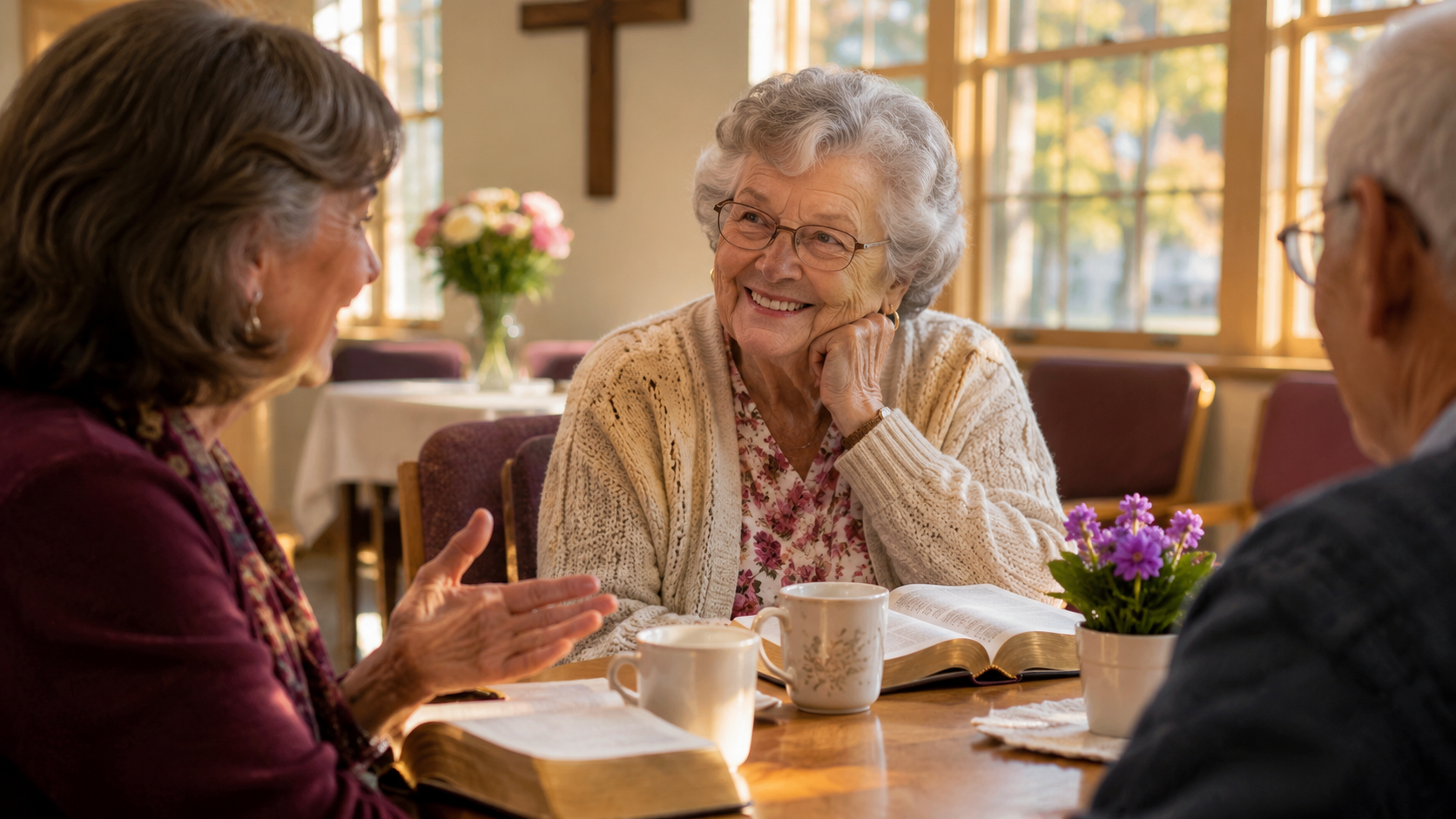 An older woman enjoys fellowship and conversation during a church Bible study. Meaningful relationships, spiritual growth, and active participation in a faith community can enrich later life and remind us that aging does not diminish our God-given dignity. (AI-generated image)
Growing Older Is Not a Failure
Our culture celebrates youth, speed, and productivity. As these abilities change, some people quietly begin to feel they are losing their value. Scripture offers a different perspective: "They shall still bring forth fruit in old age; they shall be fat and flourishing" (Psalm 92:14, KJV).
Our worth before God is not measured by how quickly we walk, how much we accomplish, or how sharp our memory remains. Later life can be a season of deeper prayer, wiser counsel, richer relationships, and faithful service. Health itself is not a measure of faith, and physical limitations never diminish the dignity of a person made in God's image.
Yet accepting aging is not the same as neglecting our health. Christian stewardship means caring responsibly for what God has entrusted to us, including our bodies. We don't need perfect health, but we can make thoughtful decisions about the health we have.
1. The Information Problem: Understanding What Our Bodies Are Telling Us
Economists use the term information asymmetry to describe situations in which different parties have different information. Health care is full of them. Medical professionals understand what symptoms may mean, but they don't necessarily know how our daily lives have changed. We experience those changes firsthand, but we may lack the expertise to judge their significance. Better decisions begin with bridging that gap.
In a recent Harvard Health article, geriatrician Dr. Suzanne Salamon offers a helpful guide: pay special attention when a symptom is new, getting worse, painful, or interfering with everyday activities. She also cautions against dismissing changes such as unexplained weight loss, falls or unsteadiness, difficulty following conversations, or growing trouble with routine tasks. These are not diagnostic criteria, but they can help us recognize changes worth discussing with a healthcare professional. Keeping a simple record of when a change began and how it affects daily life can make that conversation more productive.
Consider a fictional example. Martha, 74, had always enjoyed her Wednesday Bible study. Over the past year, however, she had gradually stopped joining the discussions. She assumed her mind was slowing down. Her daughter noticed something different: Martha frequently asked people to repeat themselves. When Martha mentioned this to her doctor, a hearing evaluation revealed significant hearing loss, and hearing aids helped her take part in conversations again. What Martha had blamed on a declining mind was, at least in part, a problem with her hearing.
Her story shows the value of listening both to our bodies and to the people who know us well. Paying attention to our health is not an expression of fear. It can be an expression of faithful stewardship.
2. The Cost Problem: Counting the Cost of Waiting, and of Doing Too Much
Every health care decision involves costs. A doctor's visit takes time and may involve transportation, copayments, and anxiety about results. Ignoring a symptom can seem easier and cheaper. But delaying needed care can create greater personal and financial burdens later, while timely evaluation may improve outcomes.
Proverbs reminds us, "A prudent man foreseeth the evil, and hideth himself; but the simple pass on, and are punished" (Proverbs 22:3, KJV). Wisdom looks beyond immediate inconvenience to future consequences.
For older Americans, Medicare offers a useful opportunity. People who have had Medicare Part B for more than 12 months are generally eligible for a yearly Wellness visit, and they pay nothing for the covered visit when their provider accepts Medicare assignment. The visit focuses on preventive care and personalized health planning rather than a routine physical, and additional services or tests may cost extra. It is a good time to discuss concerns, review medications, and plan preventive care. But new or worsening symptoms should be evaluated promptly, not saved for the next Wellness visit.
Medication management matters too. The National Institute on Aging advises older adults to watch for medication side effects and interactions. Bring an updated list of prescriptions, over-the-counter medicines, vitamins, and supplements to your appointments, and never change or stop a prescribed medication without talking with a qualified healthcare professional.
If you take several medications each day, a simple weekly pill organizer with separate morning and evening compartments can make it easier to stay on track and to notice a missed dose. One widely used, easy-to-open option is this large weekly organizer from Sukuos. (Affiliate link: the author may earn a small commission if you make a purchase. As an Amazon Associate I earn from qualifying purchases.)
 An older man organizes his weekly medications at home. Keeping track of medications and discussing potential side effects with healthcare professionals are practical ways to care responsibly for the health God has entrusted to us. (AI-generated image)
There is another side to the cost question: more care is not always better care. The ABIM Foundation's Choosing Wisely campaign, which ran from 2012 to 2023, encouraged conversations about unnecessary tests and treatments, and its principles remain useful. When considering nonemergency care, we might ask:
- What is the purpose of this test or treatment?
- What benefits and risks should I consider?
- Are less burdensome alternatives available?
- What might happen if treatment is postponed?
- What costs should I expect?
This reflects shared decision-making, in which medical expertise is weighed alongside a patient's values, circumstances, and preferences.
James encourages us: "If any of you lack wisdom, let him ask of God, that giveth to all men liberally, and upbraideth not; and it shall be given him" (James 1:5, KJV). Christian stewardship means neither avoiding medical costs at any price nor pursuing every treatment out of fear. It means making informed, prayerful, and responsible decisions.
3. When Not to Wait
Some symptoms call for immediate action rather than careful weighing of costs. According to the CDC, possible warning signs of a stroke include:
- Sudden weakness or numbness, especially on one side of the body
- Sudden difficulty speaking or understanding speech
- Sudden changes in vision
- Sudden trouble walking, dizziness, or loss of balance
- A sudden, severe headache with no known cause
If possible, note when the symptoms began, because this information helps emergency teams.
Chest discomfort is a common warning sign of a heart attack in both men and women. Other symptoms can include shortness of breath, nausea, unusual fatigue, or discomfort in the arm, back, or jaw. Women and older adults may experience less obvious symptoms.
If you suspect a stroke or heart attack, call 911 immediately, even if the symptoms improve or disappear.
Prayer and emergency care are not competing choices. We can pray while help is on the way and trust God while healthcare professionals provide treatment. Seeking medical help is not a failure of faith.
4. The Community Answer: The Church as a Place of Care
Economics often examines decisions at the individual level. Yet health decisions are shaped by circumstances beyond individual choice. Some older adults face transportation difficulties, financial worries, confusing medical information, or loneliness. Others simply have no one to talk with about their concerns. This is where churches can complement health care systems and public services through personal relationships and practical care.
Scripture teaches, "Thou shalt rise up before the hoary head, and honour the face of the old man" (Leviticus 19:32, KJV). Honoring older adults means more than respectful words. It calls for practical love. Church communities can help by:
- Providing rides to medical appointments.
- Helping older members prepare questions for their healthcare providers.
- Encouraging appropriate preventive care.
- Visiting those who have become isolated or withdrawn.
- Listening patiently when someone shares a health concern.
Such support should always respect each person's dignity, privacy, and freedom to make their own health care decisions.
From a public policy perspective, accessible primary care and understandable health information help people make better decisions. From a Christian perspective, caring for one another is more than a social responsibility. It is an expression of the love of Christ.
Final Thoughts: Aging with Wisdom, Faith, and Hope
Growing older does not make our lives less meaningful. Our physical abilities may change, but our capacity to love, pray, encourage others, and grow in faith remains precious.
Paul writes, "Though our outward man perish, yet the inward man is renewed day by day" (2 Corinthians 4:16, KJV). These words do not invite us to neglect our bodies. They remind us that our ultimate hope reaches beyond our physical condition.
We can accept the realities of aging without ignoring treatable health concerns. We can seek medical care without letting fear rule our lives. And we can make thoughtful decisions with our healthcare providers, families, and church communities while trusting God.
Aging faithfully is not about resisting every physical change. It is about caring wisely for the life God has entrusted to us while walking alongside others with compassion and hope.
Perhaps this week is a good time to schedule a preventive care visit, start a simple record of changes in your health, or call an older friend from church just to see how they are doing.
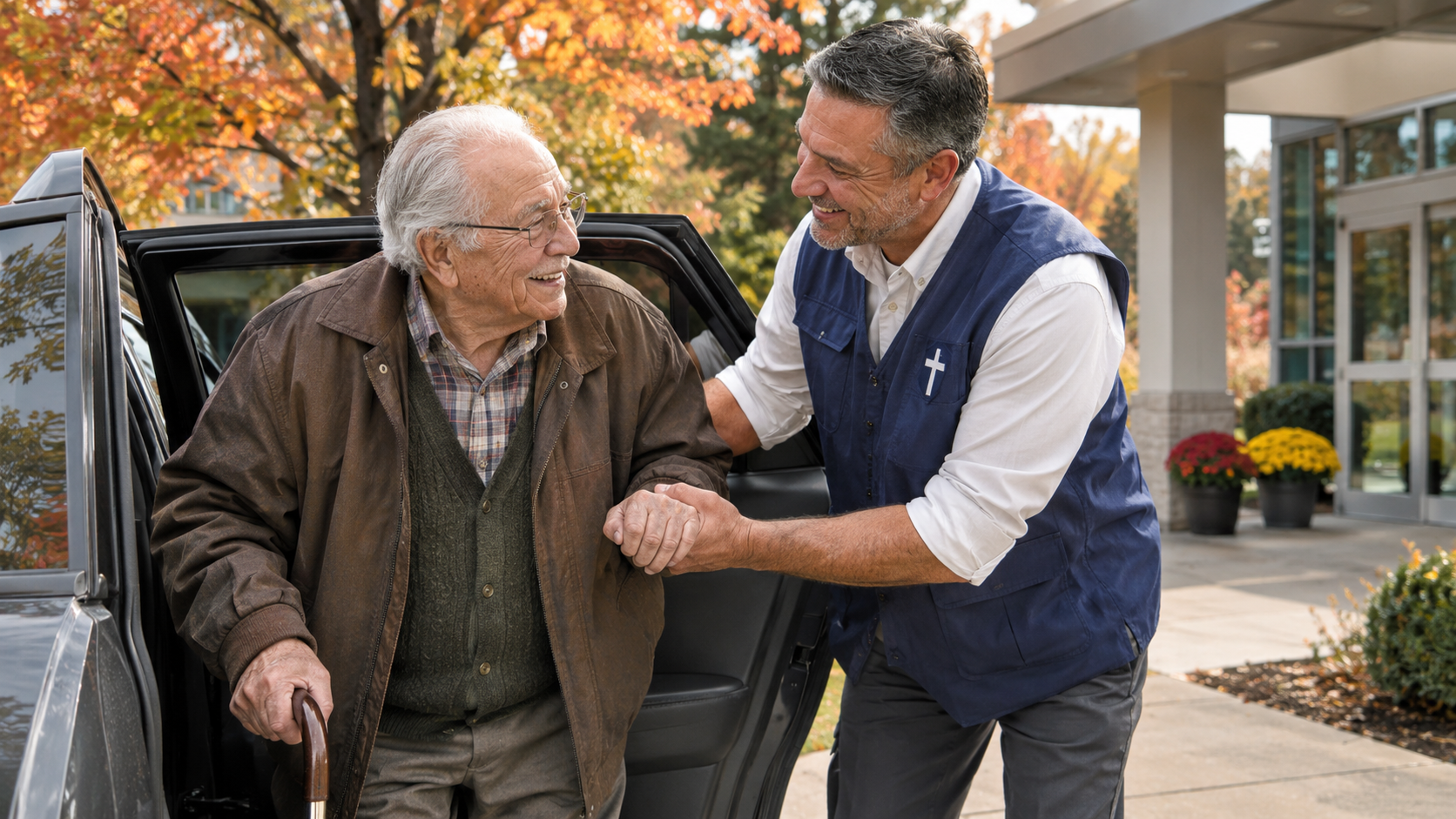 A church volunteer assists an older man arriving at a medical clinic. Providing transportation, companionship, and practical support for older adults is a meaningful way for Christian communities to demonstrate the love of Christ and help others age with dignity. (AI-generated image)
References and Further Reading
- Salamon, M. (2026, November 13). Is it aging, or something more? Harvard Health Publishing. https://www.harvardhealth.org/healthy-aging-and-longevity/is-it-aging-or-something-more
- Centers for Disease Control and Prevention. Signs and Symptoms of Stroke. https://www.cdc.gov/stroke/signs-symptoms/index.html
- American Heart Association. Heart Attack, Stroke and Cardiac Arrest Symptoms. https://www.heart.org/en/about-us/heart-attack-and-stroke-symptoms
- American Heart Association. Heart Attack Symptoms in Women. https://www.heart.org/en/health-topics/heart-attack/warning-signs-of-a-heart-attack/heart-attack-symptoms-in-women
- National Institute on Aging. Taking Medicines Safely as You Age. https://www.nia.nih.gov/health/medicines-and-medication-management/taking-medicines-safely-you-age
- Medicare.gov. Yearly "Wellness" Visits. https://www.medicare.gov/coverage/yearly-wellness-visits
- ABIM Foundation. Choosing Wisely. https://abimfoundation.org/choosing-wisely
Author's Note: This article is an original reflection drawing on publicly available health information, economics, public policy, and Christian principles. It is intended for general educational purposes and is not a substitute for professional medical advice, diagnosis, or treatment. Martha's story is fictional. Scripture quotations are from the King James Version (KJV).