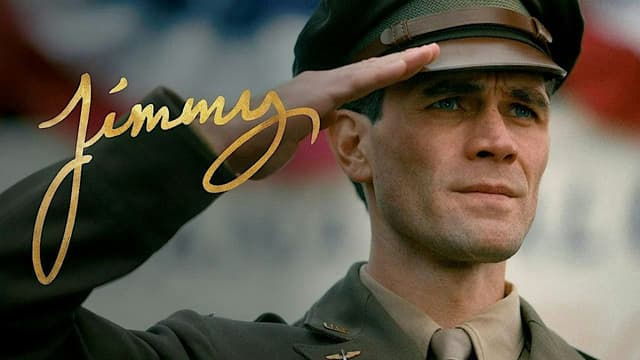
Beyond George Bailey: The Untold Story of Jimmy Stewart
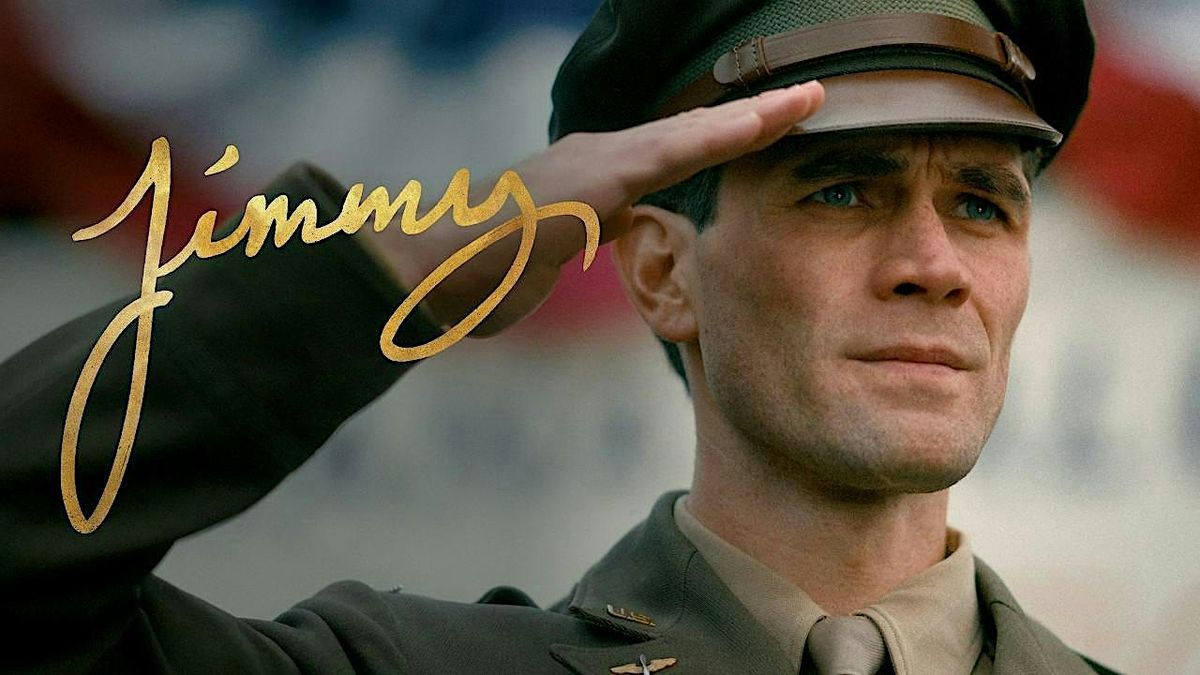 KJ Apa in 'Jimmy' | Photo image courtesy Burns & Co.
Few Hollywood stars have left a legacy as enduring as Jimmy Stewart, but the story behind the beloved actor’s journey is one of extraordinary courage, sacrifice, and a deep faith.
In the new biopic Jimmy, releasing in theaters nationwide this Friday, audiences will discover the transformative chapter of Stewart’s life—from his Academy Award-winning performance in The Philadelphia Story to his service as a combat pilot during World War II, and ultimately, the role of George Bailey in the timeless classic It’s a Wonderful Life.
Directed by Aaron Burns (Birthright Outlaw), Jimmy stars KJ Apa (Riverdale) in the title role, as well as an ensemble cast that includes Max Casella (Blue Jasmine), Kara Kilmer (Chicago Fire), Neal McDonough (The Last Rodeo), Jason Alexander (Seinfeld), Sarah Drew (Grey's Anatomy), Rob Riggle (Saturday Night Live), and Christopher McDonald (Happy Gilmore), and Jen Lilley (Days of Our Lives).
I recently sat down with the movie’s director Aaron Burns and actress Jen Lilley (who portrays Jimmy Stewart’s wife, Gloria) to talk about bringing this remarkable true story to the screen, the tender moments of faith that marked his life, and sharing the man behind one of Hollywood’s most iconic legacies.
Before we jump into talking about the film, let’s take a step back and let me ask this. Before deciding to develop and direct a movie like this, what was your knowledge of Jimmy Stewart and his life and career?
Aaron Burns: Like most Americans, I had watched It's a Wonderful Life many Christmases while growing up. I also watched Mr. Smith Goes to Washington, when I was a kid. And I loved that movie about this young guy who loves his country. He is this naive, idealistic character. And then I also really liked The Man Who Shot Liberty Valance. I also remember watching some of his Westerns with my dad as a kid. But to be honest, I thought he seemed like a good guy from the movies, but there's this old saying, ‘Don't get too close to your heroes, or you'll be disappointed.’ I assumed that like every other actor, he was just pretending to be a hero. So, honestly, I had very little knowledge of who Jimmy was personally, and then I bumped into an article that he wrote for Guidepost Magazine. It was from 40-some years ago. And he talked about making It's a Wonderful Life after he came home from the war. And I said, wait, Jimmy Stewart fought in World War II? I had no idea.
Jen Lilley: Yeah, I knew he'd won some Academy Awards, I knew he won an Academy Award for The Philadelphia Story. I, of course, being one of the leading ladies in a lot of Christmas movies, I'd seen It's a Wonderful Life faithfully, year after year. But I did not know that George Bailey in It's a Wonderful Life so deeply paralleled who James Stewart was off-screen. I did not know that he had a strong faith. I watched him in a lot of Hitchcock movies when I studied directing in college. So, I was familiar with him cinematically, but I was not familiar with him off-screen. And I just am so in awe of who he was.
What makes the story of Jimmy so compelling?
Aaron Burns: This is the most fun I've ever had on a filmmaking journey, telling Jimmy Stewart’s story. And he's such a larger-than-life character. He's so far removed from us. He’s an Oscar winner, a top of the world A-list movie star who lived way back. But in his films, he's able to capture what people sometimes call an everyman presence, that is very relatable. It feels like he's going through things that we might go through.
I guess what makes him so compelling to me is realizing the conflicts (confluence) of all these worlds is what I find intriguing. So, it's a man who's a believer, and went on a spiritual journey, a faith journey, with those things in life, who also works in the movie industry, is super famous, and is a high-profile public figure, who also fought for his country in World War II, who also finished that and came back. One of my favorite parts of the movie was the transformative force in his life that led him back to his faith.
And he went on out of there, after making this film, to meet and marry his wife, to become a wonderful husband and father, and to finish well. So, as I looked at that package of who this man was, that's the kind of story that I feel is worth sinking your teeth into for a couple of years.
I remember talking to you (Aaron) a couple of years ago and you mentioned to me that Jimmy Stewart’s faith remained central throughout his life, influencing his choices, buoying his resilience during wartime, and his portrayal of characters who embodied moral integrity and hope. What can you tell me about Jimmy Stewart’s faith?
Aaron Burns: That’s a great question, and he was not a professional Christian if that makes sense. He wasn't an evangelist or a pastor. He wasn't making faith-based movies or anything like that. He was a man who loved the Lord and who lived his life by the values set forth by Scripture. He was faithful, went to church, did all the Christian things, had his life transformed by his relationship with the Lord, but he was a professional who worked in an unforgiving industry. And the contrast between him and his colleagues is pretty profound. You look at a lot of the people that he dated early in his Hollywood career, when he was living the Hollywood lifestyle. So many of those lives ended in tragedy, divorce, addiction, suicide, and all these other things. And you see one life that tracks off and finishes well. He had a legendary marriage, where he was faithful to his wife for their whole 40-plus years, and he was a legendarily good, wonderful father. I got to spend some time with Kelly, one of his daughters, and she just beams about the kind of man that her dad was. So, I think so many more people love him than just people of faith. He's adored by a much wider audience, and he's adored for his craft, for his skill as an actor, as a storyteller, and as a performer. But as you go one click under that, you find the beating heart of a man who has all of these values and morals, who was so well respected in the industry and in the country at large for that. And then you go one step deeper and ask, where do those values come from? They came from his faith.
Jen Lilley: This movie is such an organic opportunity to evangelize to your neighbors and friends. It’s not just about Jimmy Stewart. It has so many natural evangelical underlines that you cannot avoid, because that's who he was. And I know we don't show it in the movie, but off-screen in real life, especially after he married Gloria, he was a deacon in his church. He was very faithful to his church and he was a man of deep faith. And so, that's what I know of him off-screen, and I can't wait to meet him in heaven.
In doing the film, perhaps your perception has broadened of him and what he represented. What sort of valuable lessons does this classic story convey to modern day, contemporary audiences?
Jen Lilley: That's a really good question. I just think that kindness doesn't go out of style. You know, it doesn't matter how much status you might have. He was known for just being so down-to-earth and so approachable, and I think that's how we should all strive to be. We should not be absorbing or eating the lies that were too important to engage with someone that might have a lower status than us. I can't stand that. He wasn’t like that off-screen and I think that is something we should all remember.
This movie has a fantastic cast. Max Casella, Kara Kilmer, Neal McDonough, Jason Alexander, Sarah Drew, Rob Riggle, and Christopher McDonald, and of course you, Jen Lilley, just to name a few. But perhaps the toughest role of all went to the person who played Jimmy Stewart. I thought KJ Apa was remarkable in his portrayal of such an iconic figure. Your thoughts?
Aaron Burns: Jimmy Stewart is a very distinct person. Many of us have spent hours and hours of our lives with him on the TV in our living room, and we feel like we know him. And so, it's a pretty high bar and challenge for us to get him right, and to represent him well. So, we just respected humility as we approached the subject matter and wanted to make sure that we honored that legacy. Part of that started with connecting with the Stewart estate, working with Kelly (Jimmy’s daughter), and getting her input on the script. We had a lot of deep conversations about what her dad would want, what her dad would value, having push-and-pull intentions, and we needed to tell the story that we wanted to tell as well. But when I told her the portion of her dad's life that I wanted to explore, she was thrilled. She said her dad, of all the things he did, and all his accomplishments, he was most proud of his service to his fellow men and women in the military and service to his country. And it was really neat to be able to explore, to tell the story with her, and come along the journey with us. And then, coming to set every day was tremendous. KJ did such a fantastic job doing his prep. He lost a ton of weight to get that skinny, Jimmy cheekbone, that gaunt look, especially during the war, because Jimmy couldn't eat. He had so much PTSD, but KJ brought such an intensity to his performance. When Neal McDonough showed up, he pulled me aside and said, “Is he for real? I have to match his level of intensity?” It was the same with Jason Alexander. He shows up and says, “He's doing it!” So, all of the other cast came in, and as they joined us for their scenes, they saw the energy on set and the joy that our team had. Everyone did their very best. And I'm so proud of the love that people gave to this special little story, and I'm really honored that I got to lead the team to tell it.
After audiences have had a chance to see Jimmy, what would you like to see people take away from this movie after they see it? What is your greatest hope for the film?
Jen Lilley: My greatest hope for this film would be that people realize we are so much more alike than we are different. I think it's going to unify audiences and make us all remember that.
Aaron Burns: I hope that people are entertained. And when I use the word entertain, it's similar to how you would entertain a thought, or how you would entertain a guest. It means to invite something in and contemplate it. So, I hope that the movie sticks with them more than just in a quick moment. I hope that it engages their hearts, engages their minds, and that as they reflect on Jimmy's journey, they see their own hopes, dreams, failures, and wishes portrayed out on the screen, and they go on that adventure with them. I hope this movie gives people the inspiration to keep going, to keep praying, to keep working, to keep trusting, and the inspiration to go on to the next day and see what God has in store for them for the future.
JIMMY opens in theaters nationwide this Friday
WATCH A TRAILER FOR JIMMY: