“Leave Me Alone”: Divine Pathos, Prophetic Intercession, and the Repentance of God in Exodus 32:7–14 – Part 3
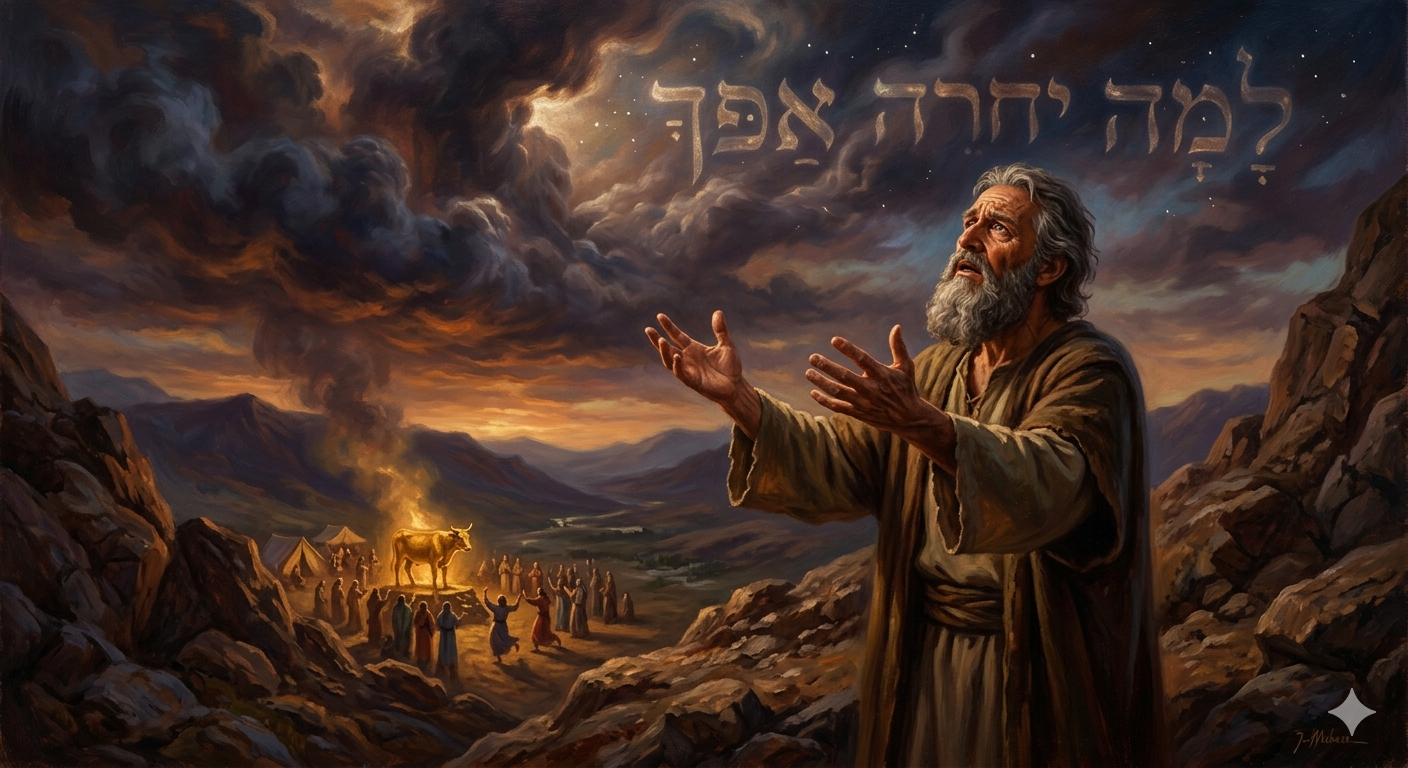
“Why does your anger burn” (Exodus 3212)
Part 1 – Click Here
Part 2 – Click Here
Theological Synthesis: Prayer, Repentance, and the Triumph of Love
The Efficacy of Intercessory Prayer
The first theological affirmation that Exodus 32:7–14 yields is the genuine efficacy of intercessory prayer. The narrative is constructed in such a way that Moses’ intercession is the decisive turning point. Before the intercession, divine wrath threatens destruction; after the intercession, the disaster is averted. The narrative logic is irreversible: it was Moses’ prayer that changed the outcome.
This affirmation has profound implications for a theology of prayer. If Moses’ intercession was genuinely effective, then prayer is not merely a spiritual exercise that shapes the character of the one who prays; prayer is an action that has real consequences in the world and in the purposes of God. Fretheim captures this well when he notes that human words in prayer are a contribution to the shape of the future at stake.[15] The New Testament concurs: “The prayer of a righteous person is powerful and effective” (James 5:16, NIV). Exodus 32 stands as the Old Testament’s most dramatic illustration of that principle.
It is worth noting that Moses’ intercession in Exodus 32 is not an exercise in passive petition. Moses argues, reasons, and challenges. He appeals to divine honor, to covenant fidelity, and to the logic of redemptive history. This model of prayer as vigorous engagement with God, rather than mere submission to divine determinations, is characteristic of the patriarchal and prophetic prayer traditions of the Old Testament. Abraham negotiates with God over Sodom (Genesis 18:22–33); Jacob wrestles with the divine messenger until he receives a blessing (Genesis 32:22–32); Jeremiah laments and challenges the divine justice in his confessions (Jeremiah 12:1–6; 15:15–18). The pattern is consistent: authentic prayer involves genuine encounter, not mere performance.
The Triumph of Divine Love
The second and ultimately decisive theological affirmation of Exodus 32:7–14 is the triumph of divine love over divine anger. The passage presents a God who is genuinely angry, whose anger is a response to genuine covenant violation, and who seriously entertains the possibility of destroying the rebellious people. The anger of God in the Old Testament is not a minor theme to be quickly transcended; it is a constitutive element of the divine character as presented in the covenantal tradition. A God who cannot be genuinely angered by human sin is a God whose love is not genuine either.
And yet the narrative does not end with divine wrath. It ends with divine repentance, with a turning away from the announced judgment. This turning is not a capitulation to human pressure or a revelation of divine inconsistency; it is the expression of a love that is ultimately more fundamental than the anger it temporarily suppresses. Hosea 11:8–9 provides the most explicit Old Testament articulation of this dynamic: “How can I give you up, Ephraim? How can I hand you over, Israel? My heart recoils within me; my compassion grows warm and tender. I will not execute my fierce anger; I will not again destroy Ephraim; for I am God and no mortal” (Hosea 11:8–9, NRSV). The divine heart is literally turned within itself, and it is this inner turning of the divine heart that constitutes the basis for Israel’s hope.
Fretheim’s summary of the divine character in the Old Testament applies with full force to Exodus 32: despite the genuine experience of grief and anger, “God’s grief does not entail being emotionally overwhelmed or embittered by the barrage of rejection. Through it all, God’s faithfulness and gracious purposes remain constant and undiminished.”[16] Exodus 32:14 represents the same movement in narrative form. The God who said “leave me alone” relents. The love that constituted Israel as God’s people proves more durable than the anger that threatened to dissolve that relationship. Divine love triumphs not by ignoring the seriousness of sin but by overcoming it, not by denying the reality of divine anger but by surpassing it.
This theological structure has profound Christological resonances, which lie beyond the scope of the present essay but deserve acknowledgment. The New Testament’s proclamation of the cross as the decisive moment of divine-human reconciliation draws upon precisely this Old Testament pattern of divine wrath and divine love, judgment and mercy, condemnation and restoration. The God who relented at Moses’ intercession in Exodus 32 is the same God who, in Paul’s formulation, “was in Christ reconciling the world to himself” (2 Corinthians 5:19, NRSV). The continuity is not incidental; it is structural. The God of the Old Testament and the God of the New Testament are one and the same God, whose character is defined not by immovable impassibility but by faithful, responsive, ultimately redeeming love.
Conclusion
The narrative of Exodus 32:7–14 confronts its readers with a God who is unmistakably personal, genuinely emotional, and authentically responsive. This God gets angry, speaks ironically, invites intercession, listens to arguments, and changes course. These features of the biblical portrait have been systematically minimized or allegorized by a Christian theological tradition deeply shaped by the philosophical categories of classical theism. The recovery of these features is not an exercise in theological novelty; it is a return to the witness of the text.
The scholarship of Heschel, Muffs, Fretheim, and Brueggemann has done much to restore the anthropopathic dimensions of Old Testament theology to their rightful prominence. Exodus 32:7–14 stands as a paradigmatic text for this recovery. Its portrait of God’s anger, Moses’ bold intercession, and the divine repentance that averts disaster illuminates two theological affirmations of enduring significance: the genuine efficacy of intercessory prayer and the ultimate triumph of divine love over divine wrath.
Thielicke’s warning remains apt. Christian theology must guard against the substitution of a theologically constructed God, however intellectually impressive, for the living God of Abraham, Isaac, Jacob, and Moses. The God who said “leave me alone” and then listened when Moses refused to do so is a God worth knowing.
NOTES
[15] Fretheim, The Suffering of God, 62.
[16] Fretheim, The Suffering of God, 127.
Claude Mariottini
Emeritus Professor of Old Testament
Northern Baptist Seminary
If you enjoyed reading this post, you will enjoy reading my books.
VISIT MY AMAZON AUTHOR’S PAGE
BUY MY BOOKS ON AMAZON (Click here).
NOTE: Did you like this post? Do you think other people would like to read this post? Be sure to share this post on Facebook and share a link on X so that others may enjoy reading it too!
If you are looking for other series of studies on the Old Testament, visit the Archive section and you will find many studies that deal with a variety of Old Testament topics.