Listening Beneath the Melody
I attended an arts high school, where one of my classes was sight-singing and ear training.
We were asked to do things like sight-read a simple line on the piano while sight-singing a more intricate one, or listen to a chamber piece and notate only the cello line. We used to joke that it required an extra pair of ears to do it. It was never easy, but somehow, I found myself drawn to it.
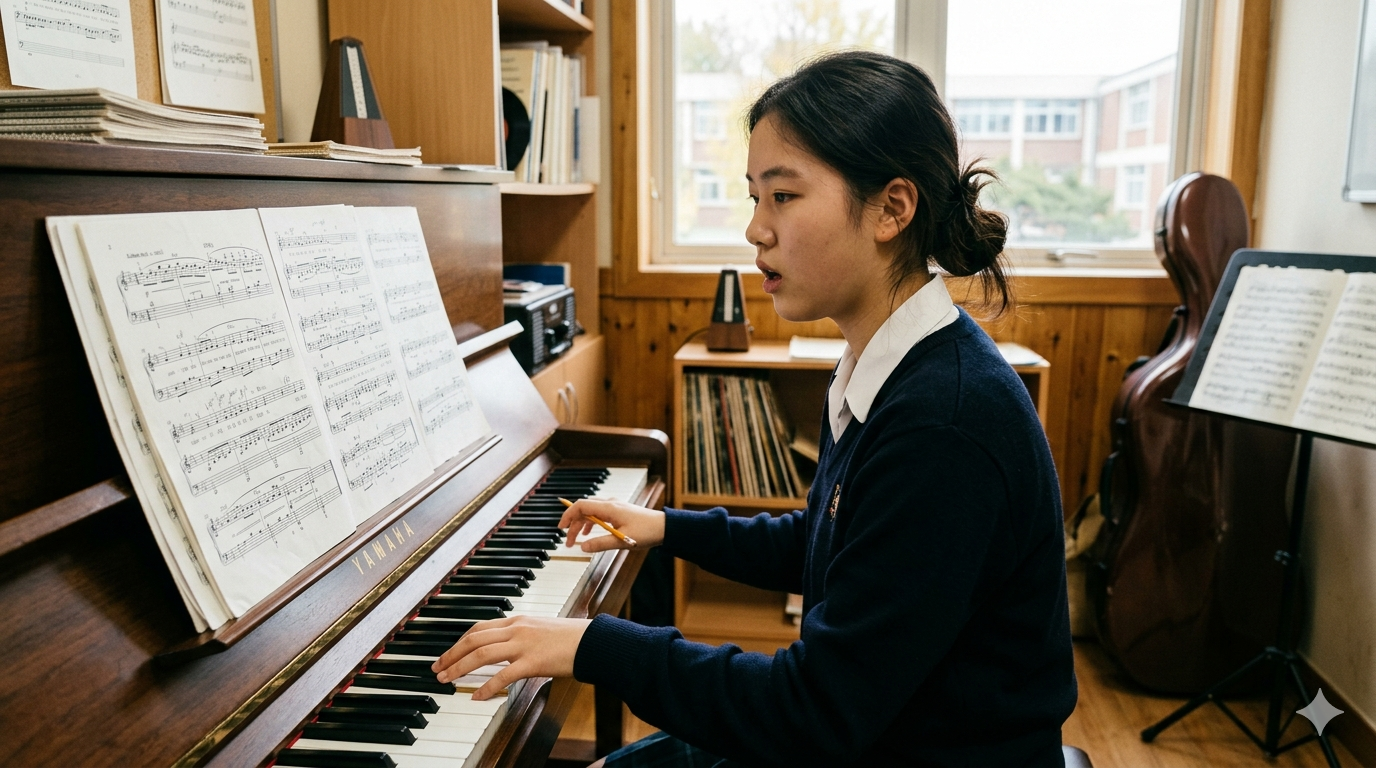
It trained the ear to separate, to focus, to hear more than what was immediately obvious. That habit followed me into chapel.
During services, when we sang hymns together, most people sang the soprano melody. But I would often lower my voice and sing the alto part, quietly, just loud enough for myself to hear. It felt like a private exercise.
There was something deeply satisfying about finding the inner voice, about aligning my part within the harmony. When the chords settled into place, it brought a quiet sense of fulfillment—subtle, but real.
Even then, I remember wondering:
Is this joy coming from worship—or from the beauty of harmony?
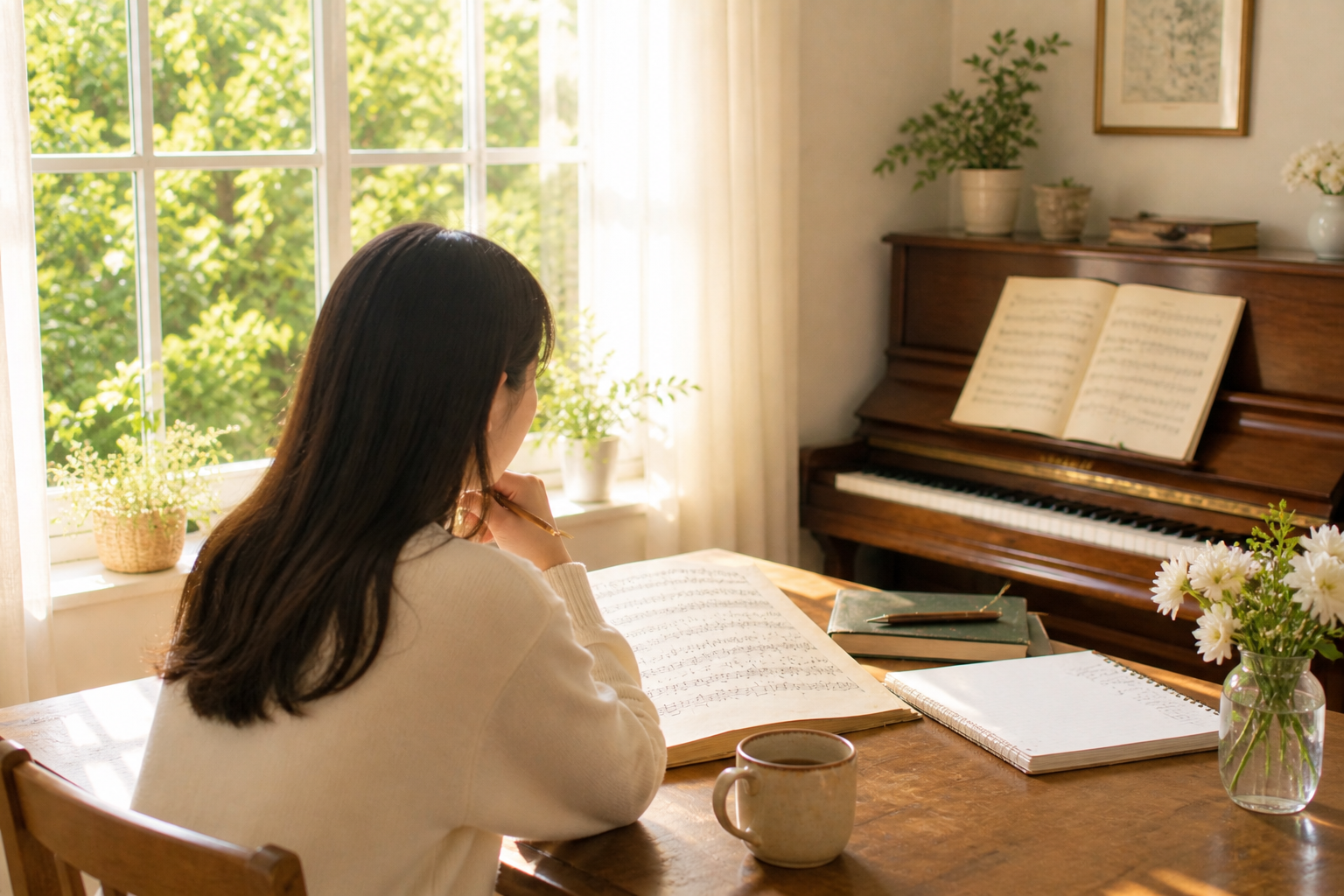
Augustine wrestled with something not entirely different. In his Confessions, he wonders whether the music in worship was drawing him toward God—or simply toward the pleasure of sound.
“When it happens to me that I am more moved by the singing than by what is sung, I confess that I have sinned.”
But is it so easily divided?
Music, after all, has its own inherent logic. When voices move together and tensions resolve, something in us responds—not because we are told to, but because it simply feels right.
But music is more than just structure; it also carries meaning, shaped for voices to sing and to share. Perhaps structure and meaning are not so easily separated.
Looking back, I’m not sure the question ever needed a clear answer. The joy of worship and the pleasure of harmony may not be entirely different, but overlapping experiences that meet beneath the surface.
Perhaps learning to hear—truly hear, beyond the melody—is itself a kind of attention. And when that attention turns toward something sacred, it begins to resemble prayer.
Perhaps this is part of why the psalms, especially in the music of Felix Mendelssohn, feel like more than just sound—they are spaces where faith is quietly carried within the harmony itself.
Next, we return to the psalms—with ears attuned to what lies beneath the melody.
Previously: [When Psalms Sing (2): Psalm 95 (Mendelssohn)]