Music & Architecture (Part 5): Romanticism and Emotional Expression
Romanticism changed both music and architecture by shifting the focus from balance and order to emotion and imagination.
In the nineteenth century, artists moved beyond Classical symmetry and restraint, creating works filled with drama, atmosphere, and personal expression.
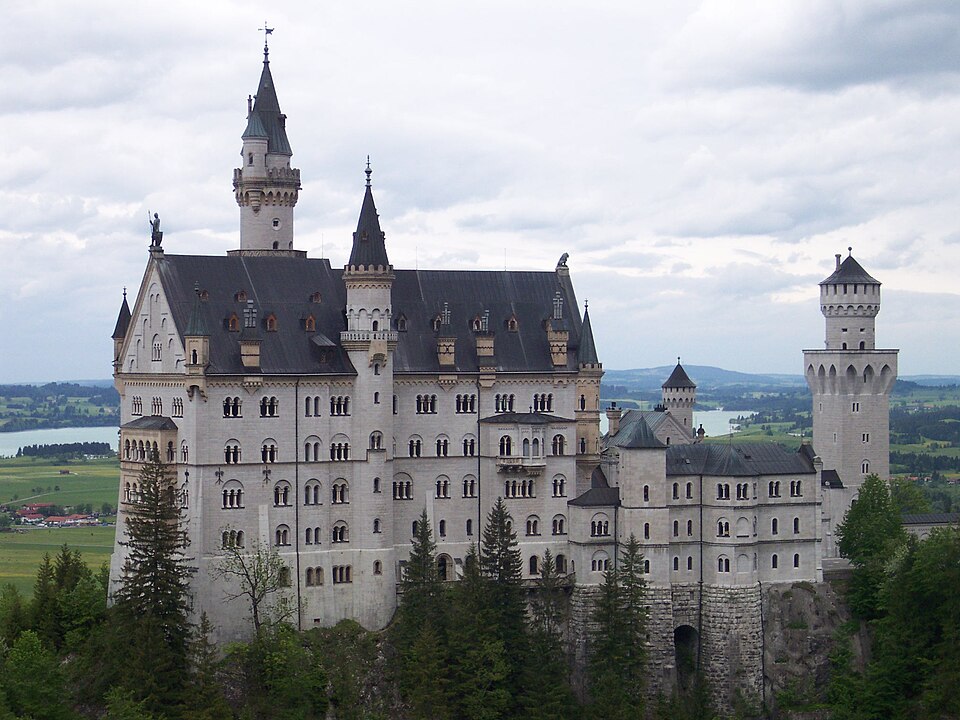 Neuschwanstein Castle — a Romantic-era castle inspired by medieval architecture
1. Gothic Revival and Romantic Architecture
Romantic architecture moved away from Classical restraint toward more dramatic and atmospheric forms. One of the most important movements was the Gothic Revival, inspired by medieval cathedrals with pointed arches, stained glass, and soaring spires.
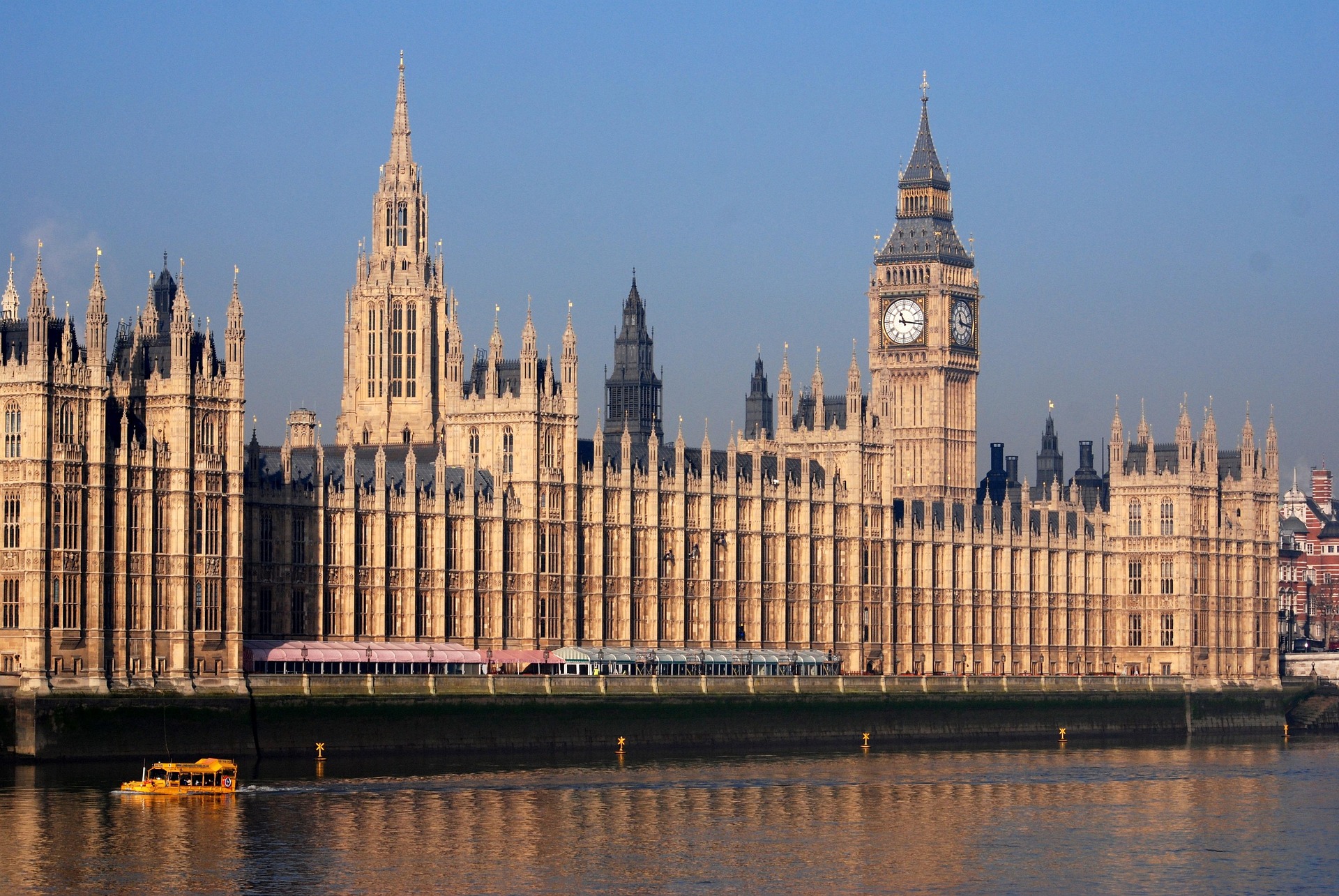 The Palace of Westminster — Gothic Revival architecture
Buildings such as the Palace of Westminster were designed not only for structure, but for emotional impact — evoking awe, nostalgia, and grandeur. Architecture became something to experience, not just observe.
2. Romantic Music and Emotional Expression
Romantic music expanded the emotional language of sound. Melodies became longer and more expressive, harmonies grew richer and less predictable, and dynamics stretched from intimate whispers to overwhelming power.
The passage marked by the red arrows forms a single sweeping phrase that extends far beyond the balanced phrase lengths typical of Classical music.
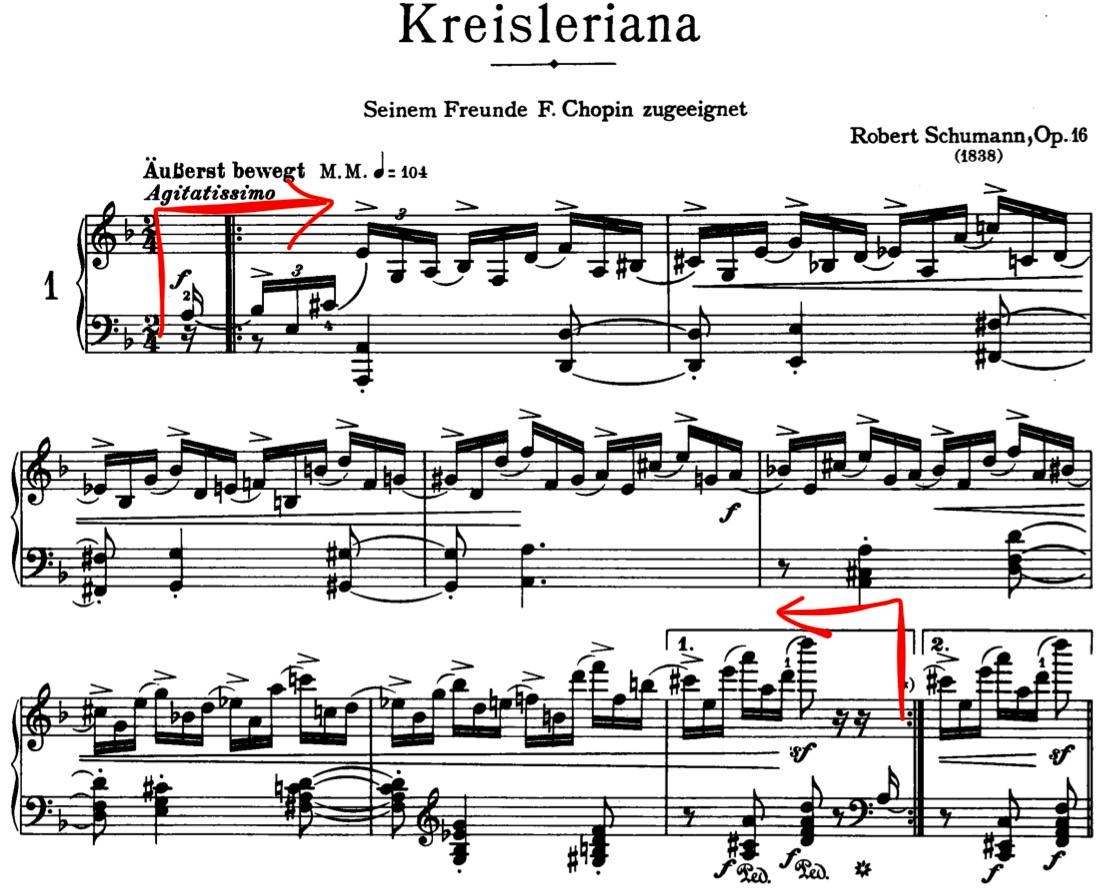 Schumann — Kreisleriana Op. 16 (Opening)
Composers such as Frédéric Chopin, Robert Schumann, Johannes Brahms, and Franz Liszt — along with many others — pushed music toward greater emotional and orchestral scale.
3. Nature, Emotion, and the Sublime
Romantic artists were deeply inspired by nature and the sublime — experiences that feel vast, powerful, and slightly beyond control. Both music and architecture tried to capture this sense of awe: buildings through scale and atmosphere, and music through constantly shifting emotional movement.
Romanticism ultimately values feeling over restraint, and experience over perfect order.
Read previous: Music & Architecture (Part 4): Classical Architecture and Musical Balance