Rachmaninoff’s Piano Concerto No. 2: A Dedication to Dr. Nikolai Dahl

In 1897, Sergei Rachmaninoff (1873–1943) suffered a major setback. The premiere of his Symphony No. 1 in St. Petersburg was poorly received, and the critics were harsh. One even compared the work to a depiction of the “Seven Plagues of Egypt.”
The experience shook Rachmaninoff’s confidence. He struggled to compose, and even beginning a new piece felt beyond his reach. For a musician whose life revolved around music, it was a deeply discouraging time.
The Doctor Who Helped Him Begin Again
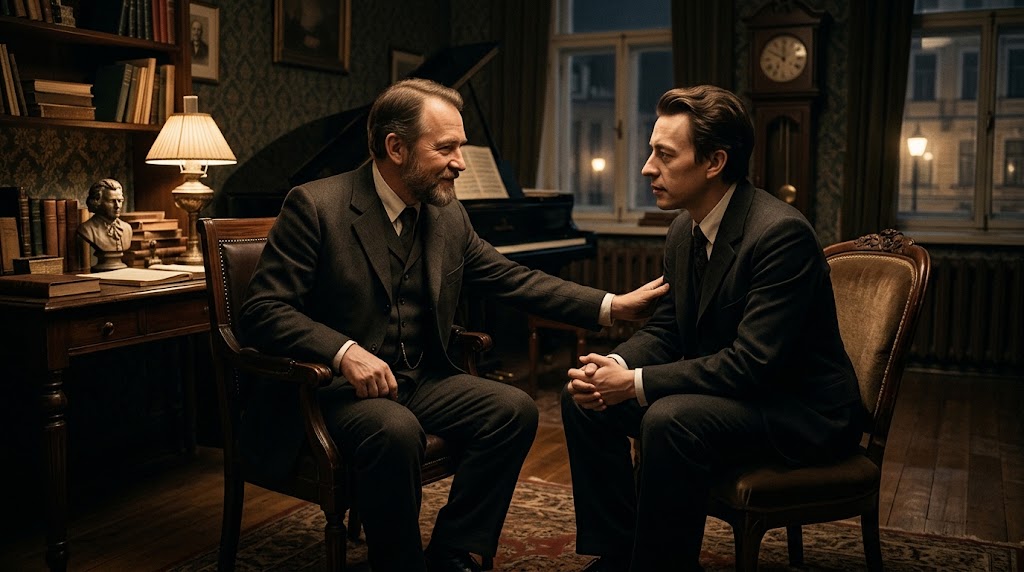
Rachmaninoff’s family encouraged him to seek help from Dr. Nikolai Dahl, a physician who was also an amateur musician. Through a series of sessions that included hypnosis and repeated words of encouragement, Dahl helped Rachmaninoff regain his confidence.
Rachmaninoff later credited Dahl with helping him return to composition. Gradually, the music began to come again, and one of the works that emerged was his Piano Concerto No. 2 in C Minor, Op. 18.
Completed in 1901, the concerto was dedicated to Dahl in gratitude for helping Rachmaninoff regain his confidence. Its success helped restore his reputation, and it became one of his most beloved works.
From Uncertainty to Triumph
Rachmaninoff’s Piano Concerto No. 2 begins with deep, resonant piano chords, followed by the orchestra as the music gradually unfolds into a rich, expansive sound.
The first movement blends sweeping melodies with moments of tension and warmth. The second is gentler, with a lyrical melody floating above the piano’s flowing accompaniment.
In the final movement, the music grows more urgent and expansive, weaving together tenderness, longing, and a sense of renewed confidence before reaching a triumphant conclusion.
Knowing what Rachmaninoff went through before composing this concerto makes its journey from uncertainty to triumph all the more meaningful.
The Difference Encouragement Can Make
Many of us know what it feels like to lose confidence in our abilities. During difficult seasons, the encouragement of another person can help us rediscover the gifts we thought we had lost.
“Therefore encourage one another and build each other up, just as in fact you are doing.” — 1 Thessalonians 5:11
Encouragement does not remove every obstacle, but it can give someone the strength to take the next step. A patient listener or a timely word can make a greater difference than we realize.
Rachmaninoff dedicated his concerto to the doctor who helped him regain his confidence. We may never know how far our own encouragement will reach, but even a small act of kindness can leave a lasting impact.
Explore Rachmaninoff’s complete piano concertos here. (affiliate link)
Read previous: Claude Debussy and Children’s Corner: A Father’s Musical Gift