Schubert’s Trout Quintet (D.667): Friendship and Joy in Chamber Music
Schubert is often associated with solitude and introspection, but the Trout Quintet reveals a different side of his music—one shaped by friendship and shared music-making.
Written in 1819 in Steyr, Austria, it grew out of a world of friends, conversation, and music, becoming one of Schubert’s brightest chamber works.
Music Made Among Friends
The Trout Quintet emerged from the world of Schubertiads—informal gatherings where friends played, listened, and shared music together. Music felt less like a performance and more like a conversation.
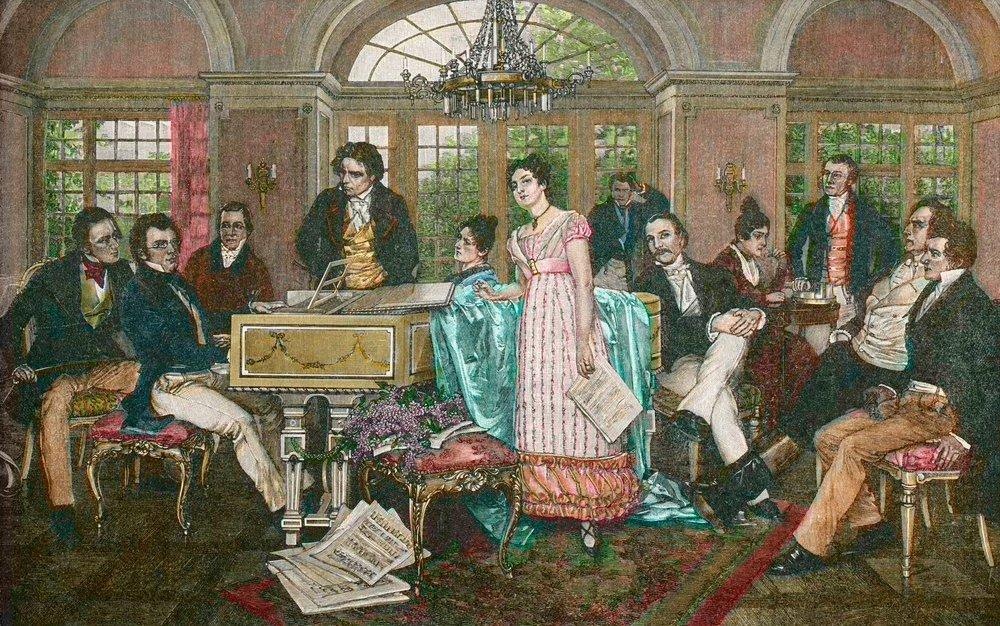 Schubertiade gathering (AI illustration)
Ideas pass naturally between instruments—piano, violin, viola, cello, and double bass—creating a sense of flow and responsiveness. Rather than one voice leading and others following, the music grows through exchange.
The Ensemble and the “Trout” Theme
One of the reasons the Trout Quintet sounds so distinctive is its instrumentation: piano, violin, viola, cello, and double bass. This creates a rare sense of balance and clarity, especially in the fourth movement, which gives the work its nickname.
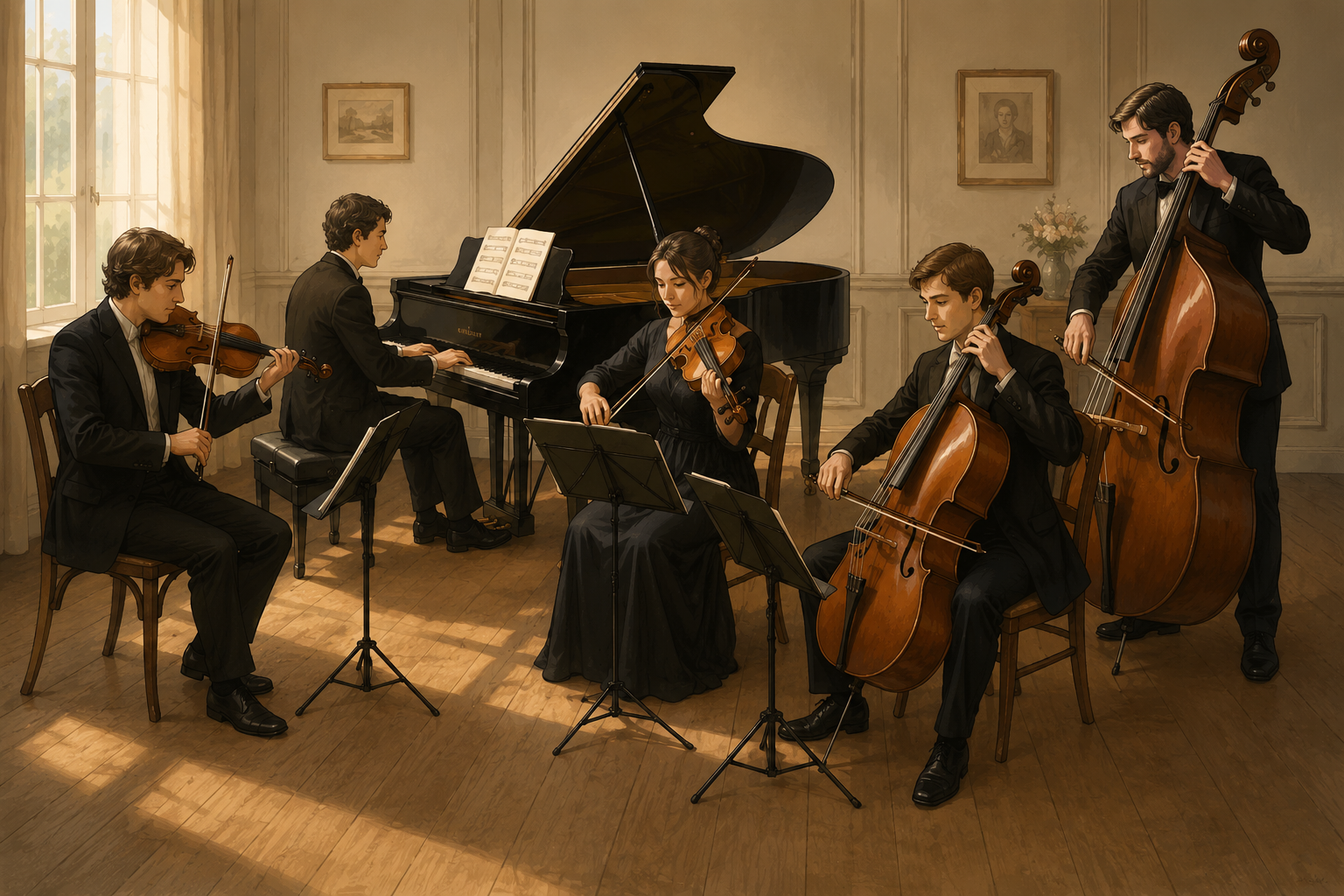 Trout Quintet instrumentation
The fourth movement is a set of variations on Schubert’s earlier song Die Forelle (The Trout), a Lied about a trout swimming freely in a clear stream until it is caught. The melody remains recognizable throughout the variations, but is continually reshaped in different colors and textures.
As you listen to the piece, notice how the instruments interact, passing musical ideas between piano and strings in a lively, responsive flow—like a gentle dialogue of friendship and shared joy.
A Christian Reflection on Friendship
In the interplay of instruments, there is a sense of order and peace beyond music itself. As voices enter and respond to one another, they suggest the quiet harmony of shared life and attentive listening.
“How good and pleasant it is when God’s people live together in unity!” (Psalm 133:1)
This unity is not uniformity, but a space where different voices remain distinct while still forming one whole—much like the texture of this music.
Final Reflection
The Trout Quintet reveals a brighter, more social side of Schubert’s musical world, centered on companionship and shared musical joy.
You can listen to a complete recording of the Trout Quintet here. (affiliate link)
Read previous: Schubert Piano Sonata D.960: When Silence Becomes Music