Should Christians Own Bitcoin? A Question Many Churches Aren’t Discussing Yet
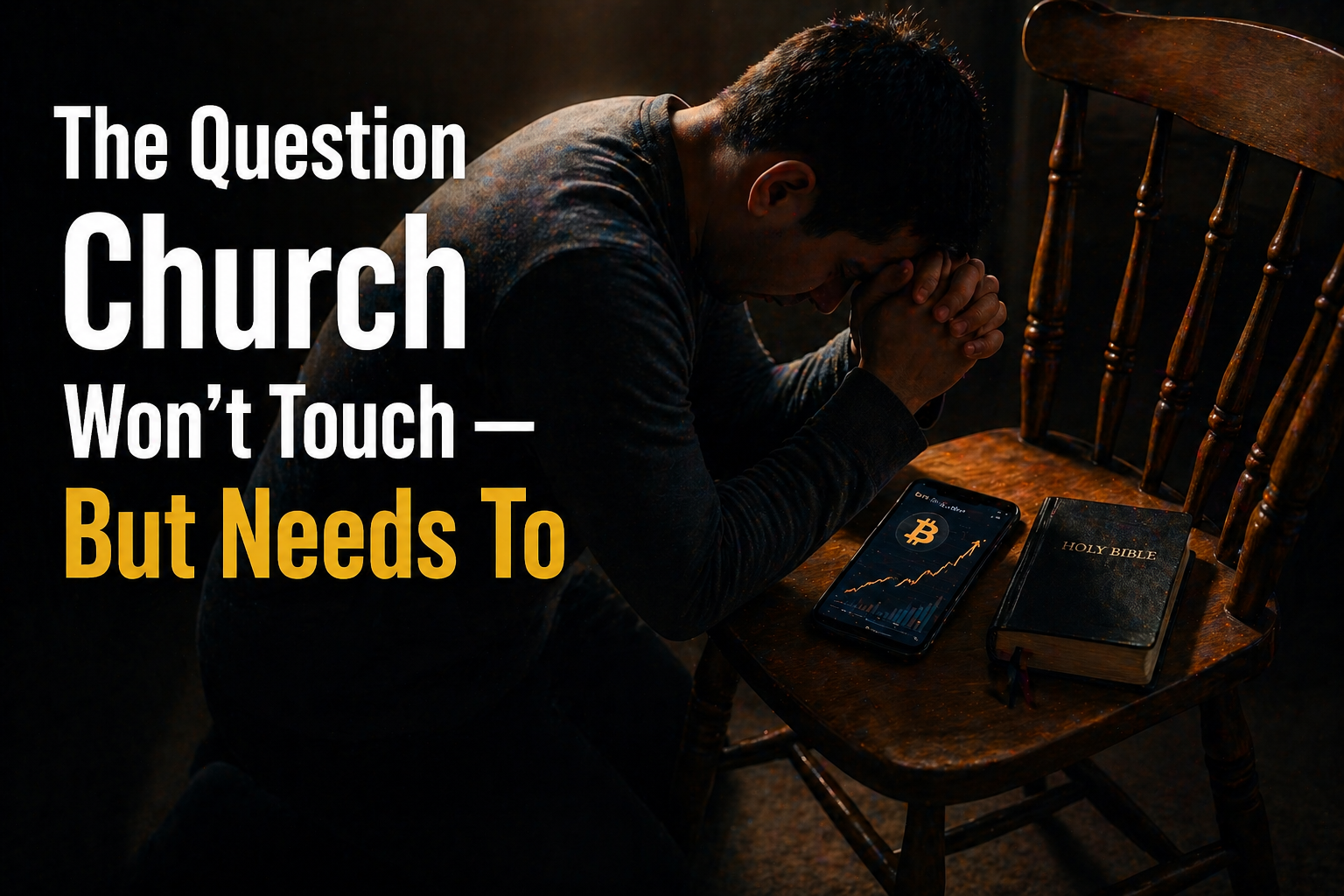
I'll never forget the moment a friend from my home church pulled me aside after a Sunday service. He'd made $40,000 on Ethereum in 2021. Then he lost most of it by 2022. He wasn't asking me about money. He was asking me whether he'd sinned — whether greed had driven him and he hadn't seen it.
That conversation stayed with me. Because the real question Christians face with Bitcoin isn't technical. It's spiritual.
Is this wisdom or worldliness? Stewardship or speculation? Freedom or a snare?
Let me be upfront: the Bible doesn't mention Bitcoin. But it has a great deal to say about money, risk, greed, stewardship, and the condition of the heart. And those principles apply here.

First, let's name the real concern: is it gambling?
This is the most common objection, and it deserves a serious answer. Gambling, in a biblical sense, is typically characterized by: (1) seeking gain without contributing value, (2) placing hope in chance rather than providence and work, and (3) a heart orientation toward get-rich-quick shortcuts.
Does buying Bitcoin fit that description? It depends — entirely — on the person and the approach.
If you're treating Bitcoin like a slot machine, betting money you can't afford to lose on price movements you can't predict, hoping for a windfall — that's gambling. The asset class doesn't matter. You could gamble with real estate or baseball cards. The sin is in the heart posture.
On the other hand, if you understand what Bitcoin is, you believe in its long-term value proposition, you invest a modest portion of your savings that you could afford to lose without financial hardship, and you hold it with open hands — that looks a lot more like the kind of wise, diversified stewardship Proverbs commends.
What does wise stewardship actually look like here?
Proverbs 21:5 says, "The plans of the diligent lead to profit as surely as haste leads to poverty." Notice the contrast: diligent planning vs. haste. That's the test.
Are you buying Bitcoin because you've done your homework and you're thinking five to ten years out? Or because someone in your small group mentioned it and you have FOMO?
Ecclesiastes 11:2 gives us what might be the oldest investment advice in recorded history: "Invest in seven ventures, yes, in eight; you do not know what disaster may come upon the land." Diversification. Don't put everything in one place. Bitcoin as a small, considered slice of a broader financial plan is very different from Bitcoin as your entire retirement strategy.
The idol test
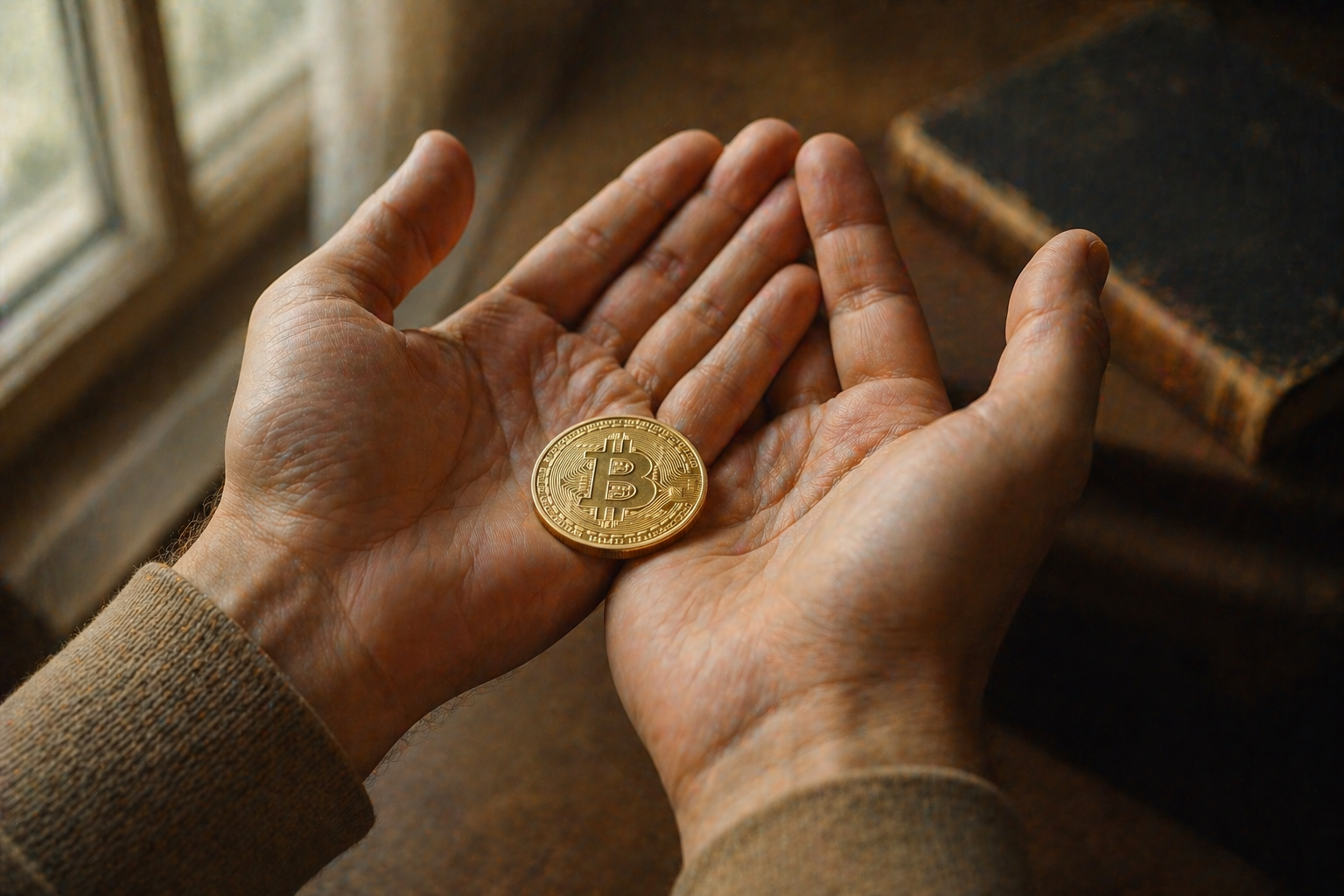
Here's the most important question — not "is Bitcoin wise?" but "what does Bitcoin mean to me?"
Jesus said in Matthew 6:21, "For where your treasure is, there your heart will be also." This verse works in both directions. Your financial decisions reveal your heart. But they also form your heart. If you find yourself checking Bitcoin prices first thing in the morning, if gains make you feel secure and dips make you anxious, if your sense of peace is tied to a chart — that's a spiritual problem. And it's a problem that would exist whether you owned Bitcoin, Apple stock, or rental properties.
The question isn't whether Bitcoin is inherently sinful. The question is whether you can hold it without it holding you.
A practical framework
Before any Christian engages with Bitcoin — buying, selling, or just learning — here are four questions worth sitting with:
- Do I understand it? You should be able to explain it to your grandmother. If you can't, you don't understand it well enough to invest in it.
- Can I afford to lose this? Not "probably won't," but "would my family's wellbeing be okay if this went to zero?"
- Am I chasing a dream or making a plan? Is this driven by FOMO, a friend's success story, or a sermon about prosperity? Or by genuine, prayerful discernment?
- Does this bring peace or anxiety? Your emotional response to your financial decisions is spiritually diagnostic.
None of this makes the decision for you. But it gives you the right questions to take to God, to your spouse, and to trusted counsel.
References:
Crossmap Blog Publication - Kingdom Finances: https://blogs.crossmap.com/kingdomfinances
Coming up in Part 3: "What Would the Deacons of the Early Church Say About Bitcoin? Ancient Wisdom for a Digital Economy"