What Does it Mean That God is Sovereign?
Few truths bring more comfort—and sometimes more questions—than the sovereignty of God. Christians often say, “God is in control,” but what does that really mean? Does God rule over everything, or only certain parts of life? If God is sovereign, do our choices matter? And how can God’s sovereignty be good news when life is painful?
The Bible teaches that God is absolutely sovereign. Nothing happens outside of His authority, knowledge, or purpose. He rules over nations, nature, history, and even the details of our daily lives. Understanding God’s sovereignty helps us trust Him more deeply, especially when circumstances are confusing or difficult.
As the Reformer John Calvin famously wrote:
“Ignorance of providence is the greatest of all miseries; the knowledge of it the highest happiness.”
The more we understand God’s sovereign rule, the more confidence we can have in His care for us.
Related: The God of His Word
What Is God’s Sovereignty?
God’s sovereignty means that He possesses supreme authority, power, and control over all things. Nothing happens apart from His knowledge, permission, or purpose. He is not merely the most powerful being in the universe; He is the Creator and ruler of the universe itself.
The Bible repeatedly presents God as the King over all creation. Unlike earthly rulers whose authority is limited by geography, time, or circumstance, God’s reign extends everywhere and over everything. His rule is absolute because His power is absolute.
Jonathan Edwards expressed this truth succinctly:
“Absolute sovereignty is what I love to ascribe to God.”
Isaiah 46:9-10 captures this biblical reality:
“I am God, and there is no other; I am God, and there is none like me, declaring the end from the beginning and from ancient times things not yet done, saying, ‘My counsel shall stand, and I will accomplish all my purpose.'”
Notice that God does not merely predict the future; He declares it. He knows the end from the beginning because He has ordained history according to His perfect plan.
Related: 100+ Free Downloadable Resources for Your Spiritual Growth
Does the Bible Teach That God Controls Everything?
One of the most common questions about God’s sovereignty is whether it extends to every detail of life or only to major events. Scripture consistently teaches that God’s rule encompasses both.
The Bible reveals God’s sovereignty over nature. He sends rain, controls the winds, governs the seasons, and sustains all living things. Jesus demonstrated this authority when He calmed the storm with a word, showing that creation itself obeys its Creator.
God is also sovereign over nations and rulers. Daniel 2:21 says:
“He removes kings and sets up kings.”
Perhaps no one summarized God’s comprehensive rule better than Abraham Kuyper:
“There is not a square inch in the whole domain of our human existence over which Christ, who is Sovereign over all, does not cry: ‘Mine!'”
From the rise and fall of empires to the smallest details of everyday life, God’s sovereign hand is at work accomplishing His purposes.
Related: Is God Angry With Sinners?
God’s Sovereignty in Salvation
The doctrine of God’s sovereignty is especially evident in salvation. Reformed theology teaches that salvation is ultimately God’s work from beginning to end.
Before the foundation of the world, God chose a people for Himself. Ephesians 1:4-5 teaches that believers were chosen in Christ and predestined for adoption according to God’s purpose and will.
Because humanity is spiritually dead in sin, people do not naturally seek God or submit to Him. Therefore, God graciously takes the initiative, opening blind eyes and drawing sinners to Christ.
John MacArthur captures this truth well:
“God is not reacting to the world; the world is responding to God’s eternal plan.”
Salvation is not God’s backup plan. It is the unfolding of His eternal purpose to redeem a people for His glory through Jesus Christ.
Related: How to Seek Happiness in God
Does God’s Sovereignty Eliminate Human Responsibility?
Many people assume that if God is sovereign, human choices must not matter. Yet Scripture consistently teaches both God’s sovereignty and human responsibility.
Human beings make real choices. We think, act, decide, obey, and disobey. Throughout the Bible, people are held accountable for their actions because those actions genuinely belong to them.
One of the clearest examples is the crucifixion of Jesus Christ. Acts 2:23 says:
“This Jesus, delivered up according to the definite plan and foreknowledge of God, you crucified and killed by the hands of lawless men.”
God ordained the event, yet those who carried it out remained fully responsible for their actions.
Rather than seeing these truths as contradictory, Reformed theology embraces both because Scripture teaches both.
Related: Why Should I Trust God? 7 Biblical Reasons to Put Your Faith in Him
Does God’s Sovereignty Mean We Are Robots?
A common objection to God’s sovereignty is the idea that it reduces human beings to robots or puppets. If God controls everything, are our choices real?
The Bible answers with a clear yes. Human beings make genuine decisions according to their desires and intentions. We are not forced against our will. Rather, we act according to what we most desire.
Throughout Scripture, God accomplishes His sovereign purposes through the willing actions of people. Joseph’s brothers sold him into slavery. Pharaoh hardened his heart. Judas betrayed Christ. Yet God used each of these events to fulfill His greater purposes.
The mystery should humble us, but it should not cause us to deny either God’s sovereignty or human responsibility.
Related: What Is the Gospel? A Clear and Biblical Explanation of the Good News
If God Is Sovereign, Why Should We Pray?
One of the most common questions people ask about God’s sovereignty is this: If God has already determined what will happen, why should we pray?
At first glance, prayer and God’s sovereignty may seem incompatible. If God’s plans cannot be changed, does prayer really accomplish anything?
The Bible answers with a resounding yes.
Scripture teaches that God not only ordains the ends but also the means by which those ends are accomplished. In other words, God has sovereignly determined both what will happen and how it will happen. Prayer is one of the means God has appointed to accomplish His purposes.
Consider the words of James:
“You do not have, because you do not ask.” (James 4:2, ESV)
God invites His people to bring their requests before Him, not because He lacks information, but because He has chosen to work through the prayers of His children.
Jesus Himself frequently prayed despite being fully aware of the Father’s sovereign plan. If anyone understood God’s sovereignty, it was Christ. Yet His earthly ministry was marked by continual prayer.
Far from discouraging prayer, God’s sovereignty encourages it. If God were not sovereign, we would have little reason to pray. Prayer would merely be wishful thinking. But because God rules over all things, we can pray with confidence, knowing that He has both the power and authority to answer according to His perfect will.
As Charles Spurgeon observed:
“Prayer is the slender nerve that moves the muscle of omnipotence.”
Prayer is not an attempt to force God to do our will. It is a privilege through which God accomplishes His will in and through His people.
Related: Why Are Christians Hated? What the Bible Says About Persecution
If God Is Sovereign, Why Should We Share the Gospel?
Another common objection concerns evangelism. If God has chosen those who will be saved, why should Christians preach the gospel?
The answer is simple: because God commands it.
Before ascending to heaven, Jesus instructed His followers:
“Go therefore and make disciples of all nations.” (Matthew 28:19, ESV)
God’s sovereignty in salvation does not eliminate evangelism; it guarantees its success.
The Apostle Paul understood God’s sovereign election better than perhaps anyone else in Scripture. Yet he was also one of the most passionate evangelists who ever lived. He endured imprisonment, persecution, shipwrecks, and hardship to proclaim the gospel because he knew God uses the preaching of His Word to bring His people to faith.
In fact, God’s sovereignty provides confidence in evangelism. If salvation ultimately depended on human persuasion, no one could be certain of success. But because salvation belongs to the Lord, Christians can faithfully proclaim the gospel knowing that God will save those He has called.
John MacArthur writes:
“The doctrine of election is not a barrier to evangelism; it is the only hope for evangelism.”
When believers share the gospel, they are participating in God’s sovereign plan to gather His people from every tribe, language, people, and nation.
God ordains the end—the salvation of His people—and He also ordains the means—the preaching of the gospel.
Related: 10 Essential Doctrines Every Christian Must Know (According to the Bible)
God’s Sovereignty and Suffering
The doctrine of God’s sovereignty becomes especially precious during seasons of suffering.
Every believer eventually encounters hardship, disappointment, loss, illness, or tragedy. In those moments, the sovereignty of God reminds us that suffering is never meaningless or outside of His control.
Charles Spurgeon offered this comforting reminder:
“When you can’t trace His hand, trust His heart.”
Romans 8:28 assures believers:
“And we know that for those who love God all things work together for good, for those who are called according to his purpose.”
God does not promise that every circumstance will be pleasant. He does promise that every circumstance will ultimately serve His good purposes for His people.
The cross itself stands as the greatest example. The worst evil ever committed became the means through which God accomplished the greatest good.
Related: 10 More Essential Doctrines Every Christian Should Know
Why God’s Sovereignty Is Good News
Some people view God’s sovereignty as frightening because they associate absolute power with human tyranny. But God’s sovereignty is good news because His power is joined to perfect wisdom, holiness, justice, and love.
R.C. Sproul famously observed:
“If there is one single molecule in this universe running around loose, totally free of God’s sovereignty, then we have no guarantee that a single promise of God will ever be fulfilled.”
That insight reveals why God’s sovereignty matters so deeply. Every promise in Scripture rests upon God’s ability to accomplish His will. Because God reigns over all things, believers can trust that His promises will never fail.
His sovereignty guarantees that evil will not ultimately triumph and that His kingdom will come exactly as He has promised.
Related: Can We Trust the Bible?
How Should We Respond to God’s Sovereignty?
Understanding God’s sovereignty should transform the way we live.
First, it should lead us to worship. When we recognize God’s supreme authority and power, our hearts should respond with awe and reverence.
Second, it should produce humility. We are creatures, not the Creator. Every blessing we enjoy comes from His hand.
Third, God’s sovereignty should encourage trust. Even when circumstances seem uncertain, God remains on His throne.
As John Piper reminds us:
“God is most glorified in us when we are most satisfied in Him.”
Finally, God’s sovereignty should motivate obedience. Scripture never uses God’s sovereignty as an excuse for passivity. Instead, believers are called to pray, evangelize, serve, and obey, trusting that God works through the means He has ordained.
Conclusion
What does it mean that God is sovereign?
It means that God reigns supreme over all creation. He rules over history, nations, nature, salvation, and every detail of our lives. Nothing can frustrate His plans or diminish His authority.
For the Christian, God’s sovereignty is not merely a theological doctrine to be debated. It is a source of deep comfort and confidence.
Charles Spurgeon beautifully summarized this truth:
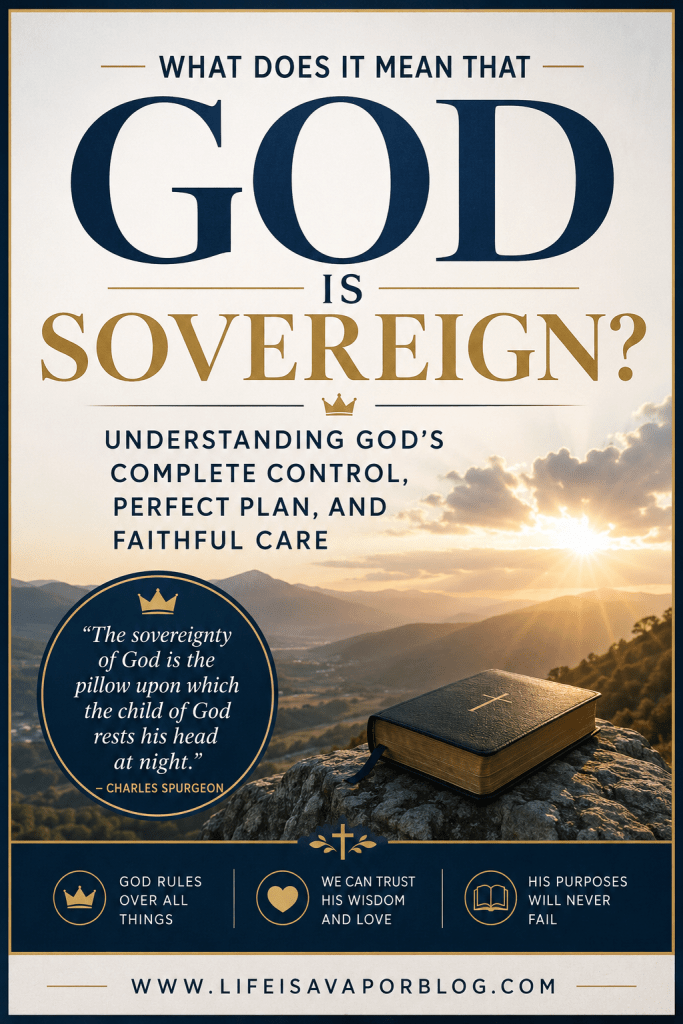
“The sovereignty of God is the pillow upon which the child of God rests his head at night.”
Because God is sovereign, believers can rest securely, knowing that the same God who rules the universe is their loving Father through Jesus Christ.
Frequently Asked Questions About God’s Sovereignty
Does God’s Sovereignty Mean God Is Responsible for Sin?
No. Scripture teaches that God is absolutely sovereign, yet He is not the author of sin.
God ordains all that comes to pass, but He does so in a way that does not violate His holiness or make Him morally responsible for evil. Human beings willingly commit sinful acts and remain accountable for their choices.
While the Bible clearly teaches both truths, it does not fully explain the mystery of how they work together.
Deuteronomy 29:29 reminds us:
“The secret things belong to the LORD our God.”
Christians should affirm what Scripture teaches even when our finite minds cannot fully comprehend it.
Does God’s Sovereignty Mean Our Choices Do Not Matter?
Not at all.
The Bible consistently teaches that human choices have real consequences. People are commanded to repent, believe, obey, pray, and follow Christ.
God’s sovereignty does not make our decisions meaningless. Rather, God accomplishes His sovereign purposes through the real choices and actions of human beings.
Because our choices matter, Scripture repeatedly calls us to live faithfully and responsibly before God.
Is God’s Sovereignty Compatible with Human Free Will?
The answer depends on what is meant by “free will.”
Reformed theology teaches that people freely choose according to their desires. We are not coerced or forced against our will. However, because of sin, our desires are naturally opposed to God until He changes our hearts through His grace.
Therefore, God’s sovereignty and human freedom are not enemies. Human beings freely choose what they desire, while God sovereignly governs all things according to His purposes.
Does God’s Sovereignty Mean Fatalism?
No.
Fatalism teaches that events occur according to impersonal fate and that human actions are ultimately meaningless.
Biblical sovereignty is entirely different.
The God of Scripture is personal, wise, loving, and actively involved in His creation. He hears prayer, commands obedience, responds to His people, and works all things for His glory and their good.
Christians do not believe in fate. They believe in a sovereign Father who lovingly governs all things.
How Can God’s Sovereignty Be Comforting During Trials?
Because it assures believers that suffering is never random.
If God were not sovereign, pain could be meaningless and purposeless. But because God rules over all things, Christians can trust that He is working even difficult circumstances for their good and His glory.
The cross of Christ provides the ultimate example. What appeared to be history’s darkest moment became the means by which God accomplished salvation for sinners.
When believers suffer, they can cling to the promise that God’s purposes are always wise, even when they are difficult to understand.
If this article was helpful, please share it!