Author Dave Hataj Provides Blueprint for Building a Lasting Legacy in 'The Craftsman's Code'
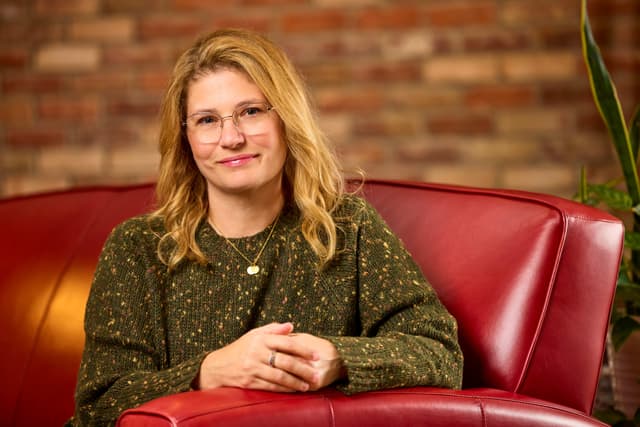
 Photo image courtesy of Getty Images via Unsplash.
Author Dave Hataj has long questioned the long-standing assumption that a university degree is the preferred path to success. He argues that in doing so, we often overlook the dignity, value, and purpose found in skilled trades and craftsmanship.
In his latest book, The Craftsman’s Code, Hataj invites readers to rethink how we evaluate meaningful work—and to recognize the essential role craftsmen play in building our communities and economy.
As the president and co-owner of Edgerton Gears, a second-generation family business, Hataj has seen first-hand how character and craft not only lead to positive change but also forges a foundational legacy that benefits future generations.
I recently sat down with the engaging Hataj to discuss the ideas behind The Craftsman’s Code, the joy and satisfaction that comes with doing meaningful work, and how it can serve as a testimony of faithfulness and integrity to the world around us.
There are literally millions of books in the marketplace on a myriad of different subjects. You are writing about building a blueprint for a more meaningful life and legacy. Why should people take the time to read The Craftsman’s Code?
God's a worker, and He's called us to work. I just know so many young people, so many folks in general, who are desperate to understand their sense of purpose and belonging, and who God created them to be.
The Church has not done a good job of helping people understand how God has called us individually, gifted us individually, to be really unique and bearers of His Kingdom, whatever our sphere of influence is. So, if you're struggling to figure out your purpose in life, even if you're older, I think you need to understand what God's called us all to be in His Kingdom.
For every author, there always seems to be a moment where you say to yourself, “I have to write this book!” For The Craftsman’s Code was there a moment like that for you?
Going back to 12 years ago, I started this class called The Craftsman with Character, and it's for kids like I was as a high school kid. I was kind of lost and didn’t do well in school, but I was a hands-on kid, a tech-ed kid. I found my happy place in a woodshop, machine shop, auto shop, all those shops. So, over the years, in running our family business, we're always in crisis as far as where there are enough young people coming into the trades and manufacturing to replace an aging demographic. My company was no different. We were trying to figure out where we were going to get young people?
And tech-ed departments across the nation have been greatly reduced or even shut down. And so, going all the way back to 2010, I was at our local high school and our tech ed teacher said, “Hey, could you help us resurrect our tech ed department?” So, that was kind of the genesis of going, okay, God, what do you want me to do? How do you want me to reach these kids that are like I was, when I just kind of felt lost? I call them the lost shop kids. They're usually down at the end of a long hall somewhere. They are late bloomers, and kind of awkward. I got my doctorate, of all things, but I'm not an academic. And out of that, I developed this thing called “The Craftsman with Character” class. And it's just a way for kids to get exposure to local businesses and the trades in manufacturing but also has a deep element of mentorship and character development.
Over the last 12 years, this book just came out, but for 10 years, I'm seeing this transformation in these kids, because of their mentoring relationships with people in our businesses. And I just saw this hunger and thirst for these kids to be mentored and to have a worldview that makes sense to them.
It was during the pandemic that I decided to write all this down. I need to really go deeper on a message to hopefully give young people a true vision of who God's called them to be.
This book challenges the thought that you need a university degree to succeed over perhaps learning a skilled trade. Why do you have this philosophy? What defines meaningful work?
That's a great question. Obviously our society has emphasized four-year university degrees and white-collar work to a huge extent, and there's just this built-in bias within the Church as well, and society at large, that blue-collar work is beneath us. It goes all the way back to the Greeks, where they thought not working was the ultimate, ideal life. And so, we've lived with this terrible theology and philosophy that work is demeaning, work is not worthwhile, and especially blue-collar, hands-on work. And over time, when I've lived in the shop making gears for equipment for companies all over the world, from toilet paper to paper products, to logging industry, to cans, all the modern conveniences that we have are made by machinists who make machines.
Trades people who build our houses and keep our streets clean, build our streets and electricity, everything. And so, I really had great mentors who woke me up to say, God is a worker, and all aspects of work are necessary to build a civilization. It goes all the way back to the creation mandate in Genesis, where we're told to build a civilization, help it to thrive, and manage the Earth. And so, over the years, I've just had great mentors that said, all work is necessary.
As a blue-collar worker, I've lived with the bias and folks taking us for granted, kind of demeaning us, and looking down on us. And so my hope is to really give dignity to everybody. I meet so many people in our trades and manufacturing that just don't feel like their lives matter because they're working on a job site. That’s one of my main motivations. How do we restore dignity?
The younger generation of today seems to be concerned about having a greater purpose. Why do you think the blue-collar trades are often ignored and neglected as a calling with divine purpose?
Our media is very biased and just looks down on the work. Even the term the “working class” is really derogatory. It’s as if all blue-collar work is seen as bad. On the old sitcom, Roseanne, her husband was portrayed as an overweight guy. You could see his (posterior), and he's a plumber. We just made fun of blue-collar people for so long. And in some ways, rightfully so, because when the Industrial Revolution happened, we moved people from being very creative and living off the land, to just factory jobs, which can be monotonous, soul-sucking work.
And so, factories have really given work a bad name over the years. But when you get down to it, Jesus was a master craftsman. He is our creator. He comes in the person of a craftsman in a family business. And so part of it is really getting over the stigma when people say, well, I want a better life for my children. You then define that. What is a better life? Is it just having more stuff? Is it buying into materialism? Or is it having a really deeper sense of purpose, of using your creative talents and who God made you to be a contributor to the greater good? That's what we're all looking for, is that deeper sense.
You obviously think God is concerned about “regular” jobs? Why?
If we take a hard look at the teachings of Jesus, we find that He talks more about the Kingdom of God than He does about salvation. He only mentions salvation approximately five times in the Gospels, but he mentions the Kingdom of God over 100 times. So, the Kingdom of God is God's reign, His rule, bringing in a completely new way of life in our world. And if you're going to have that thought, that means it's everywhere.
Civilization in the Kingdom is everything from laying a hardwood floor to running power lines to your house. It's everywhere. We're building a civilization. So if Scripture and Jesus' teaching is real about bringing in the Kingdom, we need all hands on deck.
God is not just concerned about our souls, He's concerned about the entire earth and how we, as believers, manage that and usher it in through whatever sphere of influence He's assigned to us.
After people have had a chance to read The Craftsman’s Code, what would you like your readers to take away from that experience? What is your greatest hope for the book?
This book is for everybody, but especially for young people. I just want them to recognize that they have a place in this world. And I don't think that a craftsman’s life is an accident, or there's not much to it, or their work doesn't matter. The whole journey of just walking with God, walking with Jesus through your life is a life well worth living to its fullest. I've had people tell me, ‘You're too zealous, and that will wear off.’ I'm like, what? We're working with the creator of the universe. Life is an adventure.
And I want people to understand that when you really walk with God, life is a lifelong adventure. He wants to work in you and through you, in ways that we never thought imaginable. And so, that's my big passion. I wish people would experience a deeper walk with God through all of life.
To Purchase The Craftsman's Code:
WATCH CRAFTSMAN WITH CHARACTER: A PATH FOR THE NEXT GENERATION: