[Bible & IT Part 1] They Were Building to the Cloud. God Came Down Instead. - Genesis 11
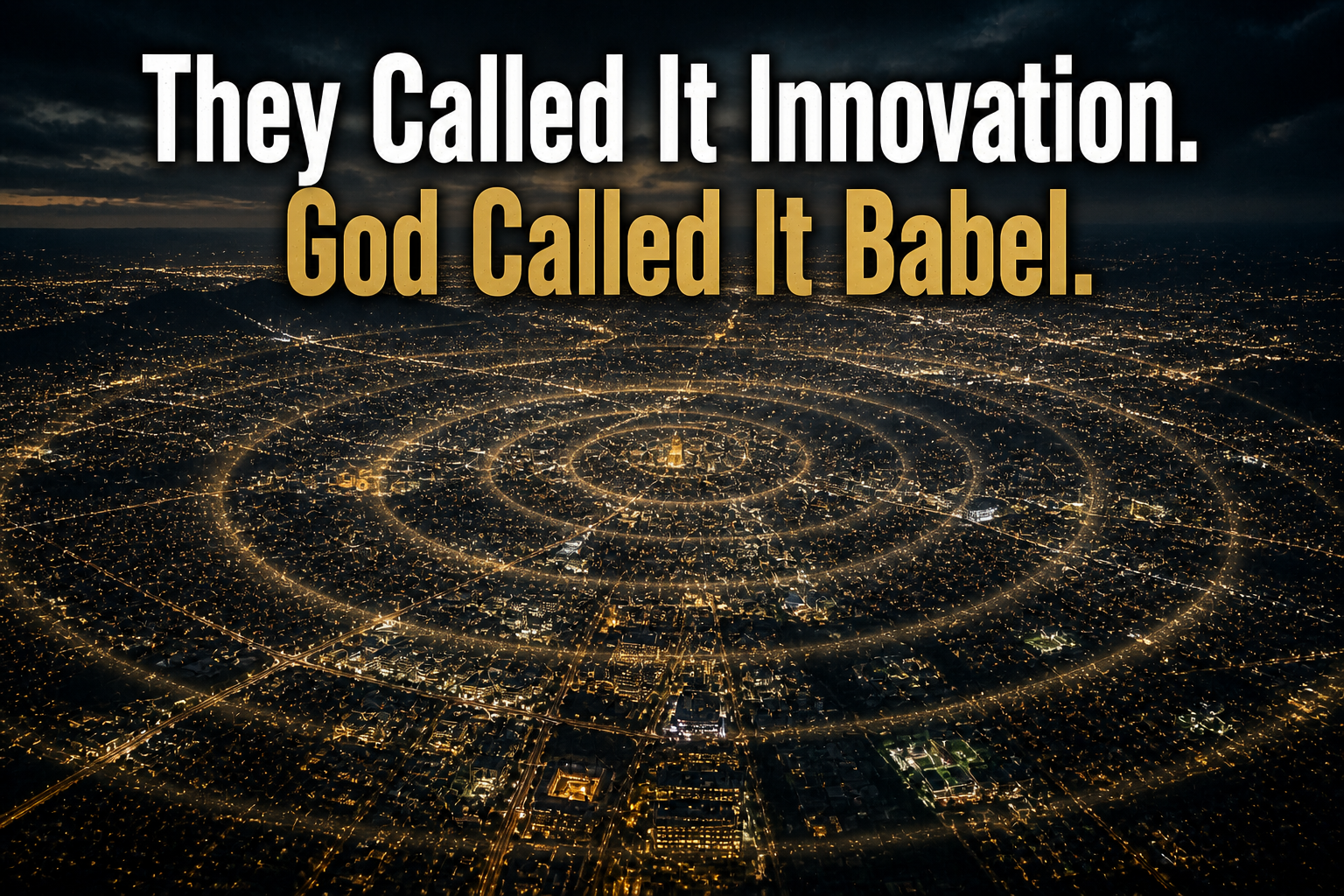 Genesis 11, Silicon Valley, and the Hubris Loop
You've heard the pitch before. Maybe you've given it.
"We're going to change the world. We're going to connect everyone. We're going to democratize access, disrupt the incumbents, and make the future arrive faster."
There's something genuinely beautiful about that ambition. I've felt it — that particular electricity in a founding team when everyone believes you're building something that matters. When the problem is real, the team is sharp, and the roadmap feels like destiny.
But there's also something in that pitch that's very, very old.
"Come, let us build ourselves a city, with a tower that reaches to the heavens, so that we may make a name for ourselves."
— Genesis 11:4 (NIV)
The Tower of Babel wasn't built by stupid people. It was built by the most technologically advanced civilization of its moment — unified, coordinated, speaking the same language, executing against a shared vision. By every metric we'd use to evaluate a startup, Babel was crushing it.
One goal. One language. One stack. Unlimited runway (they literally had all of humanity). And an ambition that, the text says, made even God take notice: "If as one people speaking the same language they have begun to do this, then nothing they plan to do will be impossible for them." (v.6)
God wasn't threatened. He was reading the room. And what He saw was a civilization using its greatest technological moment to build a monument to itself.
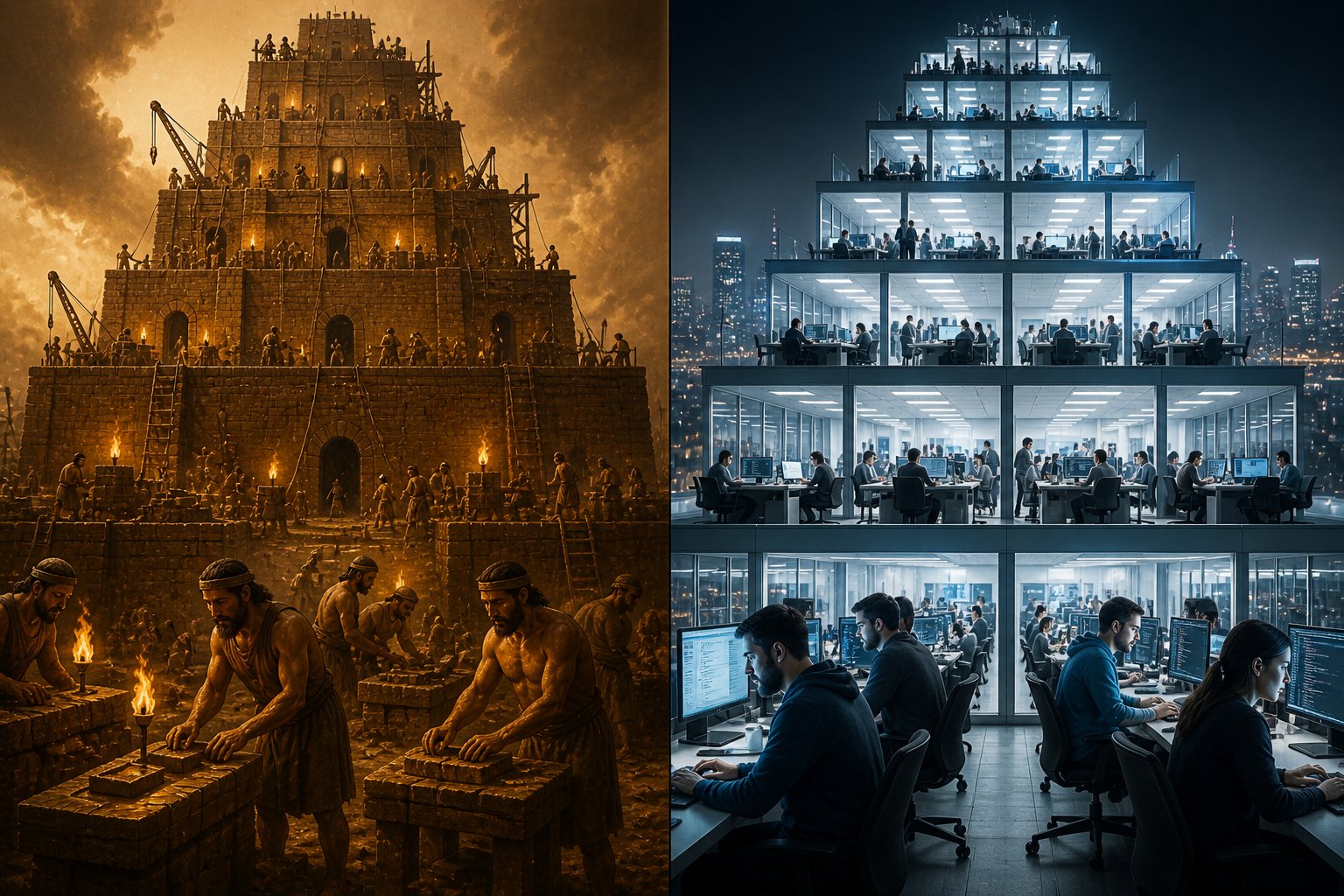
Let's call the pattern what it is: the Hubris Loop.
It goes like this. Breakthrough capability arrives. Brilliant people deploy it at scale. The deployment changes human civilization. The people who deployed it become powerful and celebrated. They begin to believe their next breakthrough will also change civilization. They begin to believe they are the main characters of history. They stop asking "What should we build?" and start assuming that whatever they can build, they should.
You can map this onto any decade in Silicon Valley without trying very hard. The social network that was going to connect humanity and ended up fracturing it. The platform that was going to democratize information and ended up being the primary vector for coordinated disinformation. The AI lab that published safety research with one hand and shipped increasingly powerful systems with the other, because the competitive pressure was too intense to stop.
Not evil people. Brilliant people. Babel people. Nothing they plan to do will be impossible for them — and that turned out to be the problem.
The Babel story doesn't end with punishment. It ends with scattering.
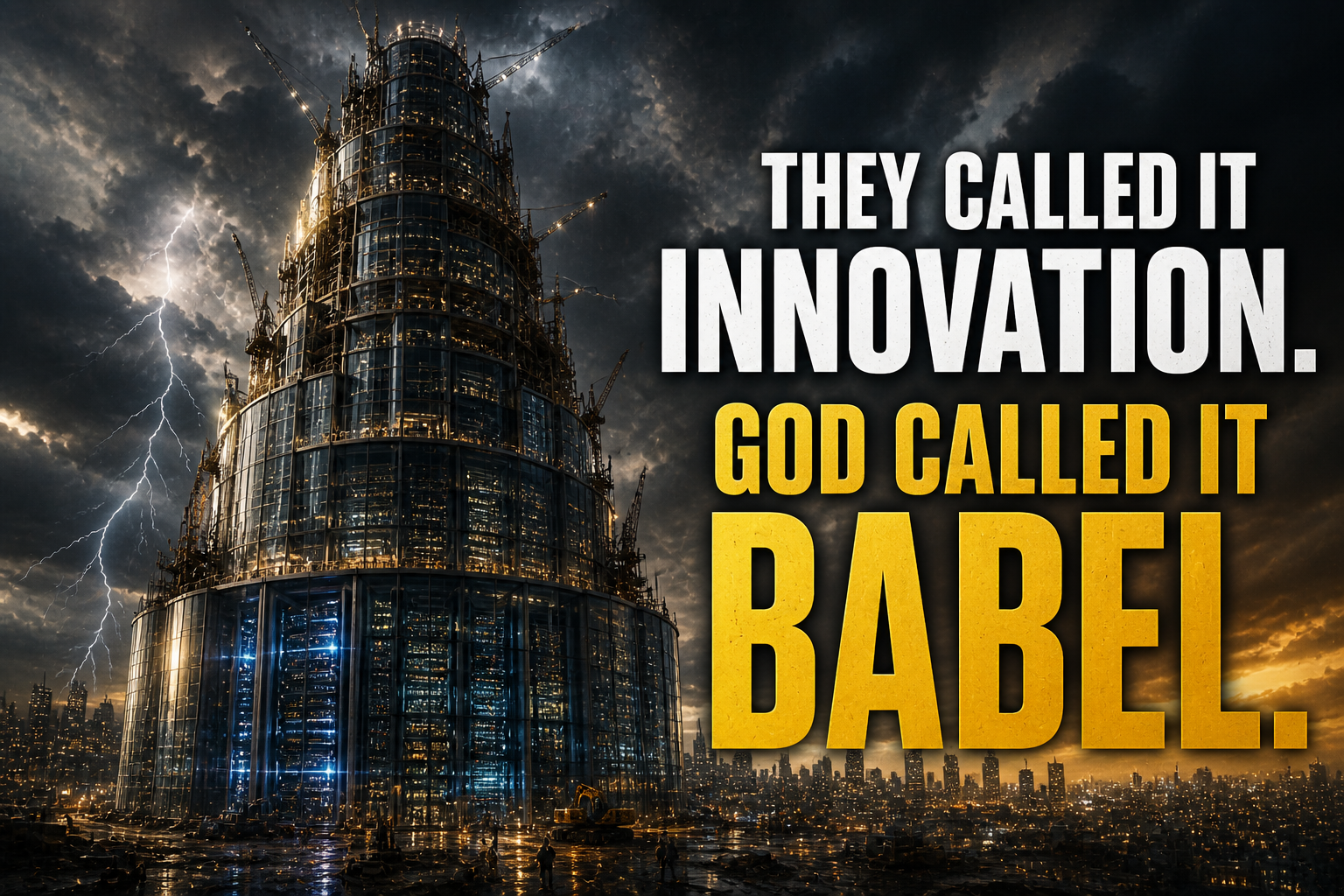
God doesn't destroy the tower. He confuses the language and disperses the builders. Which is a strange mercy, when you think about it. The project stops — but the people survive. They spread out. They find other things to build. The centralized monument to human self-sufficiency gets replaced by distributed human culture, which turns out to be more resilient, more creative, more generative than a single tower ever could have been.
The internet was supposed to be Pentecost — a reversal of Babel, a reunification of languages and peoples. And in some ways it genuinely is. Real-time translation. Global collaboration. The Gospel reaching places that no missionary could physically go.
But every technology carries the Babel temptation inside it. The temptation to scale past wisdom. To build faster than you can understand the consequences. To make a name for yourself using tools powerful enough to reshape civilization, without asking whether you have the moral framework to handle that kind of power.
Here's what I think the Babel story gives Christian technologists that nothing else does:
A category for the moment before it goes wrong.
Not after the backlash. Not after the congressional hearing. Not after the whistleblower. Before. The Babel moment — the moment when the capability is real, the vision is exciting, the team is aligned, and everything is working — that's exactly when the question of for whose glory? matters most.
God asked it at Babel. He's asking it now.
"So that we may make a name for ourselves" is a mission statement. It's just not the right one.
What's yours?
References:
The Gospel Coalition — Babel, Pentecost and the Internethttps://www.thegospelcoalition.org
Crossmap Blog - Faith Tech: https://blogs.crossmap.com/faithtech
The Atlantic — Has Silicon Valley Lost Its Way?https://www.theatlantic.com
Tristan Harris / Center for Humane Technologyhttps://www.humanetech.com