[Bible & IT Part 3] The Algorithm Knows You. God Knew You First. - Psalm 139
Psalm 139 & The Age of Surveillance Capitalism
Last year, I talked to a friend about wanting to visit Japan. Just talked — didn't search it, didn't text it, didn't type it anywhere. Two hours later, my Instagram feed had three ads for Tokyo hotels.
Maybe it was coincidence. Maybe I'd searched something adjacent weeks ago and the model finally connected the dots. Doesn't matter. The feeling was the same: something is watching.
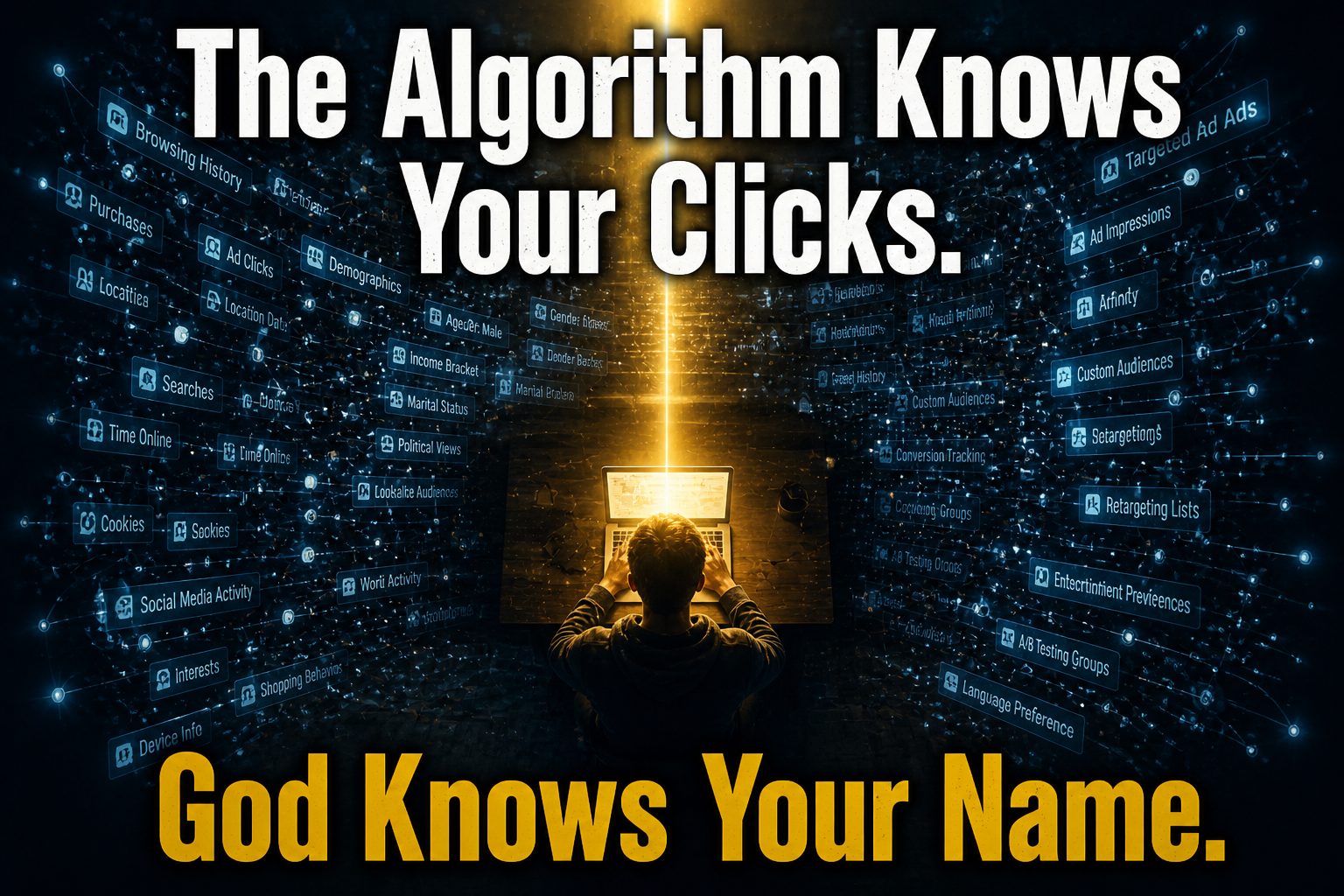
We are living in the age of the most sophisticated human surveillance apparatus ever built. Not surveillance in the paranoid, black-helicopter sense — but in the cold, probabilistic, business-model sense. Every scroll, every pause, every re-read, every abandoned cart, every search you made at 2am and immediately regretted — it's logged. It's weighted. It feeds a model that builds a version of you more detailed, in some narrow ways, than the version your closest friends carry.
The data knows your spending patterns better than your spouse. The recommendation engine knows your insecurities better than your therapist. TikTok's algorithm reportedly takes 35 minutes to figure out what kind of lonely you are.
And into this world walks Psalm 139. Written by a shepherd-king who had no concept of machine learning, and somehow nailed it anyway.
"You have searched me, LORD, and you know me. You know when I sit and when I rise; you perceive my thoughts from afar. You discern my going out and my lying down; you are familiar with all my ways."
— Psalm 139:1–3 (NIV)
Before you read that as comforting — sit with the discomfort first.
Because David is describing something that, if a corporation did it, we'd call it a terms-of-service violation.
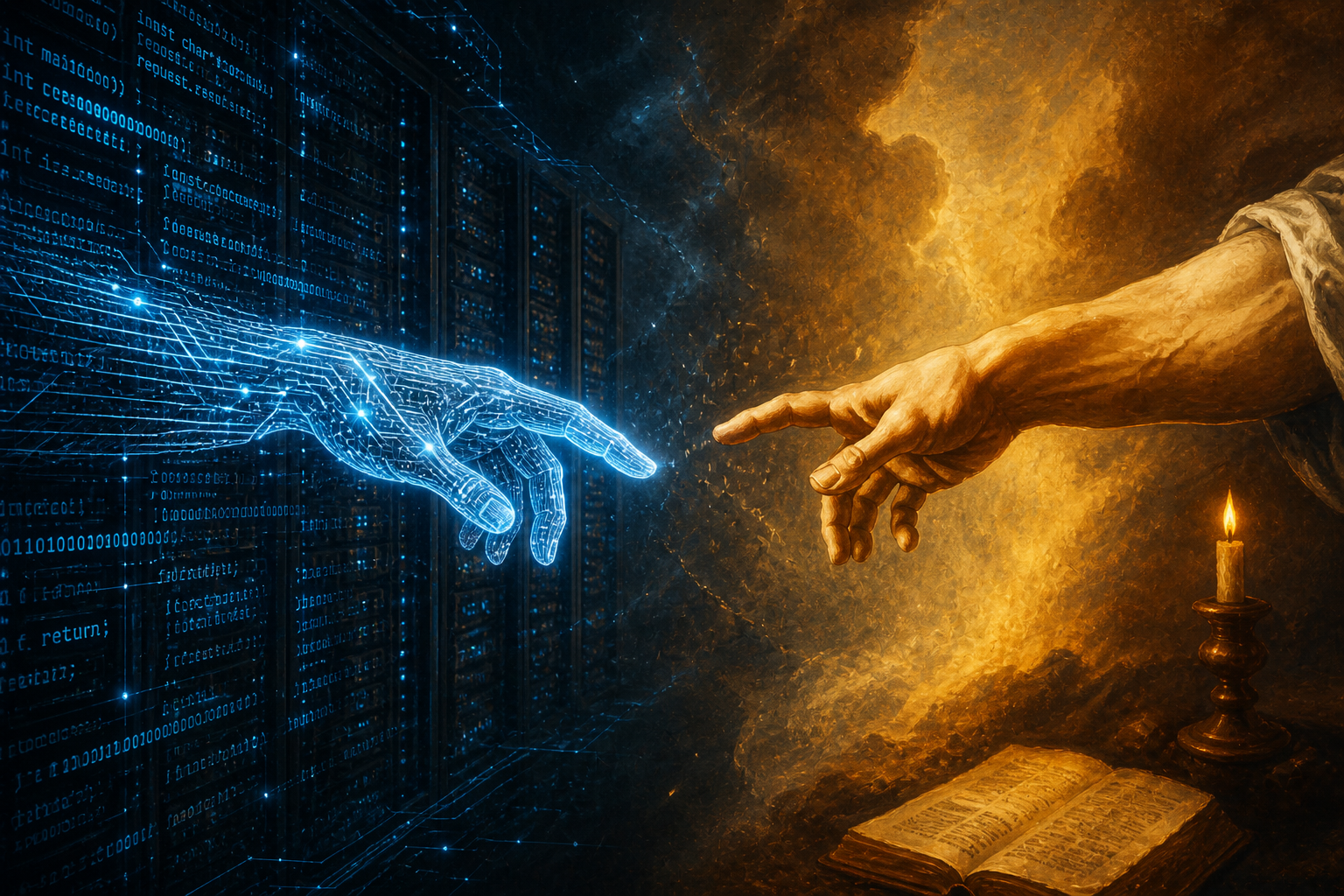
God's knowledge of you is not algorithmic. That's the whole point.
Here's what surveillance capitalism does: it watches your behavior to predict your behavior. It's powerful, but it's fundamentally shallow. The algorithm doesn't know you — it knows your data exhaust. It knows the ghost you leave behind when you move through digital space. It builds a model of your preferences, but it cannot model your grief, your doubt, your longing, the thing you whispered at 3am that you never typed into any search bar.
When David says God knows him — the Hebrew word is yada. It means intimate, personal, experiential knowledge. The kind of knowing that exists in covenant relationship. The kind that doesn't need data because it precedes data. God knows you before your behavior generates evidence of who you are. He knows your thoughts from afar — which is to say, before they complete. Before they become searchable.
"Before a word is on my tongue you, LORD, know it completely."
— Psalm 139:4
The algorithm waits for you to express a preference, then responds. God knows the preference before you have it. That's not surveillance. That's fatherhood.
Now here's the question that keeps me up some nights:
We built the algorithm. Christians, atheists, agnostics, brilliant people with good intentions — we built these systems together. And somewhere in the optimization process, we optimized for engagement and discovered that outrage, anxiety, and loneliness are incredibly engaging. The machine didn't intend that. But the machine doesn't have intentions. Only we do.
What does it mean to work inside these systems with the theological understanding that every human being flowing through your platform is yada known by God — not as a data point, but as a person He formed in the womb and called by name?
That's not a rhetorical question. It changes how you spec a feature. It changes what metrics you decide to optimize. It changes whether you raise your hand in the product meeting and ask "But what does this do to someone who's already isolated?"
The most powerful thing Psalm 139 offers the Christian tech worker isn't comfort. It's contrast.
The algorithm offers a counterfeit intimacy — the uncanny feeling of being known without being loved. God offers the real thing: being fully known, fully seen, in the past and future simultaneously — and being loved anyway.
"Such knowledge is too wonderful for me, too lofty for me to attain." (v.6)
David couldn't explain it either. He just knew it was different. It was personal. It was safe.
In a world where your data is your product, you are living proof of a different kind of knowing. Build accordingly.
Refernces:
Crossmap Blog - Faith Tech: https://blogs.crossmap.com/faithtech
Shoshana Zuboff — The Age of Surveillance Capitalism (summary)https://www.theguardian.com/technology/2019/jan/20/shoshana-zuboff-age-of-surveillance-capitalism-google-facebook
The Gospel Coalition — What Christians Should Know About AIhttps://www.thegospelcoalition.org/article/christians-artificial-intelligence/