[Bible & IT Part 5] "Watchmen on the Digital Wall" - Ezekiel 33
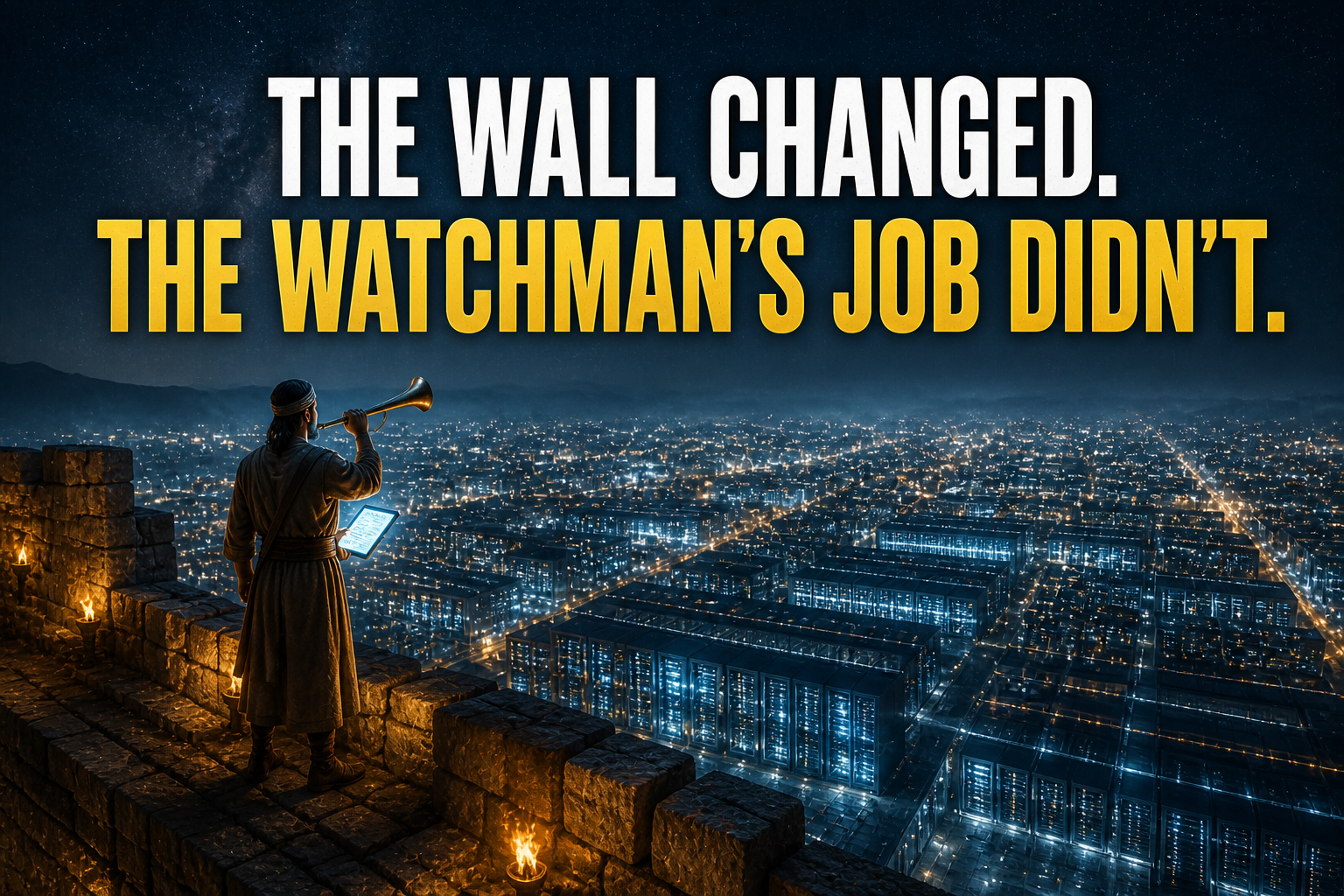
Ezekiel 33 & The Calling of the Cybersecurity Professional
Three AM. A SOC analyst in Dallas is watching a dashboard. Her coffee is cold. The alerts have been quiet for two hours, which in her experience means either nothing is happening or something is about to. She refreshes. There it is — anomalous lateral movement across seventeen endpoints, pattern consistent with ransomware staging.
She has maybe four minutes before it detonates across the hospital network.
She's the only one awake.
If you've ever worked in cybersecurity — or known someone who has — you know this isn't a hypothetical. It's Thursday. It's a regular Thursday at 3am for someone, somewhere, every week. The defenders are always outnumbered. The adversaries are often better funded. And the stakes — hospitals, power grids, water treatment plants, election infrastructure, financial systems — have quietly become civilizational.
Most people have no idea this is happening. They're asleep.
She's watching the wall.
"But if the watchman sees the sword coming and does not blow the trumpet to warn the people and the sword comes and takes someone's life, that person's life will be taken because of their sin, but I will hold the watchman accountable for their blood."
— Ezekiel 33:6 (NIV)
Ezekiel was writing about ancient city walls and military sentries. But the architecture of responsibility he describes is so precise, so structural, that it maps almost perfectly onto modern cybersecurity.
In the ancient world, cities had walls. The walls had watchmen. The watchmen had trumpets. The system worked only if the watchman actually watched — stayed awake, stayed alert, took seriously the possibility that the quiet night could break open into catastrophe at any moment. Their job was not to fight the enemy. Their job was to see the enemy coming and raise the alarm in time for others to respond.
If they fell asleep. If they got complacent. If they decided the night had been quiet long enough that nothing was coming — people died. And God said: I will hold the watchman accountable.
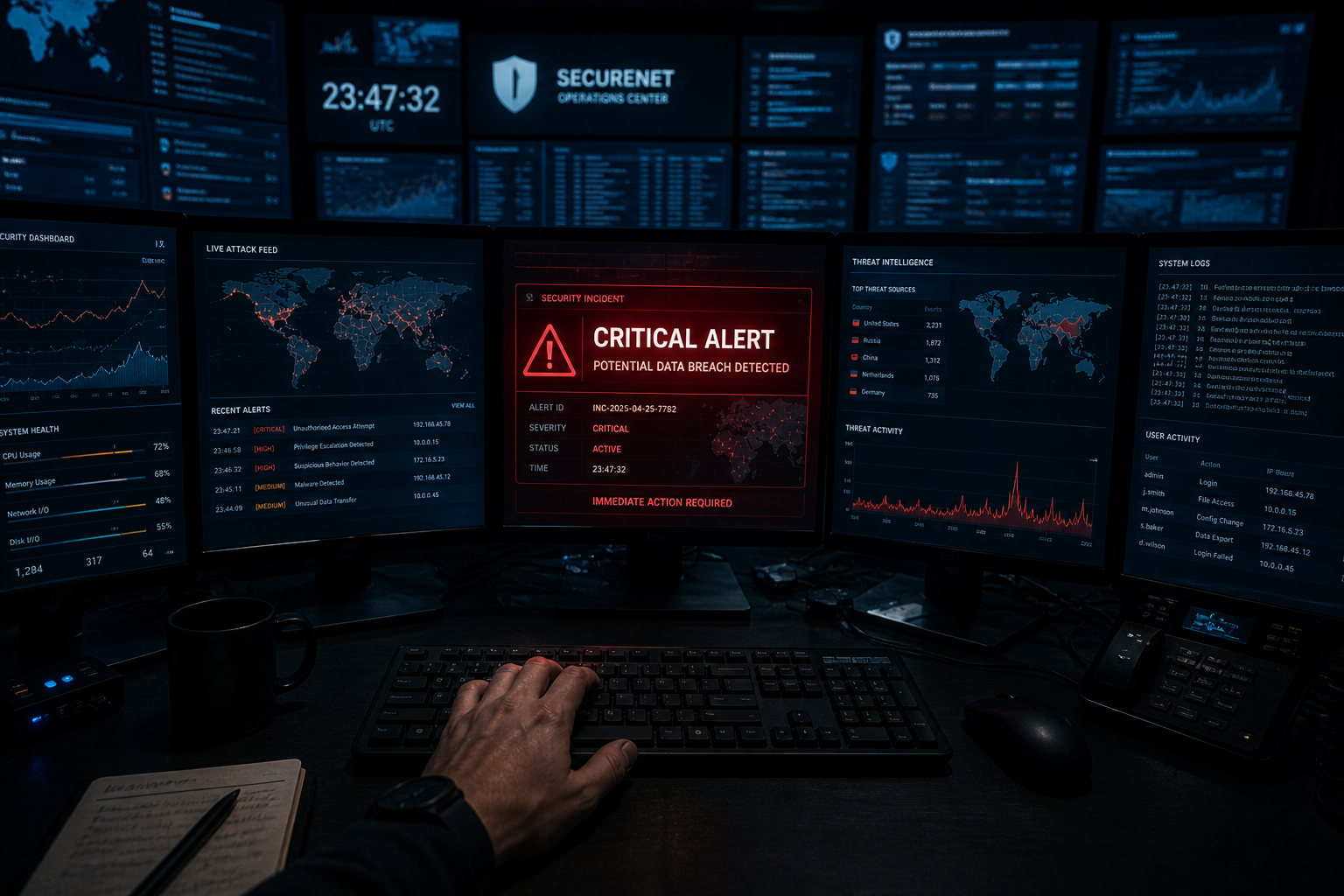
The digital wall is real. The sword is real. And so is the accountability.
In 2021, a ransomware attack on Colonial Pipeline knocked out fuel supplies to the US East Coast. In 2020, the SolarWinds breach compromised the US Treasury, Department of Homeland Security, and thousands of private companies — and went undetected for months. In 2017, the NotPetya attack cost an estimated $10 billion in damages globally and took down the shipping giant Maersk so completely that workers had to reconstruct their entire network topology from memory.
The watchmen missed it. Or didn't have the resources to see. Or saw something and weren't taken seriously.
The failure of cybersecurity is not a technical failure. It's a failure of vigilance — which is, at its root, a moral category.
For Christian professionals in the security space, Ezekiel 33 reframes your job entirely.
You are not a cost center. You are not the team that says no. You are not the department that slows things down with compliance requirements and patch policies and penetration tests that make the engineering team roll their eyes.
You are a watchman. You are standing on a wall that protects real people — families whose medical records are in that hospital system, pensioners whose retirement savings flow through that financial infrastructure, citizens whose democratic processes run through that election software.
The trumpet is your incident report. The sword is the threat actor. And the wall is whatever system you're defending today.

But Ezekiel 33 has a second layer that I think is even more important for Christian tech workers broadly.
The chapter isn't just about watchmen on walls. God is speaking to Ezekiel about his own calling — the responsibility of the prophet to warn people of spiritual danger, not just physical danger. And the principle generalizes: if you see something coming and you say nothing, the blood is on your hands.
How many of us have been in rooms where we saw something coming — a product feature that would exploit users, an algorithm tweak that would amplify harm, a data practice that would violate trust — and we said nothing? Because it wasn't our call? Because we were too junior? Because the quarterly targets were what they were?
The watchman doesn't get to say: I saw the sword coming but it wasn't in my job description to blow the trumpet.
God holds the watchman accountable for their watch.
You don't have to be in security to be a watchman.
You have to be awake, positioned on the wall God placed you on, and willing to sound the alarm when the sword is coming — even when it's 3am and everyone else is asleep and the dashboard has been quiet for two hours.
Especially then.
References:
CISA — Cybersecurity & Infrastructure overviewhttps://www.cisa.gov/cybersecurity
Wired — The Colonial Pipeline Hackhttps://www.wired.com/story/colonial-pipeline-ransomware-attack/
Crossmap Blog - Faith Tech: https://blogs.crossmap.com/faithtech