ChatGPT for Counseling Advice, Whose Values Are They Getting?
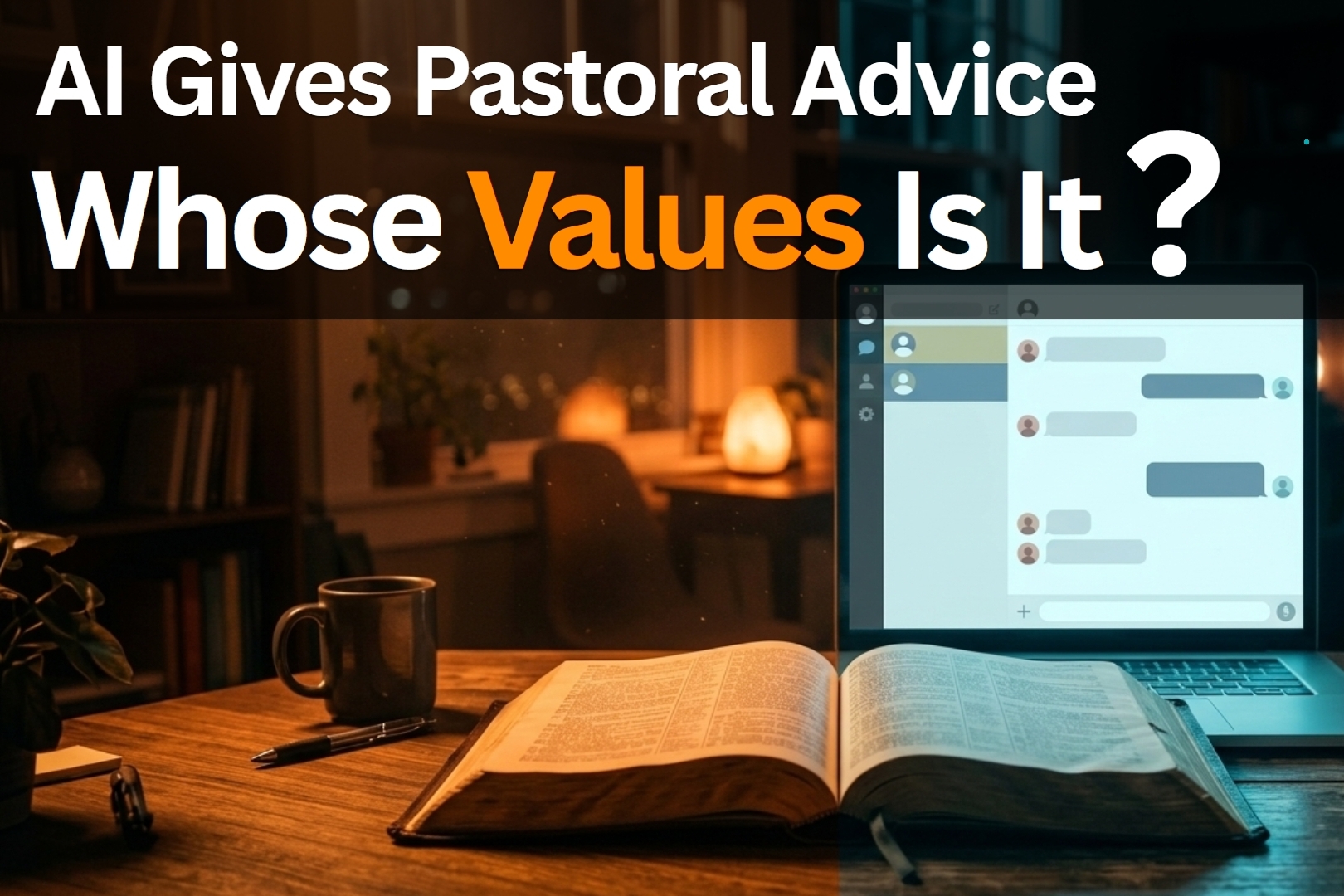
A pastor sits down to prepare for a difficult counseling conversation.
A couple in the congregation is considering divorce. A young man is asking questions about sexuality. A family is facing a decision that touches on ethics, relationships, and faith all at once.
The pastor opens ChatGPT. Types in the situation. Reads the response.
It's thoughtful. Empathetic. Balanced. It acknowledges complexity, validates feelings, and offers a measured path forward.
And it reflects, almost perfectly, what the progressive Western internet of the last decade has learned to say about these topics.
How 64% of Pastors Are Already Using AI in Ministry
 This isn't a hypothetical scenario. As of 2025, 64% of pastors involved in sermon preparation use AI tools — a dramatic increase from just 19% using AI weekly or daily in 2023. Anglicansermonwriter
ChatGPT is the most popular AI tool among church leaders at 26%, being used for applications such as sermon preparation, research, and crafting church communications. Christian Post
The adoption is real, it's rapid, and it's happening across denominations and church sizes. Pastors are using these tools not just for administrative work but for the content of ministry itself — the counsel they give, the sermons they preach, the guidance they offer to people in crisis.
Which makes the question of what these tools are actually built on more urgent than ever.
What ChatGPT for Pastors Is Actually Trained On
AI doesn't generate wisdom from nowhere. It learns from text — billions of documents, articles, social media posts, academic papers, forum threads, and books produced by human beings over decades.
It synthesizes what most people say, weights it toward what gets positive responses, and gives you the averaged consensus of the culture that produced it.
That culture has specific values. Specific assumptions about autonomy, identity, relationships, and morality. Values that have shifted considerably over the last twenty years — and that do not always align with Scripture.
When a pastor uses ChatGPT for counseling advice, they aren't consulting a theologically neutral resource. They're consulting something that has absorbed the worldview of the internet and learned to express it clearly, empathetically, and persuasively.
When AI Advice Sounds Biblical But Isn't
 This is where the danger becomes specific.
AI doesn't produce obviously secular advice. It produces advice that sounds reasonable, measured, and often even spiritual. It will quote relevant passages. It will use language about grace, compassion, and wisdom. It will feel, in many cases, like something a thoughtful person of faith might say.
But the underlying framework — the assumptions about what counts as human flourishing, what the goal of counseling is, what a good outcome looks like — comes from somewhere other than Scripture.
"Do not be conformed to this world, but be transformed by the renewal of your mind."
— Romans 12:2
Paul wrote this into a specific cultural moment with specific values — and told believers to go in a different direction. The Christian life has always been countercultural at its core.
No AI, even one trained in all the world's theological libraries, can replace the pastor-prepared sermon — or counsel. AI technologies lack the key requirement: a first-person experience of God and his world. The Gospel Coalition
When AI gives pastoral advice, it gives the world's best answer. Sometimes that overlaps with wisdom. Sometimes it doesn't. And the gap between those two outcomes is exactly where pastoral discernment is required.
Using AI in Ministry Without Losing the Biblical Foundation
None of this is an argument against using AI tools in pastoral work. The most important question is not whether you can use AI — it is how you will use it thoughtfully, with pastoral wisdom. ChurchTechToday
AI is useful for research, for organizing ideas, for drafting communications. It can save significant time on tasks that don't require theological discernment.
The line worth drawing is here: use AI to support the work of ministry, not to shape its content. Research with it. Draft with it. Let it help you think through structure and language.
But when it comes to the substance of what you counsel, what you preach, and what guidance you offer to people in crisis — that content needs to come from somewhere that wasn't built on the internet's consensus.
The discernment to know which is which isn't something AI can give you. That's the whole point.
Faith + Tech explores what technology reveals about the state of our faith — not to condemn the tools, but to see ourselves more clearly through them.
→ Read next: AI Sermon Preparation Hallucinated the Theology. The Pastor Didn't Notice.
References:
https://www.christianpost.com/news/majority-of-pastors-using-ai-to-prepare-sermons-study.html
https://www.desiringgod.org/interviews/is-technology-holy-or-worldly
https://blogs.crossmap.com/stories/ai-bible-study-heres-why-that-might-be-dangerous-jX5CSJQCd1OTWdnS4p0Ur