[Christian Finance] "What Is Bitcoin, Really? A Plain-English Guide for Christians Who Are Confused and a Little Suspicious"
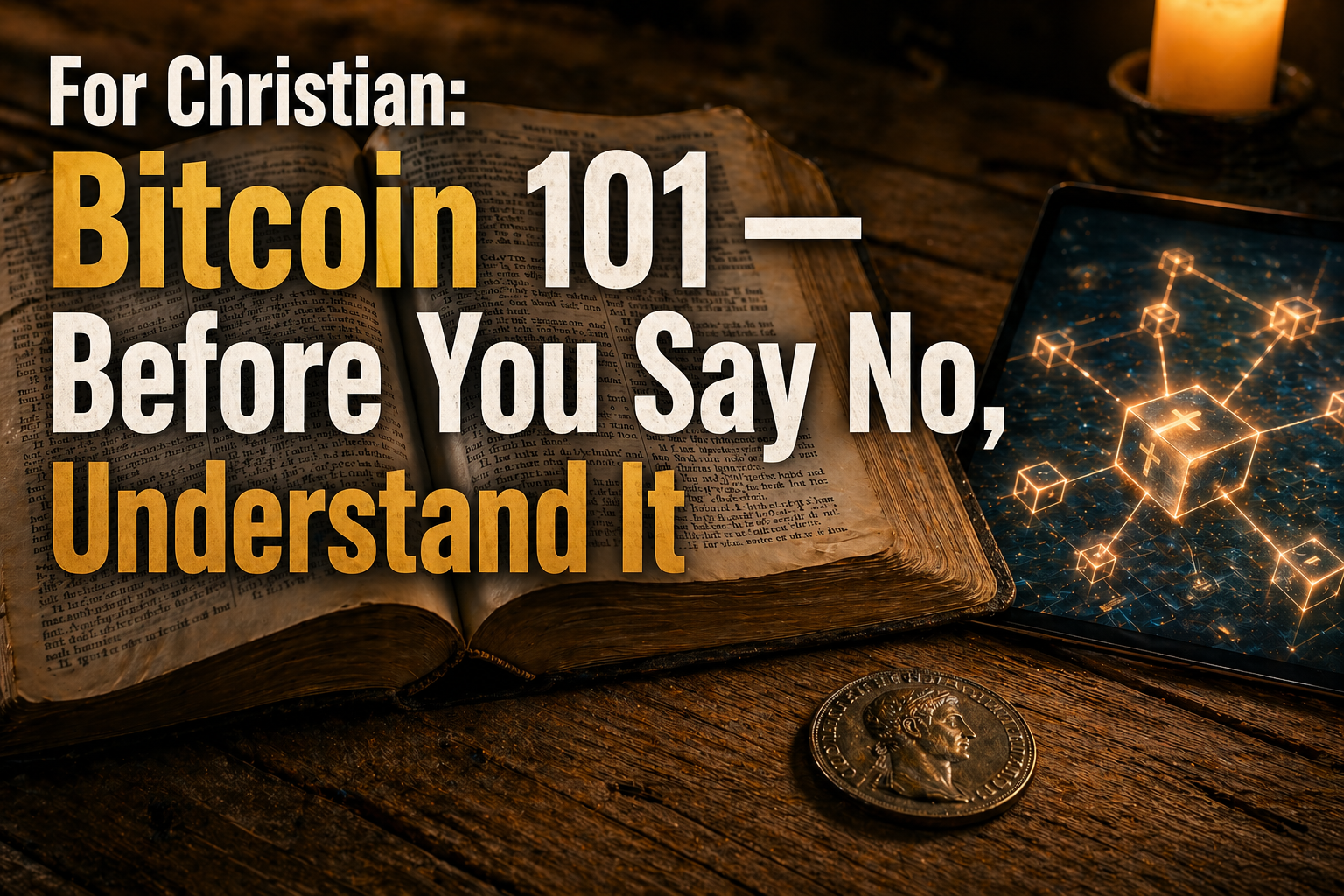 I heard one story from my seminary student: My father-in-law called me on a Tuesday afternoon last spring. He'd been at his men's Bible study and someone had mentioned Bitcoin — again. "Every week someone brings it up," he said, half exasperated. "I just smile and nod. I have no idea what they're talking about."
He's not alone. If you've been sitting in Sunday school or a small group and someone casually drops "crypto" or "the blockchain," and you've just nodded along — welcome to the club. This series is for you.
Let's start at the very beginning, because you can't make a wise decision about something you don't understand. And as Christians, we're called to be wise, not just pious.
So, what actually is Bitcoin?

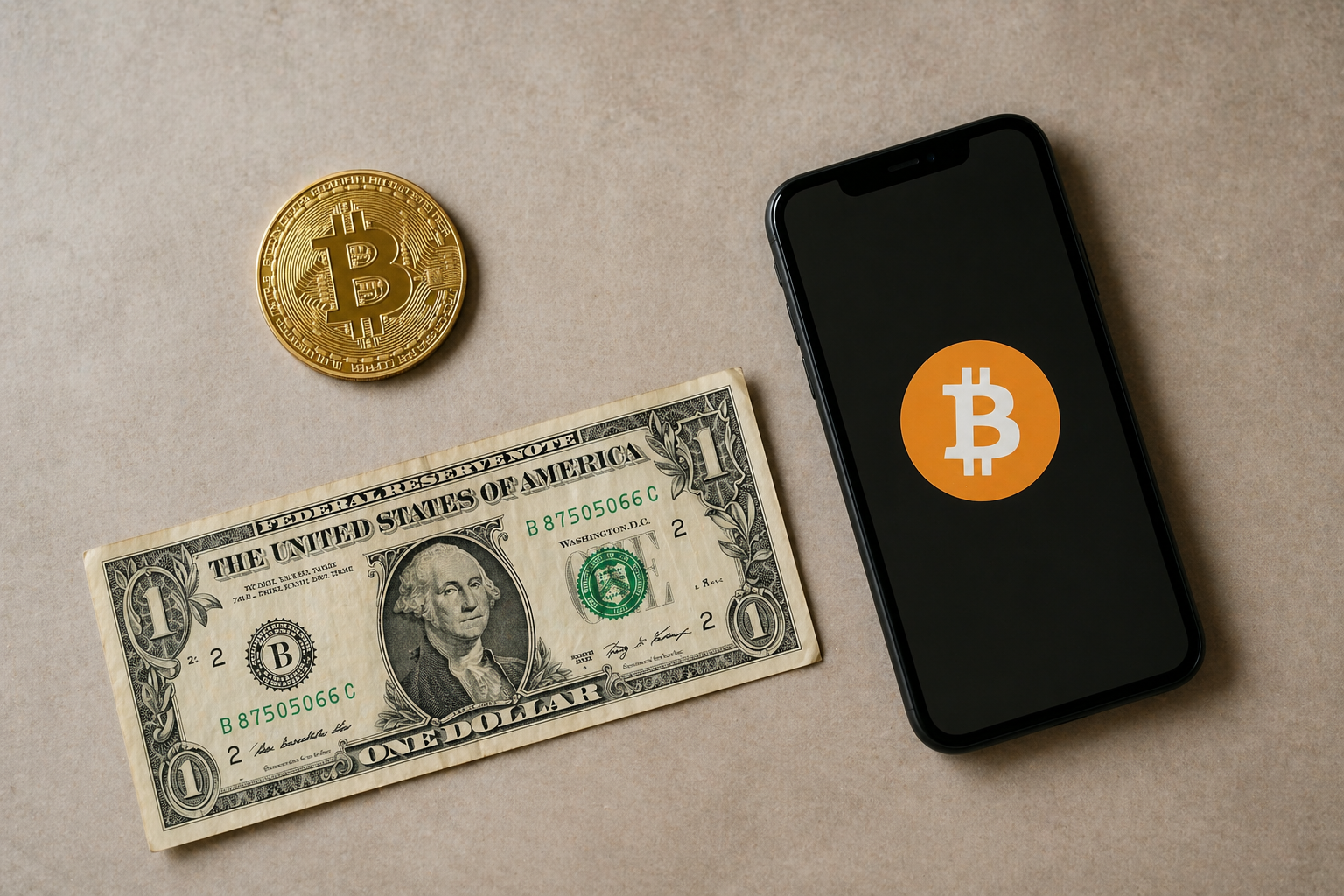
Bitcoin is digital money. But that's not quite enough — because your bank balance is also "digital." The difference is who controls it.
When you have $500 in your Chase account, that number exists on Chase's computers. Chase can freeze it, limit it, or (in extreme cases) lose it. Your money is real, but your access to it depends entirely on a company and the government regulations around it.
Bitcoin was created in 2008 — right after the financial crisis — by an anonymous person or group using the name Satoshi Nakamoto. The white paper they published proposed something radical: money that no single person, bank, or government controls. Money governed by math and consensus instead of institutions.
How does it actually work?
Think of it like this: imagine a ledger book that records every transaction. Normally, a bank keeps that ledger in a private vault. With Bitcoin, that ledger — called the blockchain — is copied across tens of thousands of computers around the world simultaneously. Every ten minutes, a new "page" (called a block) is added to the book. Every computer in the network agrees on what that page says before it gets added.
To add a fraudulent transaction, you'd have to rewrite the history on more than half of those tens of thousands of computers at the same time. It's technically possible, but so expensive and difficult that it's never happened.
That's the "block" in blockchain — each page of transactions is chained mathematically to the one before it. You can't alter page 47 without also altering pages 48, 49, 50... all the way to today, simultaneously, faster than the rest of the network. In practice, it's like trying to rewrite a book that ten thousand people are reading and comparing at the same moment.
What about "mining"?
Those computers that verify transactions? They're rewarded with newly created Bitcoin for their work. This is called mining — not because anyone digs in the ground, but because, like gold mining, you do work to receive a reward, and the supply is limited. There will only ever be 21 million Bitcoin in existence. That hard cap is baked into the code.
This is actually why some economists take Bitcoin seriously. Most currencies can be printed infinitely. Bitcoin cannot.
 Why should any of this matter to Christians?
Here's the honest pastoral answer: it may not need to. Jesus didn't need the Jerusalem stock exchange to feed five thousand people. But we live in a world where financial systems shape who eats and who doesn't, who has access to opportunity and who's locked out. Understanding these systems — without being consumed by them — is part of being faithful stewards of the world God placed us in.
You don't have to buy Bitcoin. But understanding what it is puts you in a better position to ask the right questions when your brother-in-law, your college student, or your pastor's kid brings it up.
Next, we'll tackle the harder question: should Christians engage with it at all?
Coming up in Part 2: "Should Christians Own Bitcoin? A Faith-Based Framework for the Crypto Question Everyone's Avoiding"
References:
Bitcoin.org — "Bitcoin: A Peer-to-Peer Electronic Cash System" (Satoshi's original white paper): https://bitcoin.org/bitcoin.pdf
Crown Financial Ministries — Biblical financial stewardship foundation: https://www.crown.org
Crossmap Blog Publication Center: Kingdom Finances, https://blogs.crossmap.com/kingdomfinances