[Christian Movie Review] The Passion of the Christ — Biblical Meaning, Symbolism, and the Significance of Christ's Sacrifice
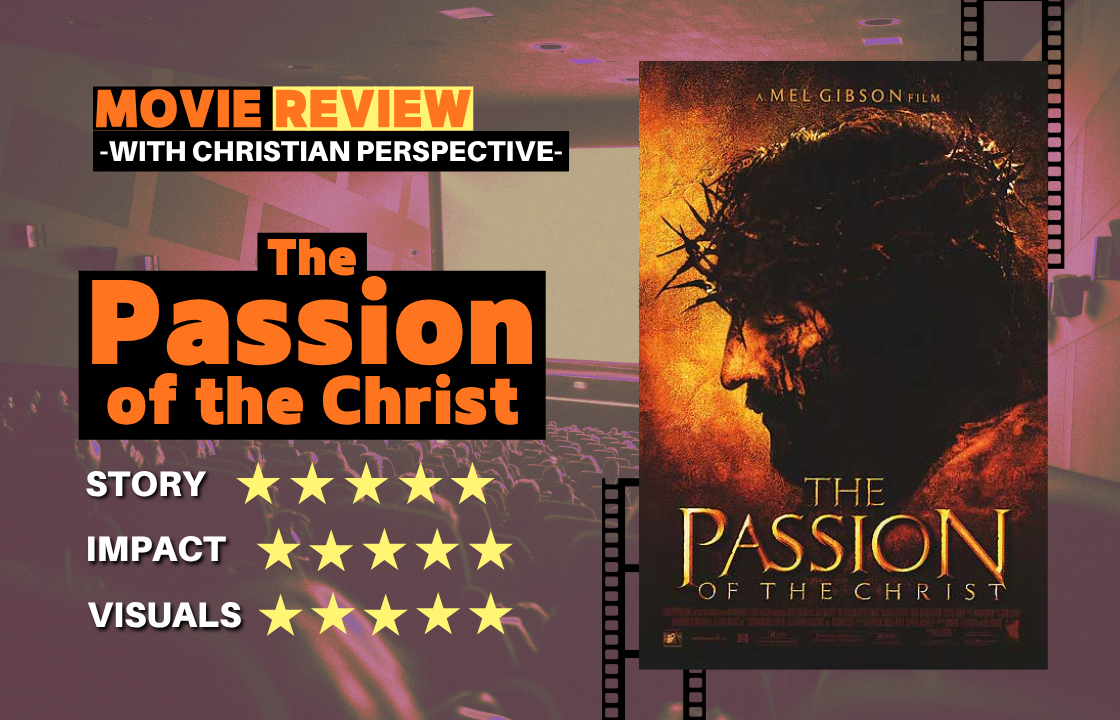 Christian review rating of The Passion of the Christ — story, visuals, biblical accuracy, and spiritual impact
The Film That Shook the World
When The Passion of the Christ hit theaters in 2004, it became something far more than a religious movie. Directed by Mel Gibson, the film portrayed the final hours of Jesus Christ — from Gethsemane to the crucifixion — with an intensity that Hollywood had rarely attempted before.
Rather than tracing the full arc of Jesus' ministry, his miracles, or his teachings, the film narrows its focus almost entirely to the physical and spiritual suffering leading up to the cross. Through its use of Aramaic and Latin dialogue, unflinching realism, and heavy symbolic imagery, The Passion forces the audience to sit with the weight of what actually happened on that hill outside Jerusalem.
For many Christians, this film became a profound meditation on the cost of sin and the depth of Christ's sacrifice. Outside the church, reactions were more divided — some called it a masterpiece, others criticized its graphic violence, and still others raised concerns about its theological framing. Even critics who disagreed with its message acknowledged one thing: this film made the modern world stop and reckon with the cross.
How Christians and Critics Responded
Among evangelicals and many Catholics, The Passion was widely received as one of the most powerful portrayals of Jesus ever put on screen. Churches organized group viewings. Pastors built entire sermon series around it. Many believers testified that seeing the crucifixion depicted this viscerally gave them an entirely new understanding of what grace actually cost.
Critics, however, raised real concerns. The relentless focus on physical suffering led some to ask whether the gospel's broader message — resurrection, reconciliation, the kingdom of God, and victory over sin — had been overshadowed by the brutality.
Certain scenes also sparked historical and theological debate. When stripped of its biblical context, some argued, specific portrayals risked reinforcing antisemitic narratives — a serious concern that deserves honest engagement rather than dismissal.
Yet almost everyone agreed on this much: in a culture increasingly prone to trivializing the cross, this film made people look directly at it.
What the Film Gets Powerfully Right
The Weight of Sin and Sacrifice Is Taken Seriously
One of the film's greatest strengths is its refusal to make the cross cheap. Modern culture often reduces the crucifixion to jewelry or vague inspiration. The Passion confronts that tendency head-on.
The imagery breathes Isaiah 53 into life in a way that is hard to forget:
"He was pierced for our transgressions… by his wounds we are healed."
The film insists that salvation was never free — not in the sense of what it cost Christ. He endured this willingly, out of love for sinners. That truth lands harder when you watch it unfold on screen.
A Christ Who Obeys All the Way to the End
Throughout the film, Jesus is portrayed as someone who suffers without retaliation — not because he has no power, but because he chooses to lay it down. There's no resistance, no bitterness, no retreat. Just a steady, agonizing obedience toward the cross.
This is Philippians 2:8 made visible:
"He humbled himself by becoming obedient to death — even death on a cross."
The film succeeds in presenting Jesus not as a political victim of circumstance, but as the Lamb who lays down his own life.
The Reality of Spiritual Warfare
Another notable quality is how consistently the film draws attention to the spiritual darkness operating behind the scenes of the crucifixion. Satan appears throughout as a presence actively trying to undermine Christ's mission.
This is largely a cinematic interpretation, but it points to a biblical truth that contemporary culture tends to forget: the cross was not simply a political execution. It was a collision between sin, death, and God's redemptive plan. The crucifixion had a cosmic dimension that most modern retellings quietly ignore.
Where the Film Falls Short
The Overwhelming Focus on Physical Suffering
The film's greatest strength is also its most significant weakness. The sheer volume of graphic violence risks reducing the gospel to a story about pain.
The New Testament does take Christ's suffering seriously — but the gospel is not only a story about suffering. It is a story about reconciliation, resurrection, grace, and the coming of God's kingdom. And there's something important that the film's narrow focus misses: Jesus' entire life was the cross in motion.
Long before Gethsemane, Jesus was already bearing the weight of humanity — patiently loving disciples who kept misunderstanding him, returning with compassion to people who repeatedly failed him, enduring betrayal and rejection without withdrawing his care. The cross on Calvary was not a sudden burst of sacrifice; it was the culmination of a life already defined by sacrificial love.
Some viewers may walk away remembering only the graphic violence rather than the deeper love and pastoral tenderness that made the cross meaningful in the first place.
Symbolic and Non-Biblical Additions
Some of the film's most striking moments draw more from tradition, mystical sources, or artistic imagination than from the biblical text itself. For example:
- Several scenes involving Mary are significantly expanded beyond what Scripture records.
- Satan's visual portrayal is heavily stylized and symbolic.
- Certain emotionally charged moments prioritize cinematic impact over strict biblical fidelity.
None of this is necessarily malicious — filmmakers make interpretive choices. But Christians watching the film need to hold a clear line between Mel Gibson's artistic vision and the biblical account itself.
The Resurrection Gets Too Little Space
Perhaps the most significant theological imbalance in the film is how briefly it treats the resurrection. The vast majority of the runtime is devoted to suffering and death. The resurrection appears at the very end — and just barely.
But the resurrection is not an epilogue. It is the whole point. Paul makes this plain in 1 Corinthians 15: without the resurrection, the Christian faith collapses entirely. There is no gospel without Easter Sunday.
A more generous treatment of the risen Christ would have produced a far more theologically complete film.
Symbolism and Theological Meaning
The film uses rich visual symbolism to carry its theological message, and much of it is worth examining closely.
The Serpent Crushed Underfoot
One of the most memorable symbolic moments is the crushing of the serpent. This directly evokes Genesis 3:15 — the promise that the offspring of the woman would crush the head of the serpent.
It's a powerful visual statement: the cross is not defeat. It is the moment when the power of the enemy begins to unravel.
Blood and Atonement
The recurring image of blood throughout the film reflects the atonement theme woven through the entire biblical narrative — from the Passover lamb in Exodus to its fulfillment in Jesus Christ.
Hebrews 9:22 puts it directly:
"Without the shedding of blood there is no forgiveness."
The film connects Jesus unmistakably to the sacrificial imagery that runs from Genesis to Revelation. Whatever its shortcomings, it does not let viewers forget that this death was substitutionary.
Darkness, Storm, and Cosmic Disruption
The earthquake, the tearing of the temple veil, the darkness that falls over the crucifixion scene — these are not just dramatic effects. They are visual shorthand for a universe responding to the death of its Creator.
The film understands that the cross was not a private tragedy. It was a world-altering event.
Why This Film Still Matters
More than two decades after its release, The Passion of the Christ remains one of the most culturally significant Christian films ever made.
In an era increasingly allergic to the concepts of sin, judgment, and atonement, the film has pushed millions of people to genuinely ask: Who is Jesus? What did the cross actually mean? That is no small thing.
The film is not perfect. Its interpretive choices, emotional intensity, and cinematic additions must be weighed carefully against Scripture. Christians should watch it as a work of art and reflection — not as a documentary or a theological textbook.
But its core contribution is real: it made the cross feel like the cross again.
Final Thoughts
The crucifixion is not just a tragic moment in ancient history. It is the center of Christian hope — the place where God's justice and love met, where sin was condemned and sinners were reconciled, where death was entered so it could be defeated.
The film ends with a brief glimpse of resurrection. But the story it points to does not end there. Christianity is not built only on a crucified Savior — it is built on a risen King. The cross matters because of the empty tomb. The sacrifice is meaningful because death did not have the final word.
The Passion of the Christ can be a powerful starting point for that reckoning. But let it point you back to the source — the Scriptures, the resurrection, and the living Christ who is the same yesterday, today, and forever.