Gird Your Loins: What the Belt of Truth Means
There are phrases in the Bible that make modern readers stop and squint. "Gird your loins" is near the top of the list.
It sounds archaic, maybe a little comical. People use it now as a half-joking way to say "brace yourself." But the phrase carried real weight in the ancient world, and when you understand what it actually meant, one of the quietest pieces of the armor of God suddenly makes a lot of sense. Because before Paul mentions a breastplate or a shield, he tells believers to gird your loins with truth.
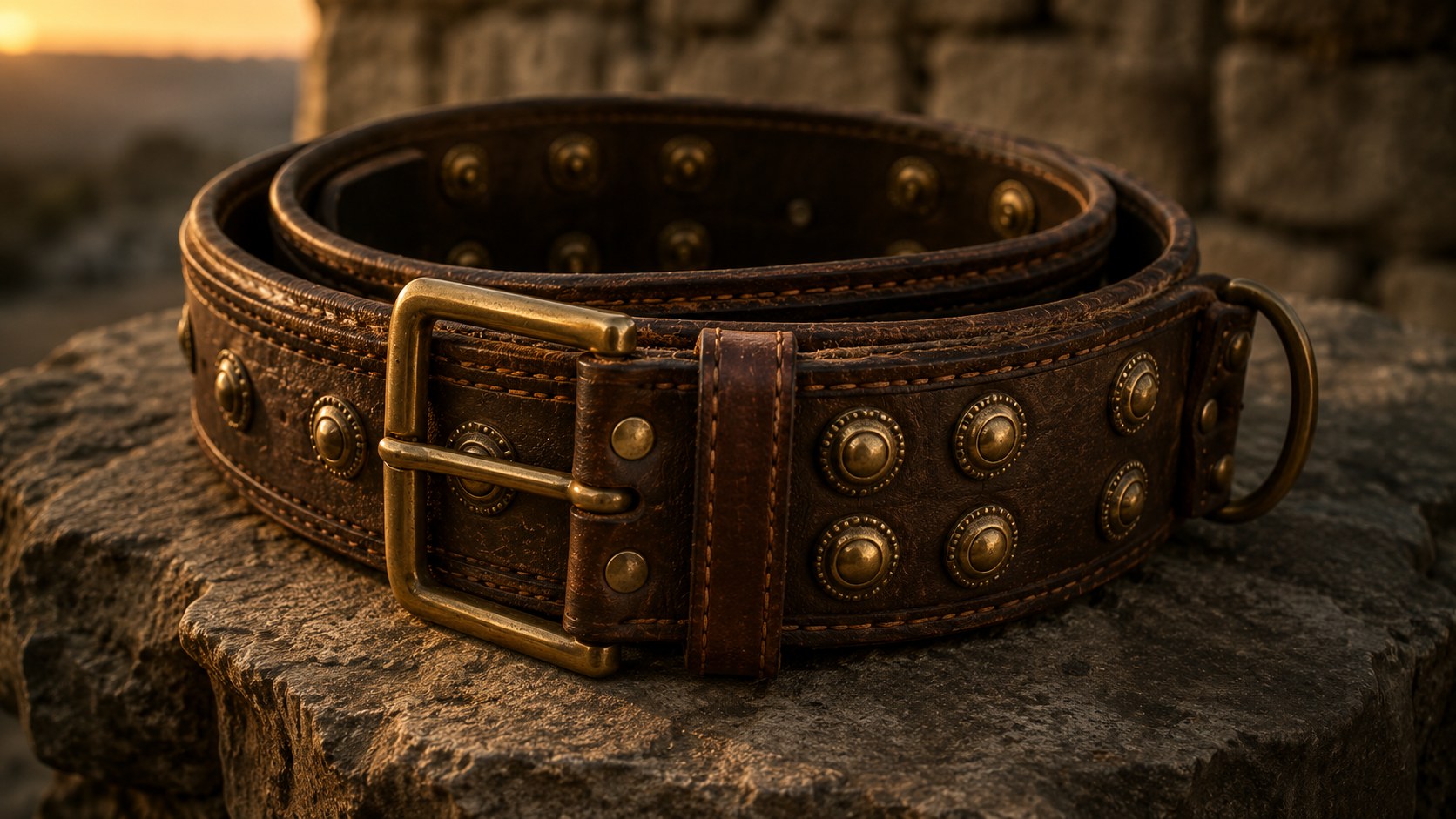
It is the first piece he lists. And there is a reason it comes first.
What "gird your loins" actually meant
In the ancient Near East, people wore long, loose robes — fine for standing around, terrible for running, fighting, or hard work. So when a person needed to move with purpose, they would reach down, gather the loose fabric, pull it up between their legs, and tuck it into their belt. That was "girding up the loins." It turned a flowing robe into something you could actually work and fight in.
To gird your loins meant: get ready. Stop being encumbered. Prepare for action.
For a soldier, the belt was the literal center of readiness. It was the first thing he fastened, because everything else hung from it — the breastplate was secured to it, the sword hung from it, the whole kit depended on it being tight. A loose belt meant a soldier who could not move and gear that would not stay in place.
Why Paul makes truth the belt
Now read Paul's line with that picture in mind:
"Stand firm then, with the belt of truth buckled around your waist." (Ephesians 6:14)
Truth is the belt. It is the piece that goes on first and holds everything else together. And the logic is beautiful once you see it. A life that is not anchored in truth cannot hold the other pieces in place. Righteousness without honesty becomes hypocrisy. Faith without truth becomes wishful thinking. Even the sword — Scripture — only cuts if you are honest enough to let it.
That is why the belt comes first in the armor of God. Take away truth and the whole kit sags and slips. There is a reason a double life feels exhausting: it is a soldier trying to fight with an unbuckled belt, everything coming loose at once.
Two kinds of truth the belt holds
The belt of truth works on two levels, and you need both.
First, there is the truth — the reality of who God is and what he has done. Jesus said, "Then you will know the truth, and the truth will set you free" (John 8:32), and a few chapters later he called himself "the way and the truth and the life" (John 14:6). The belt is buckled to a Person before it is buckled to a principle.
Second, there is truthfulness — your own honesty. Living without pretense. Refusing the small lies, the curated image, the convenient half-truths. This is the daily discipline of being the same person in private that you are in public. It is unglamorous. It is also load-bearing.

The same image, elsewhere in Scripture
Paul was not the only one to use this picture, which tells you it was a familiar one. Peter writes, "with minds that are alert and fully sober, set your hope" — older translations render the opening "gird up the loins of your mind" (1 Peter 1:13). Jesus told his followers, "Be dressed ready for service" — literally, keep your loins girded (Luke 12:35). And Isaiah, prophesying about the coming Messiah, said "righteousness will be his belt and faithfulness the sash around his waist" (Isaiah 11:5).
The thread running through all of it is readiness. To gird your loins is to be prepared, undistracted, and able to move. Truth is what makes you ready.
How the belt connects to the rest
Because the belt secures the other pieces, it has a special relationship to the breastplate of righteousness. In Roman armor the breastplate was often fastened to the belt; the two worked as a unit. The same is true spiritually. Righteousness that is not held in place by truth comes loose and slides into performance. Honest people can be genuinely good. Dishonest people can only act good — and acting is exhausting and eventually fails.
What a loose belt looks like
It helps to picture the opposite of the girded life, because most of us recognize it instantly.
A loose belt is the person who tells a different version of the story to different people, and has to keep track of which version went where. It is the exhaustion of maintaining an image — the curated highlight reel, the public face that has quietly drifted from the private reality. It is the small untruths that seem harmless until the day they tangle together and trip you in front of everyone.
The cost is not mainly that you get caught, though you often do. The cost is that you can never quite move freely. Part of your energy is always going toward holding the loose fabric, managing the gap between who you are and who you are pretending to be. It is tiring in a way that honest people, for all their other struggles, simply do not experience. They have nothing to keep track of. The belt is tight, and they can run.
That is the hidden gift of truth. It is not only morally right; it is practically freeing. "The truth will set you free," Jesus said (John 8:32), and anyone who has finally confessed something they were carrying knows the lightness he meant. Girding up is, in part, the relief of putting down the weight of pretending.
Buckling the belt again after you've let it slip
Nobody keeps the belt perfectly tight. Honesty slips. We shade the truth, manage impressions, avoid the hard conversation. The question is not whether the belt comes loose but what you do when you notice.
The answer is simple and humbling: you buckle it again. You tell the truth you have been avoiding. You correct the impression you let stand. You confess the thing to God and, where it matters, to the person involved. None of this is comfortable, and all of it is how the belt gets re-secured. Readiness is not a state you achieve once. It is a posture you keep returning to, day after day, every time you catch the fabric starting to drag.
1. Honesty is not optional equipment
We tend to treat truthfulness as a nice character trait. Paul treats it as the belt — the thing without which nothing else stays on. A life of small dishonesties is a life that cannot hold the rest of the armor. Truth is structural.
2. You cannot fight encumbered
The whole point of girding up was to remove what got in the way. Tangled-up people fight badly. Sometimes the most spiritual thing you can do is get honest about what is tripping you, gather it up, and deal with it — so you can finally move.
3. Readiness is a posture, not a moment
"Gird your loins" is not a one-time act. The belt stays on. Readiness is a way of living — alert, undeceived, prepared for whatever the day brings — rather than a panic you summon when trouble arrives.
4. Truth is a Person before it is a principle
You do not anchor yourself to an abstract idea of honesty. You anchor yourself to the One who called himself the truth. That is why the belt holds: it is buckled to something that does not move.
A prayer for the belt of truth
Lord, you are the truth, and I want to be buckled to you and nothing else. Gird me. Pull up everything in my life that has been dragging and tangling me, and help me face it honestly. Strip away the pretending. Make me the same person in the dark as I am in the light. Hold the rest of the armor in place with your truth, so that I am ready — really ready — for whatever today brings. In Jesus' name, Amen.
Frequently asked questions
What does "gird your loins" mean?
It is an ancient phrase meaning to gather up the loose fabric of a long robe and tuck it into your belt so you could move, work, or fight freely. Figuratively, it means to get ready and prepare for action.
What is the belt of truth in the armor of God?
In Ephesians 6:14, truth is pictured as the soldier's belt — the first piece put on and the one that holds the rest of the armor in place. It represents both the truth of God and the believer's own honesty.
Why is the belt of truth listed first?
Because in Roman armor the belt was the foundation that everything else attached to. Spiritually, truth holds the other pieces together; without it, righteousness, faith, and the rest come loose. Honesty is structural to the whole armor.
Is "gird your loins" actually in the Bible?
Yes. The imagery appears in several places, including 1 Peter 1:13 ("gird up the loins of your mind" in older translations), Luke 12:35, and the description of the armor in Ephesians 6. Newer translations often render it as "be ready" or "be alert."
How do I "put on" the belt of truth?
By anchoring yourself in the truth of who God is, and by practicing honesty in daily life — refusing pretense and the small lies that slowly loosen everything else.
For the passage in full, see Ephesians 6 on Bible Hub or read it at Bible Gateway.