Gratitude Grows You Into Holiness

Even before he made the world, God loved us and chose us in Christ to be holy and without fault in his eyes. – Ephesians 1:4 (NLT)
More and more people are talking about gratitude and that’s good. Gratitude is a brave living practice. The science behind it is amazing: you can actually see gratitude’s impact on a brain scan. Gratitude activates areas of the brain linked to joy, empathy, and connection. It changes us at a neurological level, which means God designed our brains to be transformed by gratitude. Gratitude reflects the heart of God, something we can live out. Our brains need us to.
But living out gratitude isn’t easy. We’re quick to say we’re thankful while our minds still race with fear, scarcity, and comparison. Oh, the daily battle of this, right? Suddenly gratitude doesn’t feel so simple.
Gratitude is a daily practice that reorients your heart toward joy and worthiness.
Joy, though, is the most vulnerable emotion. To feel joy is to stand in the middle of what is beautiful and admit, “I could lose this.” To protect ourselves, we often practice foreboding joy or rehearsing tragedy before it happens. We tell ourselves, “I shouldn’t get too happy. I’m not worthy of this joy, so I’ll brace for disappointment.” It feels responsible, but it robs us of living in the very moments we prayed for.
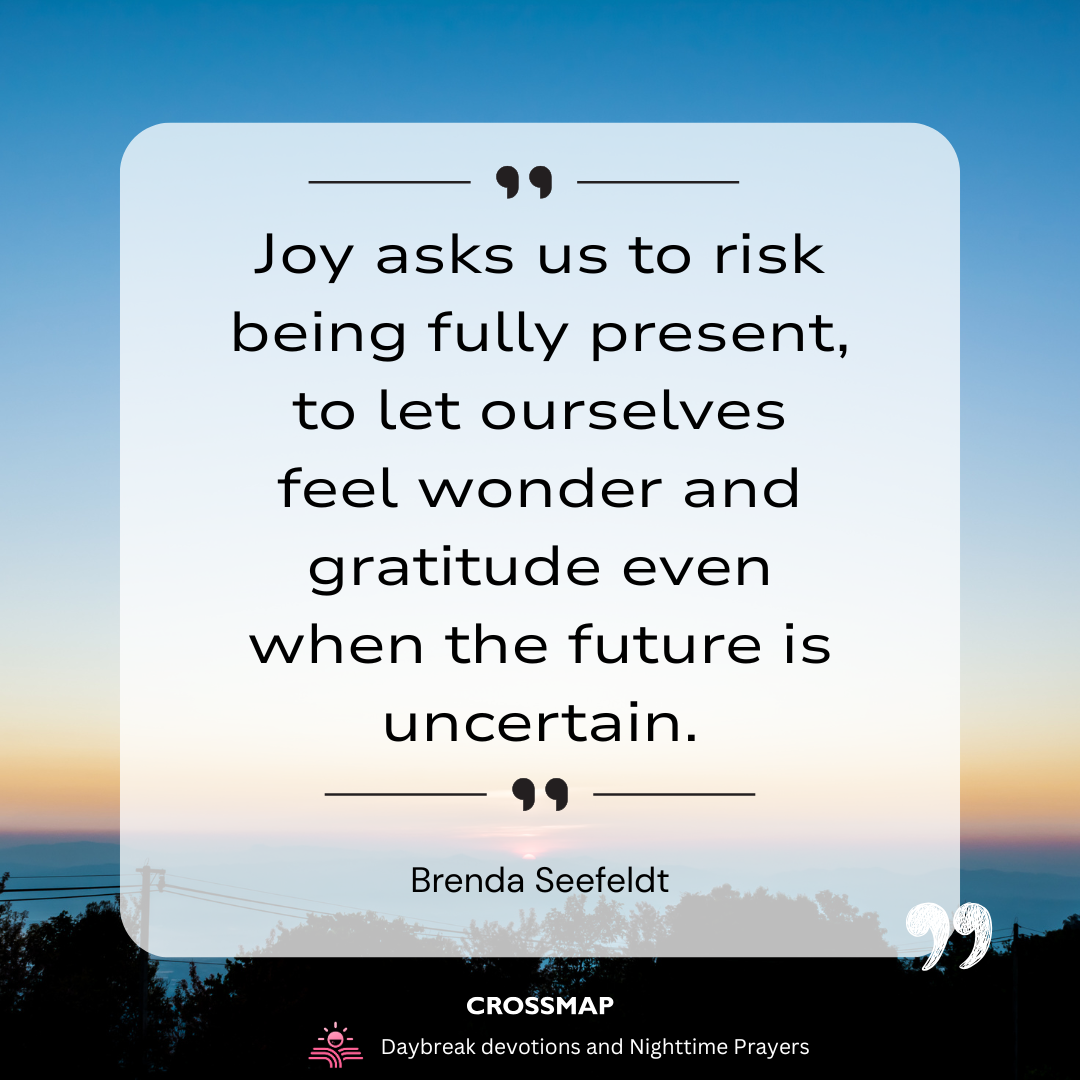
Joy asks us to risk being fully present, to let ourselves feel wonder and gratitude even when the future is uncertain. Joy opens us to love, and love always carries risk.
Worthiness is part of that risk. We long for someone to draw the line and say, “You’ve done enough. You are enough.” But the truth is, worthiness isn’t earned. Worthiness is your birthright. Your life has cosmic significance regardless of what you do or how you feel about yourself. Something outside of you—-Jesus-—declares you worthy. You matter.
Gratitude is not an attitude; it’s a practice. It’s not what you feel when life is easy, it’s what you choose when life feels messy. It’s writing down three things that went right anyway. It’s pausing mid-day to notice what’s beautiful: laughter at the next table, sunlight through the window, a text that arrives at the perfect time. Gratitude takes the ordinary and makes it holy.
Here’s the surprise: gratitude and vulnerability grow together. When we choose to see what is good—-even when everything isn’t—-we make space for honesty. Gratitude doesn’t deny pain; it sits beside it and says, “You don’t get the last word.” It lets us hold both joy and sorrow as part of a whole, healing story. Gratitude whispers in those moments, “You already have enough because you are enough.”
When gratitude becomes a habit, everything shifts. Relationships deepen because we begin to see people as gifts, not obligations. Joy expands because the good feels bigger than the bad. Trust grows—trust in God, in others, and even in ourselves. We begin to notice how much we are being cared for in ways we once overlooked. We start believing God is actually good all the time. Even when circumstances say otherwise, we can still say, “I trust you, God…somehow.”
Did you see what happened there? Gratitude grows you into holiness. Holiness is such a spiritual word it feels unattainable. Let’s define this as we define it at my church, “Maturing into who I already am.” The Bible teaches that in Christ we are already made holy, yet we’re also called to grow into that reality day by day in our imperfect progress.
Gratitude gets us there. God didn’t design your mind to stay stuck in fear or self-criticism. Through His gift of neuroplasticity, God built your mind to grow, rewire, and be restored by his love. God wove into us the capacity to heal.
So may your gratitude lead to brave decisions that grow you into holiness—or, as someone in my church said, “Replace holiness with wholeness.”
Gratitude grows you into wholeness. A life where your soul, mind, and body are fully alive in God’s love, resting in grace, and knowing you belong.
Questions for Reflection:
As we enter into the holiday season what is something that you are grateful for that perhaps you have neglected previously?
As you move forward, what types of things you can do to ensure that you will not neglect something you should be grateful for?