How Goethe Inspired Schubert’s Erlkönig: A Song of Fear and Urgency
A note before we begin: this piece centers on a child's fear and death. If that feels heavy today, feel free to save this one for another time. If you're ready, Erlkönig offers a powerful portrait of fear and uncertainty.
Some stories seem to bypass the intellect and go straight to the heart. Franz Schubert's Erlkönig, composed in 1815 when he was just eighteen years old, is one of them.
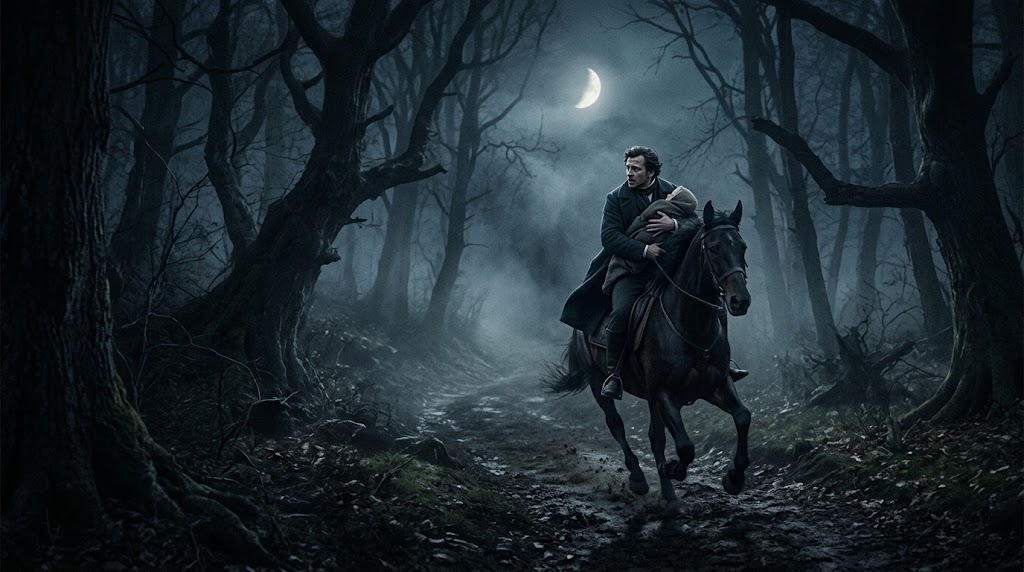
Inspired by Johann Wolfgang von Goethe's (1749–1832) famous poem, Schubert transformed a tale of fear and uncertainty into a dramatic musical experience. With one singer and one pianist, he brought the story vividly to life.
The Story Behind Goethe's Erlkönig
Goethe's poem tells the story of a father riding through the night with his young son. The child believes he sees the Erlking, a mysterious figure who calls to him, while his father insists that what he sees is only mist and shadows.
As the child's fear grows, the poem ends tragically, leaving the reader uncertain whether the Erlking is real or imagined.
How Schubert Turned a Poem into Music
Schubert transformed Goethe's poem into a vivid musical drama. One singer performs four roles—the narrator, the father, the son, and the Erlking—while the piano drives the story forward.
The result feels almost like a miniature opera for voice and piano. Rather than simply telling the story, Schubert allows us to experience its fear, urgency, and growing tension through music.
What to Listen For in Erlkönig
Listen first to the piano. Rapid repeated notes create a sense of relentless motion, evoking the galloping horse carrying father and son through the night.
Notice how each character sounds different. The narrator guides the story, the father sings in a lower and steadier voice, and the child sounds increasingly anxious as the song unfolds.
The Erlking is different again. His music sounds smooth and inviting, almost comforting at first. Yet beneath that gentleness lies something unsettling. By the end, the growing urgency drives the story toward its tragic conclusion.
Fear, Uncertainty, and Trust
Although Goethe's story belongs to another time, its emotions remain familiar. We all face moments of fear, uncertainty, and situations we cannot control. The father wants to protect his child, yet he cannot remove his son's fear or fully understand what is happening.
“When I am afraid, I put my trust in you.” — Psalm 56:3
The Bible does not ignore fear. It reminds us that we can turn to God in the midst of it. Trust does not require having every answer. It means remembering that God remains present even when the path ahead is unclear.
Perhaps that is part of what makes Erlkönig so powerful. Schubert gives vivid expression to fear and uncertainty—emotions that can be difficult to put into words. Yet Psalm 56 reminds us that trust can exist even in the midst of fear.
Read previous: How Dante Inspired Liszt: Franz Liszt’s Dante Sonata