
It's Not About the Gift
 Photo image courtesy Vlada Karpovich at Pexels.com
Now on his way to Jerusalem, Jesus traveled along the border between Samaria and Galilee. As he was going into a village, ten men who had leprosy met him. They stood at a distance and called out in a loud voice, “Jesus, Master, have pity on us!”
When he saw them, he said, “Go, show yourselves to the priests.” And as they went, they were cleansed.
One of them, when he saw he was healed, came back, praising God in a loud voice. He threw himself at Jesus’ feet and thanked him—and he was a Samaritan.
Jesus asked, “Were not all ten cleansed? Where are the other nine? Has no one returned to give praise to God except this foreigner?” Then he said to him, “Rise and go; your faith has made you well.” — Luke 17:11-19
I love this story of the Thankful Leper because the one thankful man reminds me of my children. How many times, when they were little, did they rush to me with a big, squeezy hug before "Thank you" could spill from their lips?
A cheeseburger for lunch? [squeezy hug] Thank you, Mom.
New Lego set for a birthday? [squeezy hug] Thank you, Mom.
Playdate at a friend’s house? [squeezy hug] Thank you, Mom!
That kind of thankfulness is what we see in the Thankful Leper, which should teach us, among other things, that a sincere thankful response is not bound by age.
Last Christmas, we gave our teenage daughter a guitar, the one thing she’d been asking for for months. As soon as she recognized the shape of the gift, she stopped opening it and rushed to us with one of those hold-on-and-don’t-fall-over hugs.
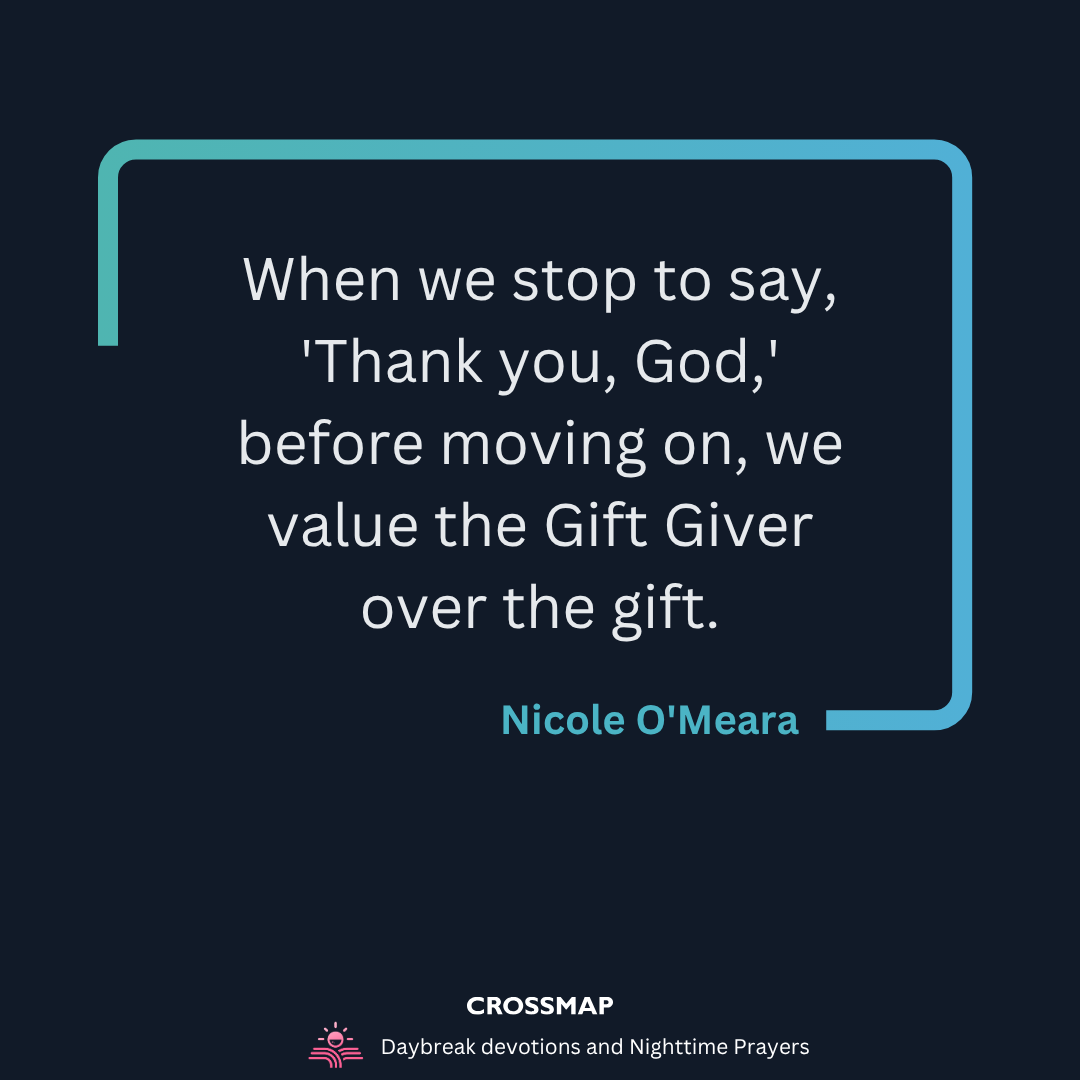
When God gives us the desire that lives deep in our hearts, thankfulness is the appropriate response. When we stop to say, "Thank you, God," before moving on, we value the Gift Giver over the gift.
This is what the Samaritan leper did. He recognized that the gift of his healing was a sign of how much God loved him, and that knowledge overwhelmed him so much, he had to stop to say Thank you.
His thanksgiving was costly.
First, it slowed the man down. He was on his way to see a priest to get the "all-clear" sign so that he could see his family. It may have been years since he’d hugged his family. Stopping to say thank you cost the man time with his family.
Second, it separated the Samaritan man from his community of lepers. These ten men had probably been a little community of sufferers for years. To stop and give thanks to God meant the man had to leave his community. They were taking different paths.
Third, it put him a humbled position. His thanksgiving couldn’t compare with the priceless gift he’d been given. Jesus said to him, “Rise and go; your faith has made you well.” Jesus gave the Samaritan man health and salvation.
Despite the costs, the Samaritan Leper was compelled to stop and give thanks.
How often do we feel that compelled to give thanks?
We might be tempted to think our thanksgiving doesn’t matter to God in the light of eternity. How do two words, thank you, compare to salvation or miraculous healing or any other gift from our Heavenly Father?
In the times when I’ve been compelled to say thank you, I’ve learned that it’s not about the gift.
In my jewelry box, I have a 20-year-old pin made of cardstock, a safety pin, and scotch tape. Basically, it’s junk. But it was made by my four-year-old son as a Mother’s Day gift, and it was given with the biggest heart and biggest smile a proud little man could muster. I held that scribbled scrap of paper in my hand and couldn’t contain my thankfulness. I wrapped him in a squeezy hug and whispered two simple words, "Thank you." And you better believe I wore my pin proudly!
I’ve kept my pin for 20 years because of what it represents. This "priceless" treasure reminds me of how much my son loves me.
When we don’t recognize the Gift Giver, we devalue the love behind the gift, and the gift itself loses value.
Let’s be like little children, rushing to give thanks to our loving Heavenly Father for every gift, little and big.
Questions for Reflection:
1. When have you felt compelled to give thanks for a gift from God? If you haven’t, is it because God has not given good gifts to you or that you’ve missed the love behind the gifts?
2. How will you thank God first, for gifts he’s given you this year? This week? Today?