Jehovah Nissi Meaning: The Lord My Banner of Victory
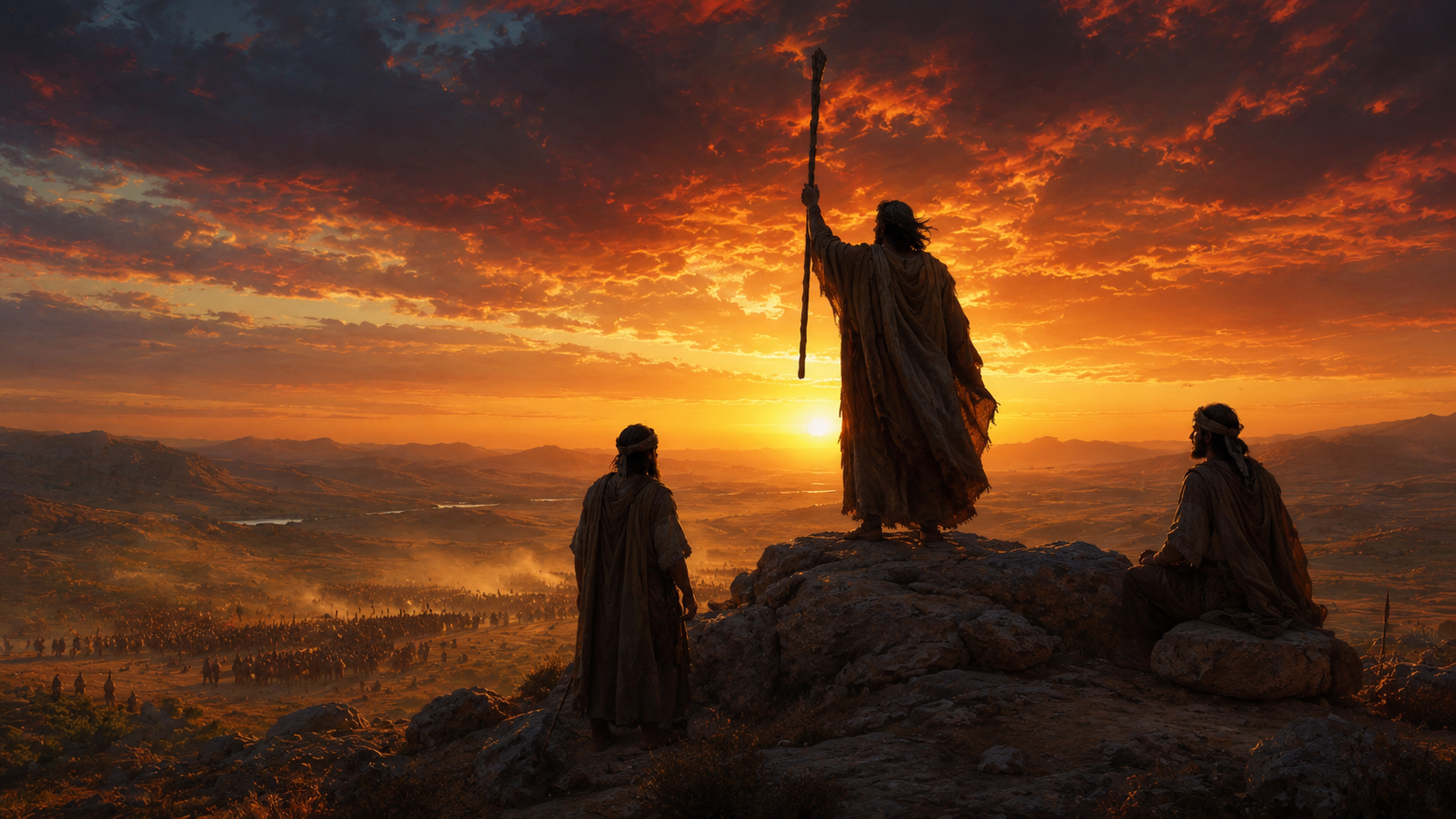
The first time the Israelites raised a sword in their own defense, they'd been free for less than three months. They had walked out of Egypt under a column of cloud. They had crossed the Red Sea on dry ground. They had drunk water from a struck rock at Rephidim. And then, before they had even reached Sinai, an enemy named Amalek attacked them from behind, going after the weak and the stragglers.
The battle that followed gave the world one of the most evocative names of God in the entire Bible. When Moses built an altar to commemorate the victory, he didn't name it for the soldiers who fought. He didn't name it for the strategy that worked. He named it for the staff he'd held above his head until his arms gave out.
He called it Jehovah Nissi — "the Lord is my banner."
This is a name with the smell of battle on it. It's not a name for quiet contemplation. It's the name for the moment your strength runs out. To understand what Jehovah Nissi means is to understand what Israel learned the day they fought their first war. The banner over them wasn't their courage, wasn't their weapons, wasn't even Moses's raised hands. It was the God who held all of those up.
What does Jehovah Nissi mean in Hebrew?
The name Jehovah Nissi (יהוה נִסִּי) is built from two Hebrew words.
Jehovah (יהוה) is the English transliteration of the Tetragrammaton — the four Hebrew consonants YHWH that represent the personal, covenant name of God revealed to Moses at the burning bush. Many modern translations render it as "the LORD" in small capitals. More recent scholarship often prefers the transliteration Yahweh.
Nissi (נִסִּי) comes from the Hebrew word nes (נֵס), meaning "banner," "standard," "ensign," or "signal." The "-i" ending is a possessive suffix, making it "my banner."
Translated together, Jehovah Nissi means "the Lord is my banner" or "Yahweh is my standard." The KJV renders it "Jehovah-nissi." The NIV gives "The LORD is my Banner." The ESV reads "The LORD Is My Banner."
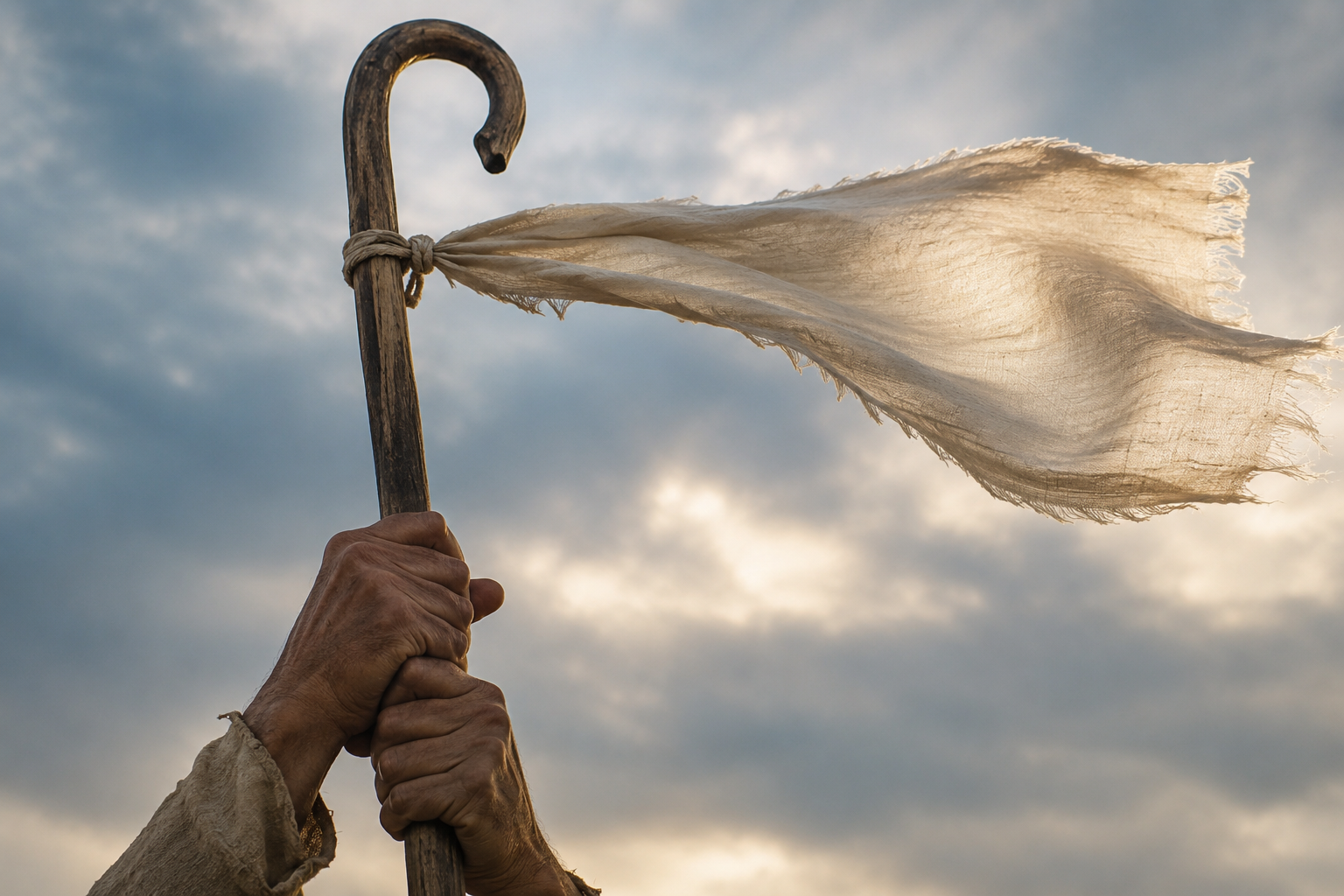
The word worth pausing on is nes. In the ancient world, a banner wasn't decorative. It was a rallying point in battle. A tall pole raised in the middle of the army, so scattered or wounded soldiers could find their way back to their unit. It was also a signal of identity, declaring whose army you belonged to. And in some contexts, nes could even refer to a miracle or a sign — something lifted up that pointed beyond itself.
When Moses named God Jehovah Nissi, he was drawing on all of those meanings at once. God is the rallying point. God is the identity. God is the miraculous sign lifted above the battle.
Where does Jehovah Nissi appear in the Bible?
The name appears once, in Exodus 17:15–16, right after Israel's victory over Amalek. Here is the passage in three translations:
KJV (Exodus 17:15–16): "And Moses built an altar, and called the name of it Jehovah-nissi: For he said, Because the LORD hath sworn that the LORD will have war with Amalek from generation to generation."
NIV (Exodus 17:15–16): "Moses built an altar and called it The LORD is my Banner. He said, 'Because hands were lifted up against the throne of the LORD, the LORD will be at war against the Amalekites from generation to generation.'"
ESV (Exodus 17:15–16): "And Moses built an altar and called the name of it, The LORD Is My Banner, saying, 'A hand upon the throne of the LORD! The LORD will have war with Amalek from generation to generation.'"
The closing verse is famously hard to translate — the Hebrew is compressed and ambiguous. But the heart of the moment isn't. Moses built an altar specifically to remember that the victory belonged to God, and he gave that altar a name that would outlive the battle.
The story behind the name: Moses, Joshua, and the battle at Rephidim
The full account of the battle is in Exodus 17:8–16, and it's one of the strangest war stories in the Bible.
The Israelites had just camped at Rephidim. They had no army in any meaningful sense. They were a former slave population, recently freed, traveling with women, children, livestock, and whatever they could carry. Amalek attacked them, targeting (according to Deuteronomy 25:18) the weakest who lagged behind.
Moses gave Joshua command of the fighters. But the strategy Moses chose for himself was peculiar. He climbed a hill overlooking the battle, taking with him Aaron and Hur, and the staff of God in his hand.
What the text says next is remarkable: "As long as Moses held up his hands, the Israelites were winning, but whenever he lowered his hands, the Amalekites were winning" (Exodus 17:11, NIV).
Moses's arms grew tired. So Aaron and Hur brought a stone for him to sit on, and they stood on either side of him, holding up his hands — one on the left, one on the right — until the sun went down. The battle below ebbed and flowed with the position of Moses's arms.
When the day ended and Joshua had defeated Amalek with the sword, Moses didn't name the altar after Joshua's victory. He didn't name it after his own perseverance. He named it for what the staff had pointed to all day. God himself. The banner lifted above them.
Why Jehovah Nissi matters: three theological insights
1. The victory is God's, not ours
It would have been easy for Israel to credit Joshua's military leadership, or Moses's persistence, or their own bravery in their first battle. The whole structure of the story is designed to make that interpretation impossible. Moses's arms. The swinging tide of battle. The failure when his hands dropped. The victory rose and fell with the banner, not with the soldiers.
To call God Jehovah Nissi is to acknowledge that whatever ground we hold, we hold because he holds it for us. This isn't a denial of human effort. Joshua fought. Aaron and Hur lifted. Moses persevered. But the banner over them was the source of the strength, and the credit belonged to him.
2. Lifting the banner means lifting our weakness toward God
There's something profoundly honest about Moses needing two men to hold his arms up. He was the leader. He was the deliverer. He had spoken with God on the mountain. And he couldn't, by himself, hold his hands up long enough.
The image of Aaron and Hur standing on either side of him, holding his hands toward heaven, is one of the tenderest pictures of community in the Pentateuch. To live under Jehovah Nissi is to admit that we're not strong enough to keep our own arms raised — and to receive the help of those whom God places beside us.
If you're exhausted in a battle that has gone on longer than you expected, Jehovah Nissi is the name to call on. It's also the name to remember when you're the one holding up someone else's hands.
3. The banner is for identification, not just inspiration
Banners in the ancient world told you whose side you were on. To rally around a banner was to declare an allegiance. When Moses called God his banner, he was claiming an identity for Israel that would outlast any single battle. We belong to this God. The world will know us by his name.
For Christians today, this is more than metaphor. To live under Jehovah Nissi is to wear a public identity. It's to be known by whose banner you carry, even when no swords are drawn.
Jehovah Nissi in the New Testament: Christ lifted up
The Old Testament theme of God as banner shows up in the New Testament in an unexpected place. Not a military image. A crucifixion.
In John 3:14, Jesus tells Nicodemus: "Just as Moses lifted up the snake in the wilderness, so the Son of Man must be lifted up, that everyone who believes may have eternal life in him." Jesus is referring to Numbers 21, where Moses lifted a bronze serpent on a pole — itself sometimes called a nes in the Hebrew — so that anyone who looked at it would be healed.
The pattern repeats. A banner lifted up, and a people who live by looking at it. The cross becomes the ultimate Jehovah Nissi. The standard raised in the middle of the war. The rallying point for everyone who has been wounded. The public declaration of whose army we belong to.
Isaiah anticipates this with stunning clarity: "In that day the Root of Jesse will stand as a banner for the peoples; the nations will rally to him" (Isaiah 11:10). Paul echoes it from the other side of the cross: "God exalted him to the highest place and gave him the name that is above every name" (Philippians 2:9).
To call God Jehovah Nissi today is to look at the cross and remember whose battle we're in.
When you are losing strength: praying Jehovah Nissi
The most honest moment in the Rephidim story is when Moses's arms get tired. There's no shame in it. The narrative doesn't treat it as a failure. It treats it as the occasion for community and for God's faithfulness to be demonstrated.
If you're in a battle that has lasted longer than you thought you had strength for — a season of illness, a marriage in trouble, a child who has wandered, an addiction that keeps returning, a workplace that feels like a war zone — Jehovah Nissi is the name to pray. Not because praying it ends the battle. Because it reminds you that the banner over you was never your arms in the first place.
A prayer to Jehovah Nissi
Jehovah Nissi, Lord my banner, I am tired. My arms will not stay up on their own, and the battle has gone on longer than I expected. Be my rallying point today. Be the standard I orient myself toward when I cannot see the end of this. Send me the Aarons and the Hurs who will lift my hands when I cannot lift them myself. And teach me to look up at the banner of the cross, where you have already won the war that matters most. In the name of Jesus, who was lifted up so that I could be healed, Amen.
Frequently asked questions about Jehovah Nissi
Is "Jehovah" the correct way to say God's name?
"Jehovah" is a Latinized form of the Hebrew Tetragrammaton YHWH, combined with the vowels of Adonai ("Lord"). Most modern scholars prefer the transliteration "Yahweh." Both refer to the same covenant name of God. The names "Jehovah Nissi" and "Yahweh Nissi" are interchangeable.
How do you pronounce Jehovah Nissi?
Jehovah Nissi is commonly pronounced jeh-HOH-vah NEE-see. The Hebrew original would be closer to yah-WEH nis-SEE.
Why did Moses name an altar instead of God himself?
Moses named the altar with this name, which then becomes a title for the God who is worshiped there. This is a common biblical pattern — Jacob does the same thing at Bethel ("house of God") and at El-Elohe-Israel. The name of the altar declares something true about the God whose presence the altar marks.
What is the difference between Jehovah Nissi and Jehovah Jireh?
Both are Jehovah-compound names tied to a specific encounter. Jehovah Jireh ("the LORD will provide") was named by Abraham on Mount Moriah after the ram was provided in place of Isaac (Genesis 22:14). Jehovah Nissi was named by Moses after the battle at Rephidim. Each name highlights a different aspect of God's character in a specific moment.
Next Article: El Elyon