Music & Architecture (Part 4): Classical Architecture and Musical Balance
Classical architecture and Classical music share a common language of balance, proportion, and clarity. After the complexity of the Baroque era, both styles moved toward calmer, more ordered forms that emphasized harmony, restraint, and elegant structure.
1. A Return to Simplicity
In the late eighteenth century, architects turned again to the models of ancient Greece and Rome. Buildings became more symmetrical and measured, with less decoration and greater emphasis on form. Columns, pediments, and clean geometric lines replaced the ornate richness of the Baroque.
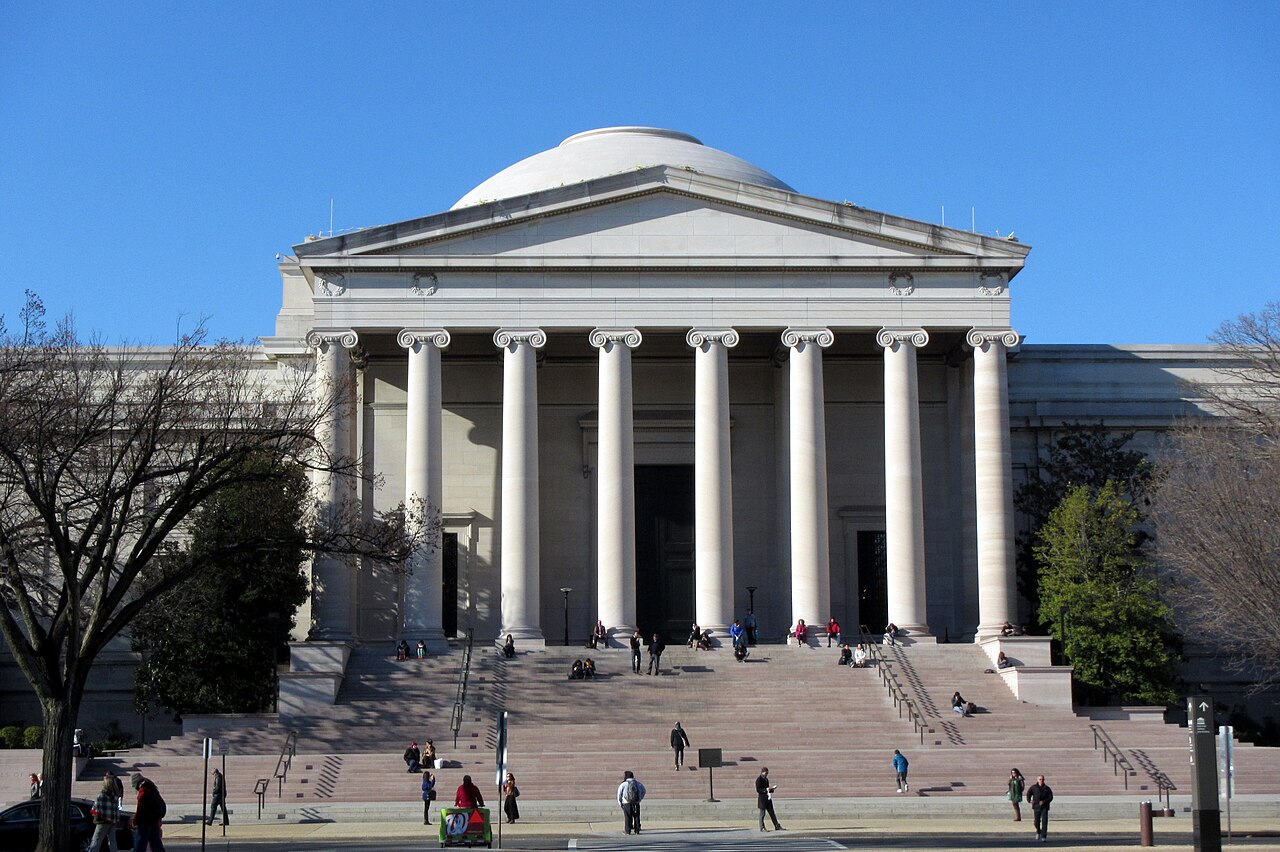 National Gallery of Art
The beauty of Classical architecture lies not in constant embellishment, but in proportion and stability.
A similar shift happened in music.
2. Balance and Clarity in Classical Music
Composers such as Joseph Haydn, Wolfgang Amadeus Mozart, and early Ludwig van Beethoven moved away from the dense textures and ornate complexity of the Baroque. In its place, they favored clearer melodies, lighter textures, and balanced phrasing.
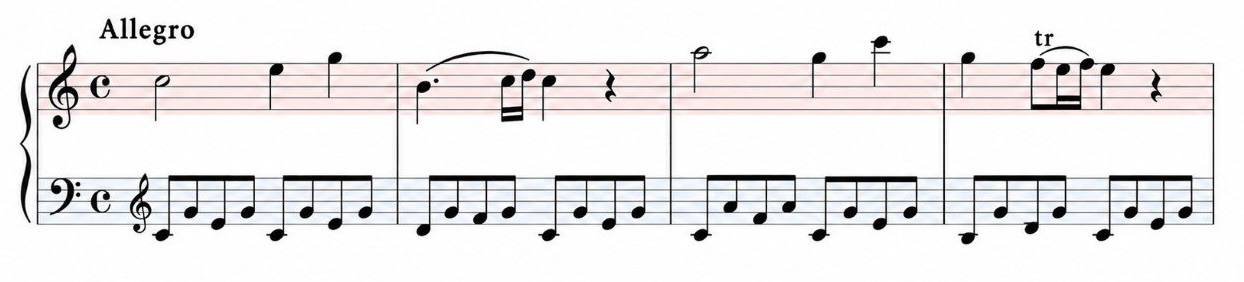 Mozart Piano Sonata No.16 — Right hand (red) carries the melody; left hand (blue) provides the accompaniment
Instead of hiding structure beneath ornament, Classical music allows the structure itself to be heard.
Tension still exists, but it is controlled and proportioned. The music feels ordered without becoming rigid.
3. Sonata Form and Architectural Structure
One of the clearest examples of Classical thinking is sonata form. A musical idea is introduced, developed, contrasted, and finally brought back into balance.
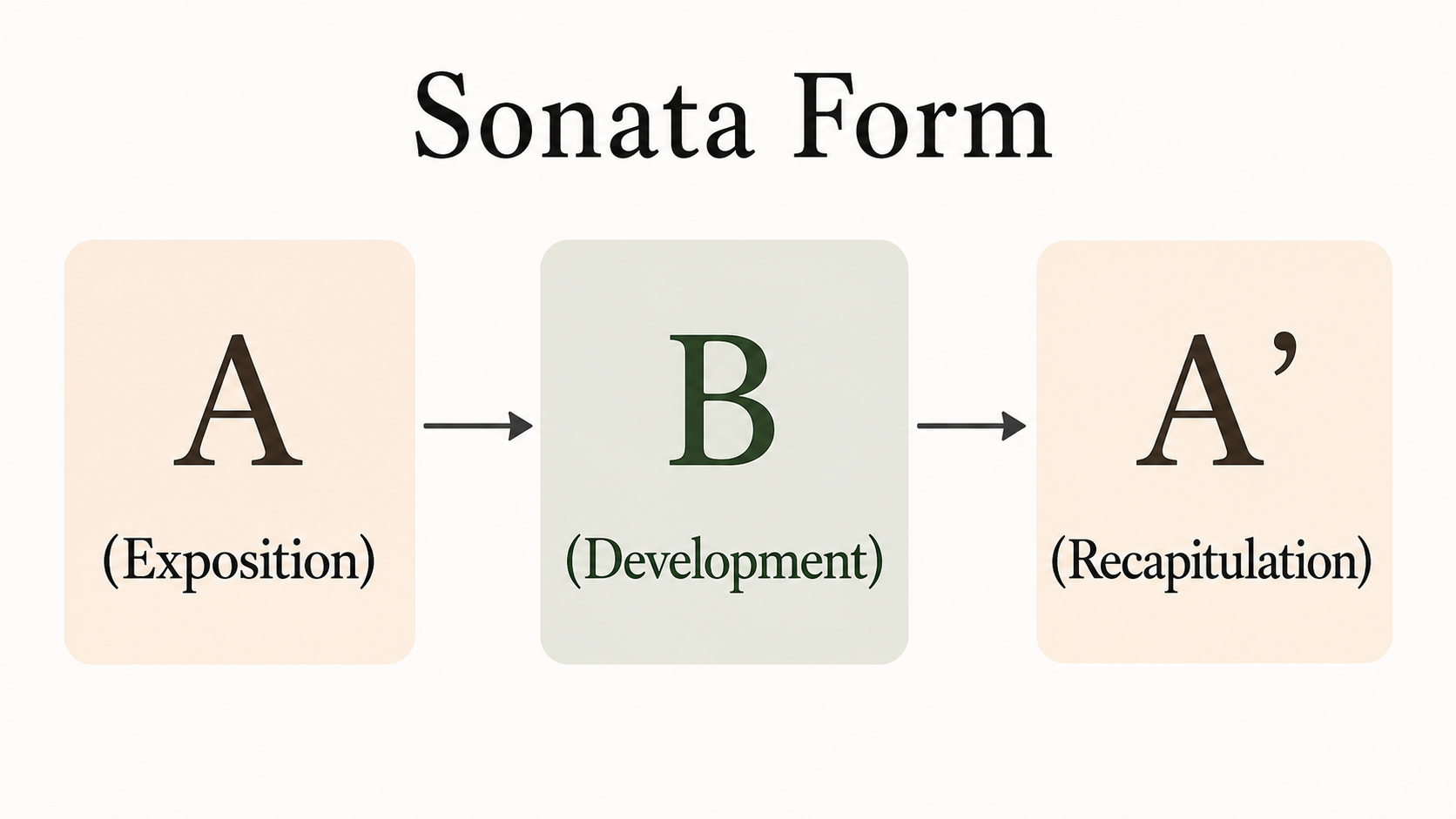 This resembles Classical architecture, where balanced wings, central entrances, and proportional design create unity through structure.
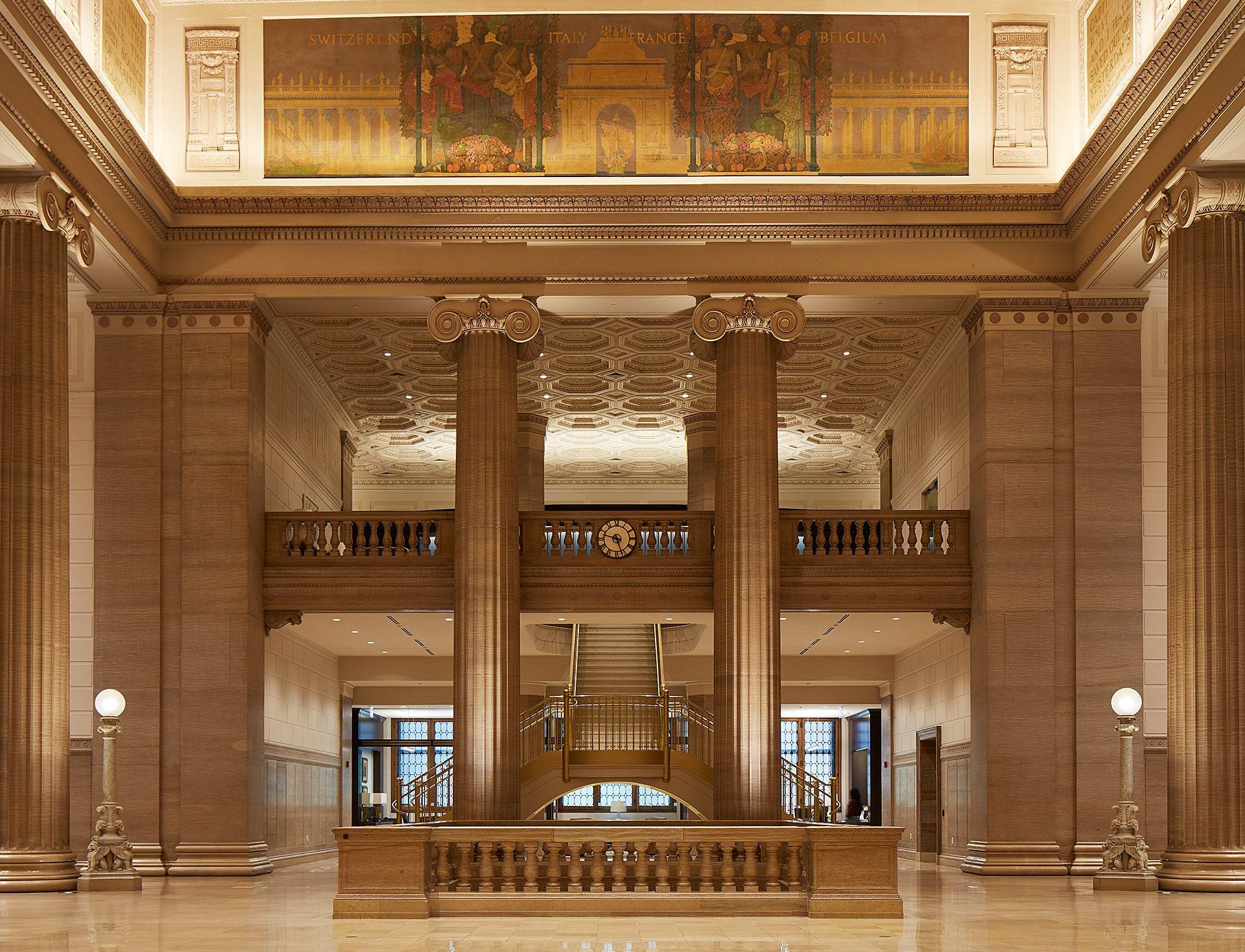 Chicago Architecture Center
In both music and architecture, beauty emerges not from excess, but from proportion.
4. The Rondo Principle
Classical music often unfolds through balance: question and answer, contrast and return. Rondo form extends this idea through recurring variation, where a central theme keeps returning between contrasting sections.
The structure is circular — the term rondo itself suggests a “round” shape — most clearly seen in ABACA (5-part rondo) and ABACABA (7-part rondo). Like an architectural motif repeated across a building, the theme creates unity while the episodes provide contrast and movement.
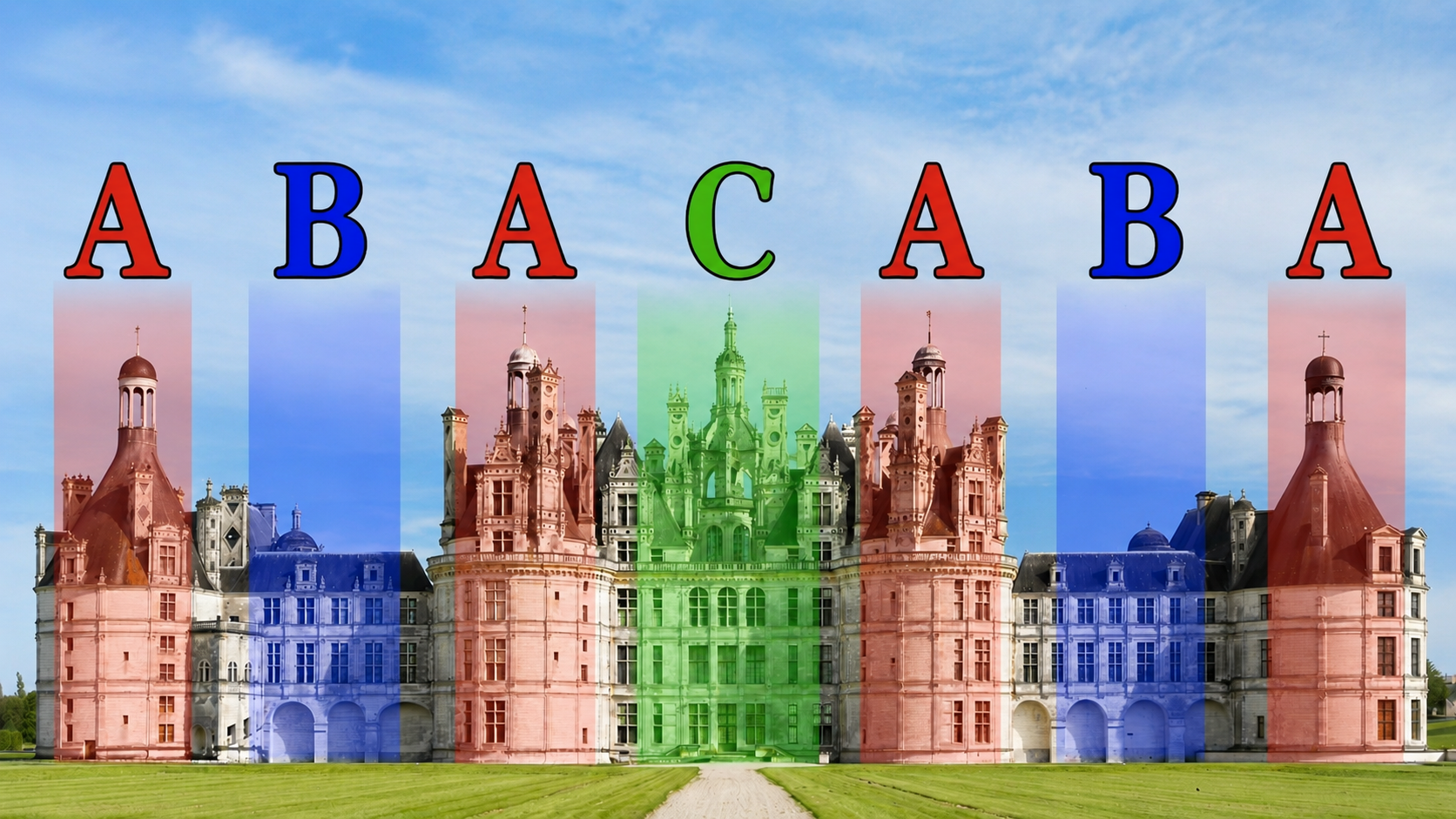 Château de Chambord visually mirrors the recurring structure of rondo form
Mozart’s Piano Concerto No. 21 in C major, third movement, is an example of rondo form — bright, balanced, and constantly returning "home."
Conclusion: Classical Balance in Music and Architecture
Classical architecture teaches the eye proportion. Classical music teaches the ear to hear proportion.
Both remind us that beauty does not depend on excess—it often emerges most clearly through balance, order, and restraint.
Experience this perfect balance in Mozart’s Symphony No. 40 here. (Affiliate link)
Read previous: [Music & Architecture (Part 3): Baroque Architecture and Musical Ornamentation]