Music & Painting (Part 5): Romanticism, Nature, and the Search for the Sublime
The Romantic era brought a new way of seeing the world. Artists and musicians turned toward emotion, imagination, and personal experience, seeking beauty in mystery, wonder, and longing.
Nature played a central role in this vision. Mountains, storms, and distant horizons inspired a sense of the sublime—an experience of awe before something vast and beyond ourselves.
Nature as a Spiritual Encounter
Romantic painters didn't simply paint what they saw; they painted what they felt. Rather than merely representing the natural world, they sought to express the emotions, mystery, and wonder it awakened.
 Wanderer Above the Sea of Fog (1818) — Caspar David Friedrich
Caspar David Friedrich's Wanderer Above the Sea of Fog captures this spirit beautifully. A lone traveler gazes across a sea of mist toward distant mountains, inviting us into a moment of wonder and reflection.
J. M. W. Turner's Rain, Steam and Speed presents nature in a different way. Rain, light, and steam merge into a scene filled with motion and atmosphere, capturing both the power of nature and the energy of a changing world.
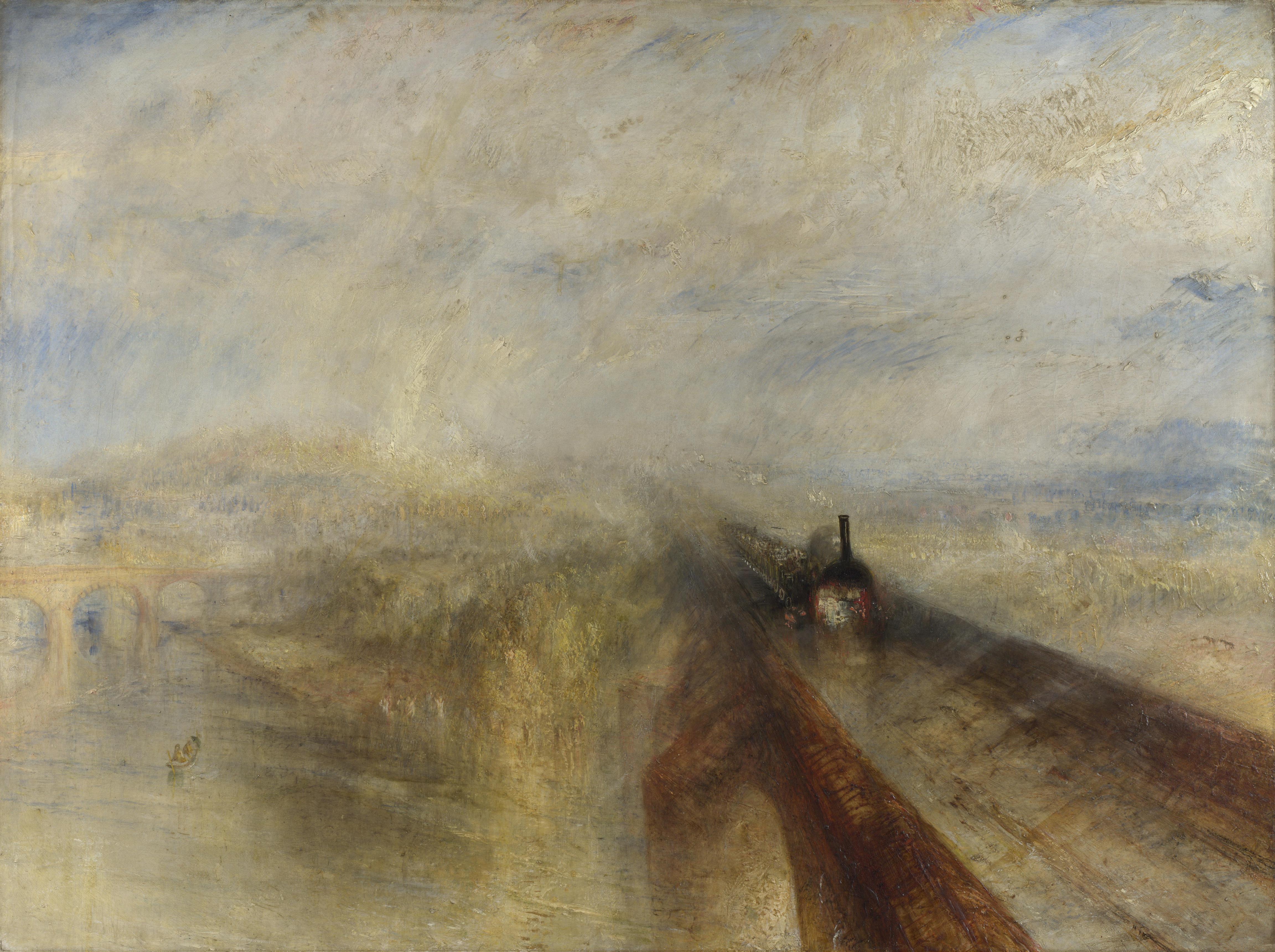 Rain, Steam and Speed (1844) — J. M. W. Turner
Many Romantic artists explored the relationship between humanity and nature. Small figures placed within vast landscapes encouraged viewers to reflect on their place in a world far greater than themselves. Through mountains, skies, and distant horizons, nature became a source of contemplation as well as beauty.
Hearing Romanticism in Music
A similar spirit can be heard in Frédéric Chopin's Ballade No. 1 in G Minor. Like a Romantic landscape, the music moves freely between reflection and passion, inviting listeners on a journey shaped by imagination, longing, and discovery.
As you listen to Chopin's Ballade No. 1, notice how the music continually shifts between moments of calm, tension, and release. Like the landscapes of Friedrich and Turner, the music invites us into a world shaped not only by what we see or hear, but by what we feel and imagine.
The enduring appeal of Romantic art lies in its ability to awaken a sense of awe. Whether through a mist-covered mountain, a storm-filled sky, or a deeply expressive melody, Romantic artists remind us that some of life's most meaningful experiences begin with wonder.
For those who see creation as a gift from God, these moments of wonder can become reminders of the beauty and mystery woven into the world around us.
Related: Music & Architecture (Part 5): Romanticism and Emotional Expression