Named for the Father
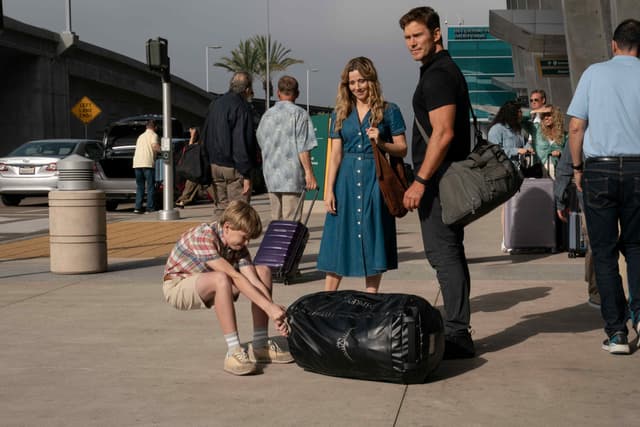
 Photo by Don Lefler on Unsplash
Behold, all souls are Mine; the soul of the father as well as the soul of the son is Mine. The soul who sins will die. -- Ezekial 18:4 [NASB]
My name, RONDA, has no “h.”
My entire life I’ve corrected people, starting with my kindergarten teacher up to a new dentist just last week. Although the success of a certain female boxer has led to fewer misspellings, my parents named me for my dad, Ronald.
It’s odd to sit in college Psychology 101 and realize that your dad struggled with a lifelong personality disorder called dysthymia. Now called PDD, persistent depressive disorder is a chronic, low-grade form of depression. Genetics and biology play a role, but in Dad’s case, it was early childhood trauma and chronic stress. Lots of stress and probable ADHD. PDD is treatable now, but decent medicines didn’t exist until he had retired.
His comment after being on antidepressant was, “I think I’ve been depressed my whole life.”
If you ask a Jewish person who their father is, you may get one of three replies.
- Their earthly father’s name, or
- Their ancestral father, Abraham, or
- Both.
God directly called Abraham of Ur, an ancient “Mesopotamian,” and promised a new land called Canaan for him and his descendants. Abraham is a “Shemite” because he descended from Shem, a son of Noah. The nation of Israel is named for Jacob (Israel), Abraham’s grandson and father of 12 sons, whose descendants were the 12 Tribes.
After Jesus’ crucifixion and resurrection, the Apostle Paul clarified in Galatians 3:28 that we have all become one in Jesus Christ, who broke down the barriers. “There is neither Jew nor Greek, there is neither slave nor free man, there is neither male nor female; for you are all one in Christ Jesus.” He points out all believers have Abraham as our Father because of faith, even if we aren’t blood descendants.
Therefore, the promise comes by faith, so that it may be by grace and may be guaranteed to all Abraham’s offspring—not only to those who are of the law but also to those who have the faith of Abraham. He is the father of us all. (Romans 4:16, NIV)
My father passed away nearly a decade ago. While grief has lessened over the years, important news still prompts me to think, “I should call Dad.” I dearly wish I could.
Questions for Reflection:
1. Whom do you claim as your "faith" father?
2. Do you have a living father or father figure? If you aren’t close, can you somehow reach out before it’s too late? Some dangerous situations call for complete avoidance, but you can pray. Can you send a card or even better, a letter? Sometimes a simple acknowledgment makes a vast difference, even to a nonbeliever.
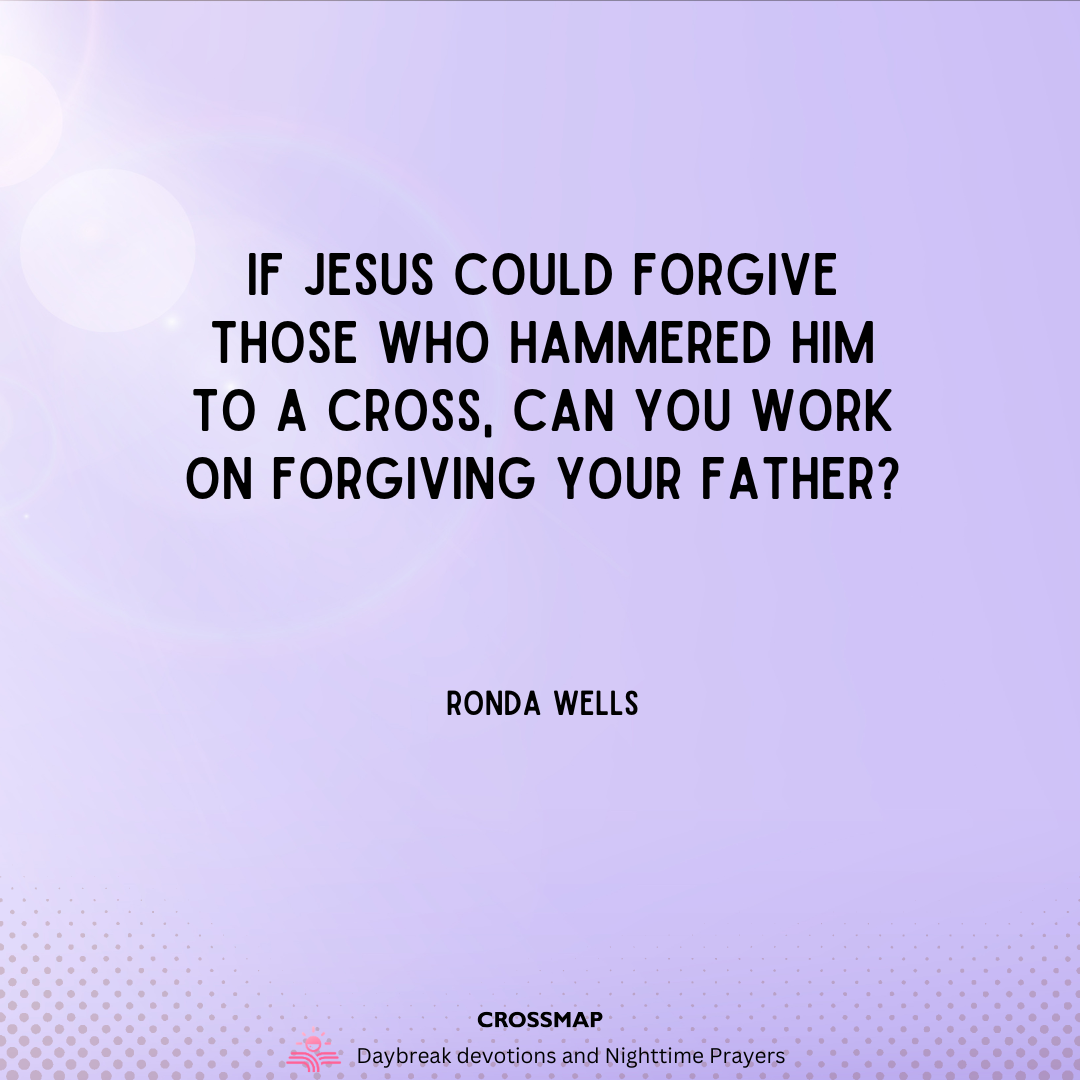
3. If you can’t forgive your dad, remember no human father is perfect. Only God can change hearts, but He listens to prayer. My dad suffered between silence and outrage for decades, unaware what was wrong. Living with him could be like walking on eggshells. If Jesus could forgive those who hammered him to a Cross, can you work on forgiving your father? “Father, forgive them for they know not what they do.” (Luke 23:34, NIV)
You may not get any response, but no one can say you never tried.