New Devotional Book 'Praying with St. Patrick' Explores Becoming Less for God's Glory
Movie director Aaron Burns has developed a well-earned reputation over the last few years for piloting films that firmly illustrate God’s redemptive hope through the eyes of common men and women. His hope is that people will see that God can use anybody for His purposes.
While his next movie project on the life of actor Jimmy Stewart will certainly show how an imperfect, flawed man can have a mighty impact on the lives of others, Burn’s latest project also highlights a flawed man with a gritty resolve to become less for God’s glory.
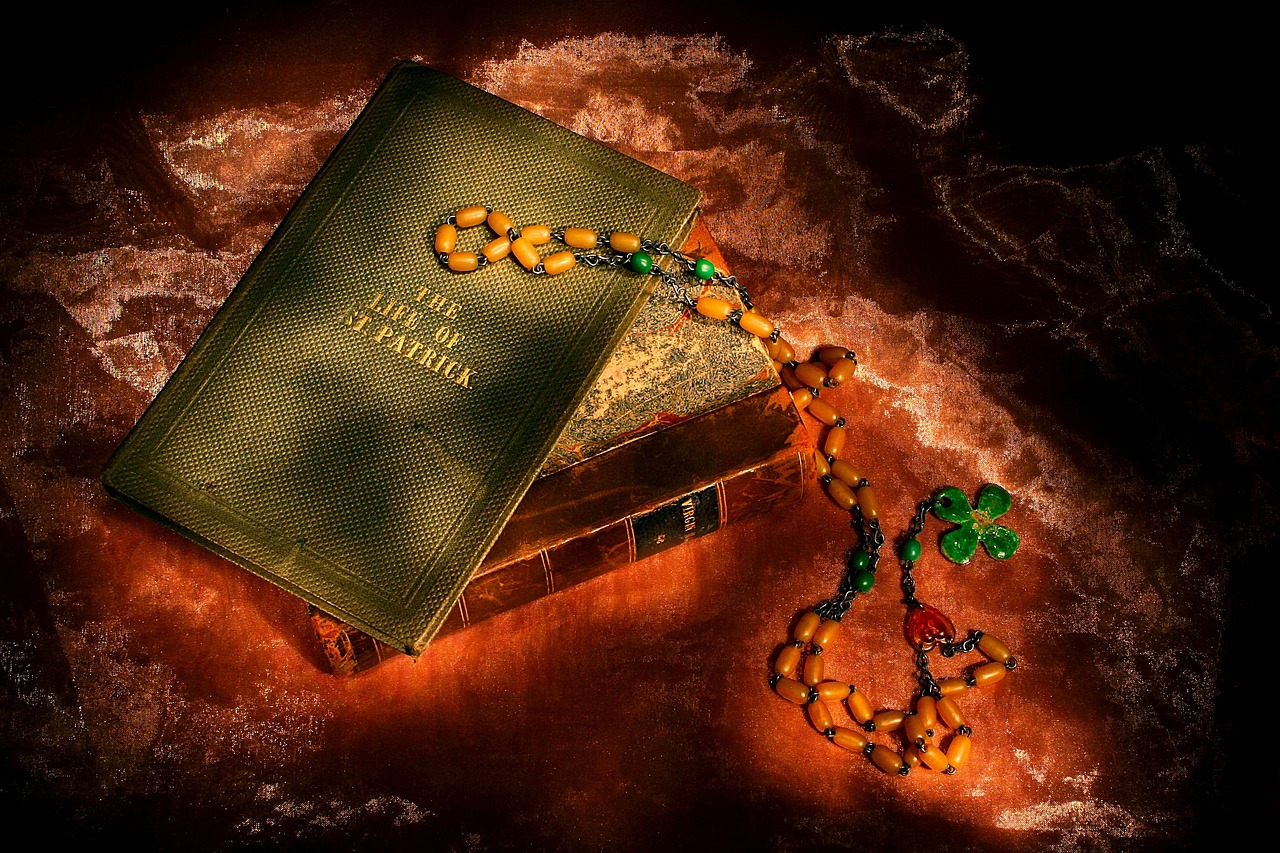
Along with co-author Matt Mikalatos, Burns has released Praying with St. Patrick, a devotional book that highlights the life and prayers of one of Ireland’s most beloved figures. The 176 page offering takes readers on a journey through Patrick’s life, allowing readers to pray his prayers while deepening and enriching their own prayer lives.
I recently sat down with Burns to discuss the man who fought selflessly for the freedom of others, why the celebration of St. Patrick’s day is so much more than wearing green, and how what he stood for is just as important today as it was during his lifetime more than 1,500 years ago.
If you were trying to convince a friend or a family member to pick up a copy of Praying with St. Patrick, what would you say to encourage them? What would your sales pitch be?
Well, every March 17th you are bombarded with messages about wearing green or the mindset of “Kiss me I’m Irish” to celebrate in some way. And I bet you have no idea the power and the beauty of the story of the man's life that you're celebrating and what he means to us today. I became interested in St. Patrick's life and I think if you take a look at the book, you'd be so interested in the story of the life he lived and inspired by his faith and his actual writings would be worth checking out.
For every author, there always seems to be a trigger, a tipping point, a moment where you say to yourself, “I have to write this book!” For Praying with St. Patrick, what was that moment for you?
I am Irish-American. I have ancestors from Ireland, like 33 million other Americans do. But to be honest, I had no idea if St. Patrick was any more real than Robin Hood or King Arthur. Several years ago, I read a copy of his letters that he wrote, manuscripts that historians agreed that yes, these are the writings of Patrick. And when I read them, I was so moved by the story of this man and just fascinated. He wasn't Irish, he was British. This was in 400 A.D, over 1,500 years ago. He grew up in Western Britain, the son of a deacon and a grandson of a pastor. But he wanted nothing to do with God, religion, or any of that stuff until he was kidnapped by Irish pirates and sold into slavery where he spent seven years, taking care of sheep in the wilds of Ireland.
And at that time, God moves in his heart. God brings to mind the things that his dad taught him and teaches him to pray. And he comes to faith, and winds up miraculously escaping, coming back home to Britain. But then God says, “I want you to go back and share the love that you've been given with the people who enslaved you.” I have no such profound story. It is so beautiful. And it resonated with me so deeply. And, then at the end of his letter, he says, “One of my prayers is that when everyone hears about me, whenever they hear about what happened in Ireland, that they wouldn't think of me, but they would think of (Jesus) Christ. And what happened in his lifetime was so profound. It's the end of human trafficking. That he was the victim of the end of child sacrifice and the ushering in of what historians call the golden age of saints and scholars. This is the 300 years of Irish history where schools and monasteries are being founded and missionaries are taking the love of Christ around Ireland, the British Isles, and the rest of Europe.
When I read that prayer, when I was moved by his story, I realized that that has not been answered yet. Because when people think of St. Patrick, they think of leprechauns, green beer and a river in Chicago being dyed green . So, I felt this joy and it was so compelling that my tipping point was wanting to share that story with the world. I wanted to say how I've been impacted by it. I need to let the world know why we're celebrating St. Patrick.
St. Patrick was a man known for living a life soaked in prayer. He was also known as a man who fought for the freedom of others – slaves, women, and the poor. What made him so special?
I think what connects him, maybe to me as a storyteller, is the underdog rebel story that you see there, that we love in all of our stories. All of our favorite stories have the underdog, the rebel, or the outsider who's trying to go up against a great evil force. And in Patrick's day it was multi-layered. And what's interesting is he was fighting so many of the same battles that we're fighting today. You look at human trafficking, Patrick was literally a victim of human trafficking. And that's a battle that Christians today are fighting and standing up against. In his own way, he was fighting within his own Christian practice. The idea of going as a “missionary” to share the love of Jesus with the Irish was debated, whether or not that even needed to be done.
In his letter, he lays out an argument for missions and says civilized, romanized, Christian good, pagan barbarian, Irish bad. Look at what Jesus says. Look at what the old New Testament says about God's love for the outsider, God's love for others, and our need to go back and share God's love with them. So he's fighting against racism, prejudice, and selfishness in his own church, and even greed. He talks about how he didn't charge money for ordinations. He didn't charge money for baptisms. He would turn away tithes sometime when the people were too poor to afford it. And he lifted up the women, the fatherless, and the abused in his community during that time. And those things translate so well to today. So he was just very unique for his era.
This book is a devotional based on the prayers of St. Patrick and is broken down into eight different prayers. I’m sure there were many prayers that didn’t make the cut which makes the ones you featured that much more special. Why these eight?
One of the things we wanted to do, if people didn't have time to dive into reading all of Patrick's literature that he wrote, was to tell his story. So, we break it down to tell his early life into slave, into student, and then into saint, to take you through that journey of his life. And as we do it, each entry has a quote from Patrick's writings, then it has a quote from Scripture, and then a little paragraph or two summarizing the next piece of his adventure. Then we have a prayer that either Patrick wrote, or that we wrote, pulling from his words. Our goal with it was twofold. One, is to introduce you to the life of Patrick, and two, to demonstrate the relevance of his faith for us today. And so I think, as you kind of take that devotional format, they're easy bite-sized pieces, that will, if you want to do it one day at a time, or if you want to read through the whole book, you can catch the sweep and scope of his journey.
Is there any one of these 8 prayers that you see as the foundational core of the book?
That's a great question. They all come together to form a picture of who Patrick was and who we can be as we follow Christ the way Patrick did. So it is hard to pick just one. But I'll tell you there's one prayer that we break down into a few of these sections that's called the Lorca or the breastplate, like a piece of armor that Patrick prays. And there's a very famous prayer that asks that Christ would be in him, Christ before him, and Christ behind him. And then it ends with a few really interesting thoughts. He says, “I pray that Christ would be in the mouth of everyone who speaks of me, in the eyes of everyone who sees me, in the heart of everyone who thinks of me.”
And it's very much a prayer that Patrick himself would disappear, and that you would see Christ in his place and in his letters. He says, “Look, I don't care if I die and I'm buried in an unmarked grave, and no one knows what happened to me. I just want to live here with the people of Ireland.” And I think that spirit flows through all of his life, through all of his books, and through all of his letters and prayers. That is very inspiring to me.
After people have had a chance to read Praying with St. Patrick, what would you like your readers to get out of the experience? What's your greatest hope for the book?
Two things. I would hope that they would ask themselves the question, where is my Ireland? What is God calling me to do like he called Patrick to do? What is he calling me to do? That's a big picture question. The second one is smaller. I would encourage them on St. Patrick's Day, when you see everyone around you wearing green and eating corned beef, just ask them, “Hey, do you know what you're celebrating?” And what a beautiful opportunity to share the love of Jesus with the people you bump into during March. Just use that as an opportunity to inform people about the amazing story that everyone is celebrating whether they know it or not.
TO PURCHASE PRAYING WITH ST. PATRICK: