One-Third of Americans Trust AI Spiritual Advice as Much as Their Pastor. We Have a Problem.
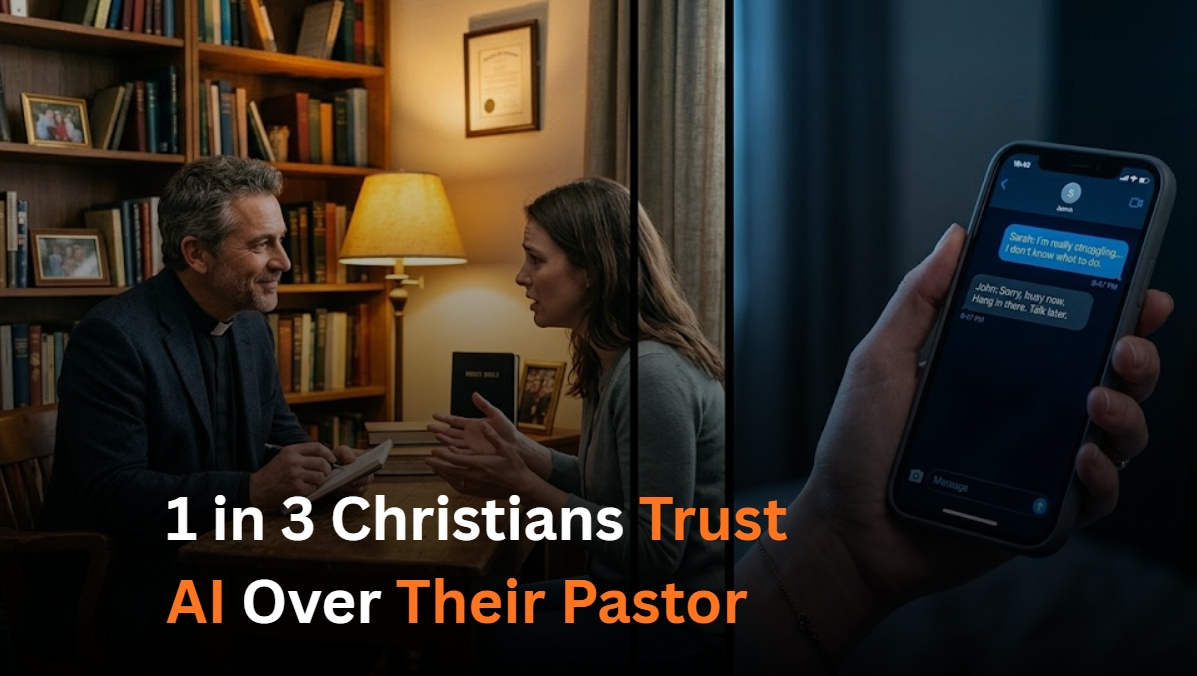 The number stopped me cold when I first read it.
One third of American adults now say that spiritual advice from AI is as trustworthy as advice from a pastor. Among Gen Z and Millennials, the number climbs to two in five.
I've been studying AI for two decades. I've been teaching in a seminary for years. I've watched these two worlds collide in slow motion, and I thought I was past being surprised.
I was wrong.
What the Data Actually Says
The findings came from the State of the Church report by Barna Group in partnership with Gloo, released at the National Religious Broadcasters meeting in Nashville. Nearly one-third of U.S. adults say spiritual advice from AI is as trustworthy as advice from a pastor — with an even larger percentage of Gen Zers and Millennials, two in five, saying it's as reliable. Crosswalk
Read that again slowly.
Two in five young adults in America — including young Christians — consider AI as spiritually reliable as an ordained pastor who knows them, loves them, prays for them, and is accountable to God for the guidance they give.
This is not a technology problem. It is a discipleship problem. And it is one the church is not yet equipped to address — only 12% of pastors say they are comfortable teaching on AI, while 31% of practicing Christians say they want their pastors to offer guidance on navigating it. Crosswalk
Why This Is Happening
I want to resist the easy answer here, which is to say that young people are naive or that the church has failed. Both might be partly true. Neither is the full picture.
The more honest answer is that AI is extraordinarily good at doing the things we associate with trustworthy counsel. It listens without interrupting. It doesn't react with judgment. It organizes information clearly. It's available at 2am. It never has a bad day that colors its response.
Pastors, by contrast, are human. They have limited time, limited availability, and limited energy. They sometimes say the wrong thing. They sometimes don't know what to say at all.
The comparison isn't fair — but it's the comparison people are making.
 What AI Actually Cannot Know
Here is the categorical difference that the comparison misses entirely.
A pastor who has known you for five years brings something irreplaceable to a counseling conversation: they know your history. They know your patterns. They know the version of this story you told three years ago and how it differs from the version you're telling now. They know which of your blind spots to gently probe. They know when to push and when to simply be present.
AI knows what you typed today.
It has no memory of your previous conversations unless you explicitly provide them. It has no access to your history. It cannot notice the discrepancy between what you said last year and what you're saying now. It has no stake in your actual transformation — only in producing a response that satisfies you in this moment.
AI is making thousands of decisions daily about what congregations see, read, and believe via curated news feeds and filtered search results JesusBYS — and now, increasingly, about what they believe about their own spiritual lives.
What the Church Needs to Do Now
This is not the moment for pastors to condemn AI from the pulpit. That ship has sailed — people are using these tools regardless, and condemnation without guidance leaves people navigating alone.
That means sermons and teaching that engage the technology seriously. Small group discussions that name what people are actually doing. One-on-one conversations where pastors ask, without judgment, how their congregants are using these tools in their spiritual lives.
And it means pastors making themselves more accessible — not because AI is the competition, but because the hunger for spiritual guidance that is driving people to AI is real and legitimate and deserves a real response.