Schubert Piano Sonata D.960: When Silence Becomes Music
Franz Schubert’s Piano Sonata in B-flat Major, D.960 is widely regarded as one of the central works of the piano repertoire, valued for its depth and spaciousness.
Completed in September 1828, just two months before Schubert’s death at the age of 31, the sonata was never published during his lifetime, nor did he hear it performed.
Among pianists, it is often regarded as a challenging work—not in a technical sense, but in the depth of interpretation required to bring it to life with coherence and conviction.
Music That Breathes
Across the sonata, long lines unfold at an unhurried pace, with phrases often settling into silence before continuing, as if the music is thinking in real time.
Rather than maintaining constant drive, Schubert allows ideas to emerge and settle. Silence becomes part of the language itself, shaping what comes before and after each phrase. His late style invites a kind of listening that values presence as much as arrival.

The Expansion of Time
One of the most striking qualities of D.960 is its spaciousness. Musical ideas unfold slowly, often returning in altered forms, while harmony shifts with quiet restraint.
Rather than moving directly toward resolution, the music lingers in moments that might otherwise pass unnoticed, creating an experience less like following a narrative and more like inhabiting a landscape—shaped not by force, but by time itself.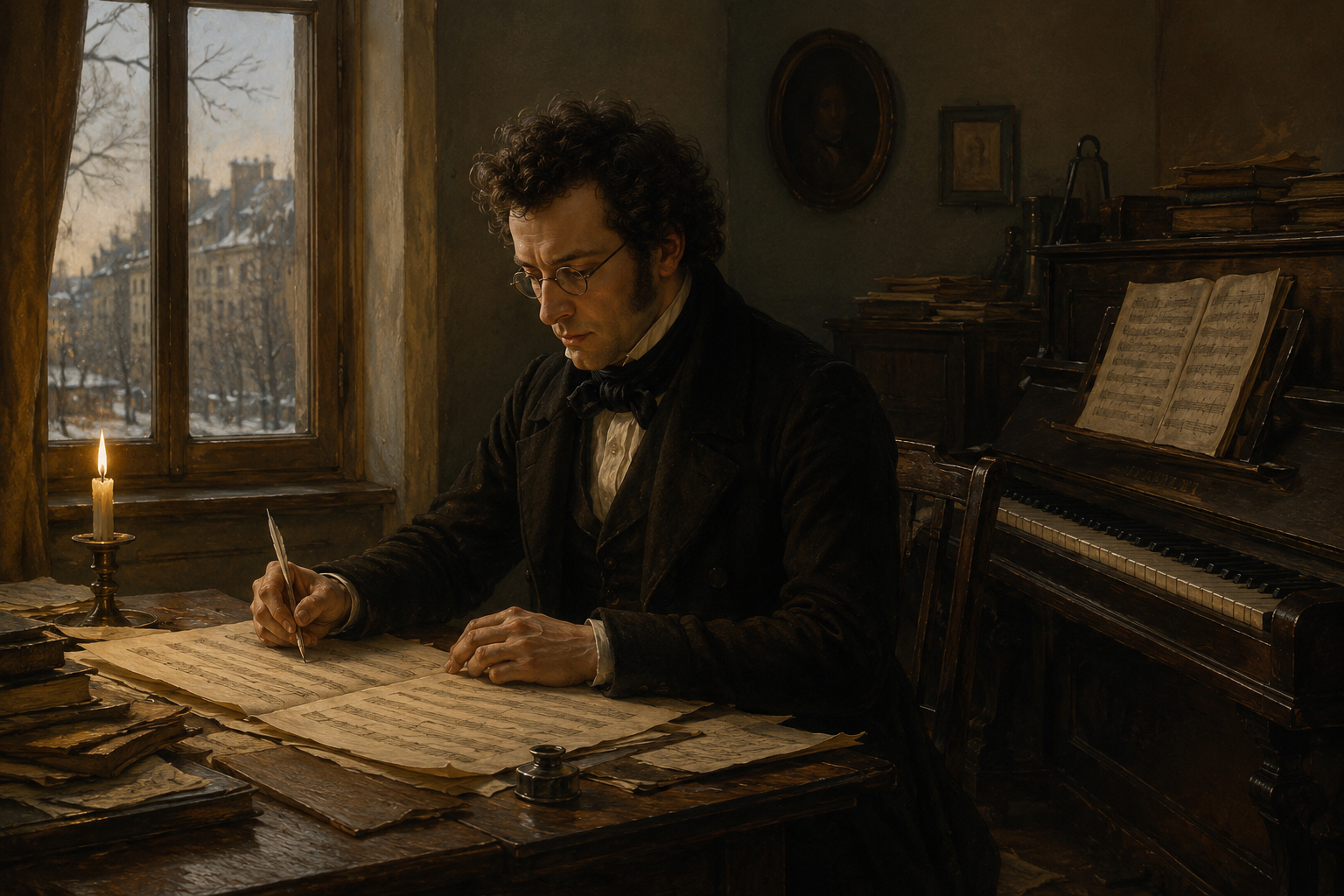
When Silence Speaks
This sense of stillness extends beyond the music. Human life often includes moments when clarity is delayed, outcomes remain uncertain, and progress feels suspended. In such times, silence can feel like absence, yet it may also become a space where understanding slowly forms.
The Christian life also contains this experience of silence. There are seasons when God’s purposes seem hidden and prayers appear to remain unanswered. Yet Scripture consistently frames waiting not as abandonment, but as a form of trust shaped over time.
“Wait for the Lord; be strong, and let your heart take courage; wait for the Lord.” (Psalm 27:14)
Like the spacious silences in Schubert's music, seasons of waiting can feel unresolved. Yet faith affirms that God’s presence is not limited to visible activity; the space between answers is not the absence of God. Even when His purposes remain hidden, He is still present.
Read previous: Schubert and the Sound of Loneliness: How His Early Songs Reveal the Most Intimate Human Emotions