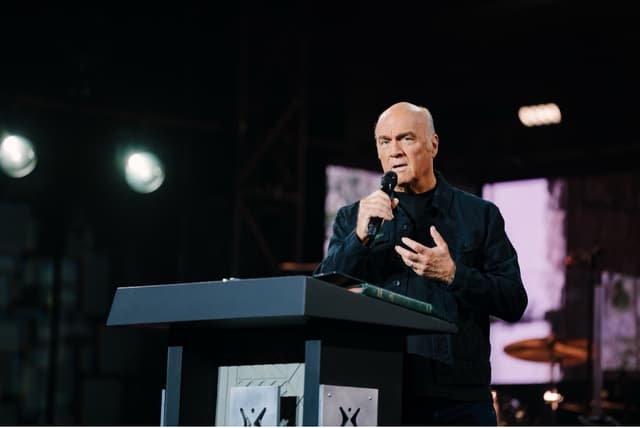
'Soul on Fire': John O'Leary on Hope, Healing, and Finding Purpose from Tragedy
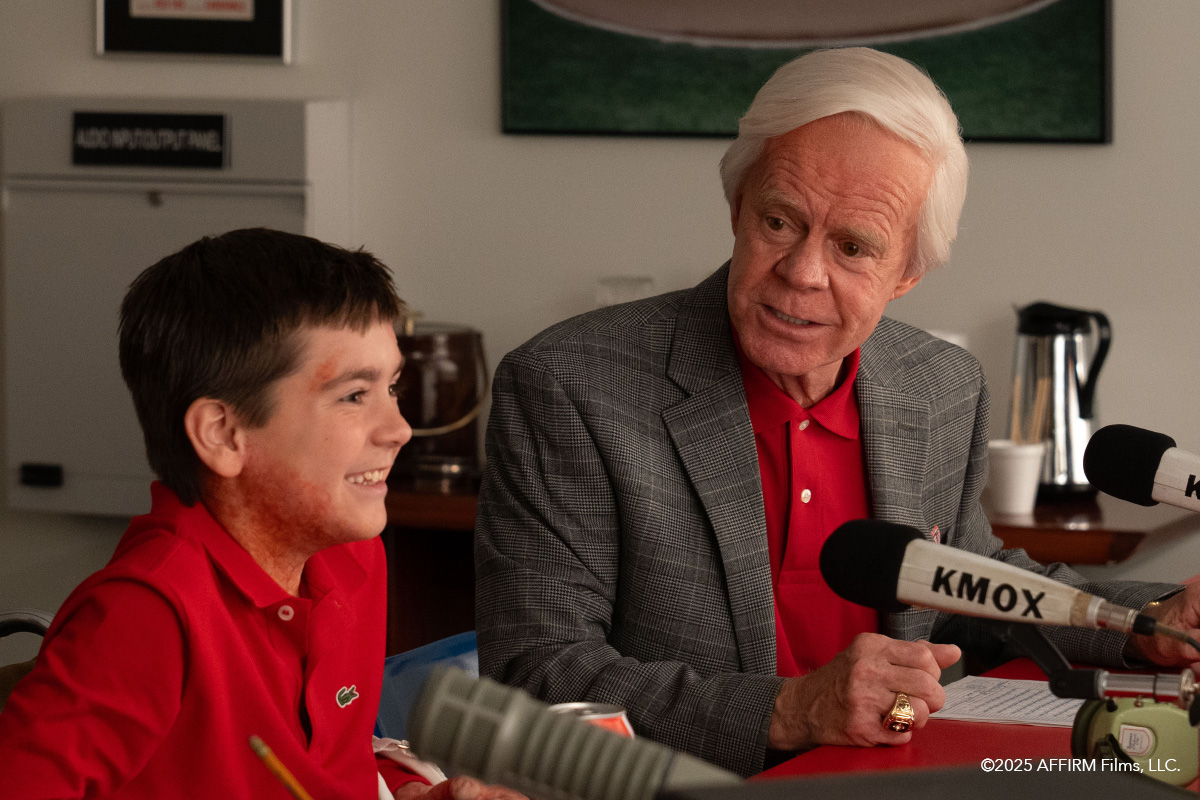 James McCracken (John O'Leary), William H. Macy (Jack Buck) in 'Soul on Fire'. Photo image courtesy Sony Affirm Entertainment
ST. LOUIS - Known far and wide for his positive, uplifting messages of hope, motivational speaker, author, and podcaster John O’Leary has inspired thousands around the world by sharing his perspective on how to live more boldly yet selflessly.
But long before developing such a positive outlook on life, O’Leary was a broken boy who became a hopeless young man. For you see, at the age of nine, the Missouri native was burned over 100% of his body in a freak accident and given zero chance to live. But somehow, some way, this average boy who loved the St. Louis Cardinals eventually found something that no one could take away from him: a positive perspective.
Simply put, O’Leary’s life is the definition of Romans 8:28 (NIV): And we know that in all things God works for the good of those who love him, who have been called according to His purpose.
So inspiring is O’Leary’s story of finding purpose through tragedy that a new movie has been made about his life. Starring Oscar-nominated actor William H. Macy (Fargo, Magnolia), John Corbett (Northern Exposure, All Saints), Joel Courtney (Jesus Revolution), and Masey McLain (The Baxters), Soul on Fire is now available digitally and will release on DVD on December 9th.
I recently sat down with O’Leary to discuss why God can use anything to find the greater good, how this tragic incident reinvented his life, and his hope that this movie can change and redeem the life of one.
John, if you don't mind, could you take me back to that fateful moment in your life when you were nine years old? For the sake of our conversation, could you share exactly what happened to you?
Absolutely. What happened was about a week before the incident, I watched boys in my neighborhood playing with fire and gasoline. They were 11. I was nine. I looked up to these kids and figured if they could do it, so could I. So that following weekend, my parents were at work. The house was all mine. I walked into the garage, then with a five gallon can of gasoline I tried to pour a little bit of gas on top of this piece of paper that was aflame, just like I saw the other kids do. And before the liquid came out, the fumes inhaled the flames into this container and created this massive explosion. It split the metal can in two. It picked me up and launched me 20 feet to the far side of the garage and set my world on fire. That's the starting point.
Today, you inspire tens of thousands of people at more than 100 live and virtual events each year. You partner with companies and organizations across fields, such as: sales, healthcare, safety, marketing, finance, faith, education and insurance. When this accident happened to you when you were nine years old did you ever think about how this accident would alter or chart the course for your life? At that point, how did you think your life would turn out?
After the explosion and after all the things that had to happen just perfectly for me to even come out of the garage and eventually end up in an ambulance and eventually make my way to the emergency room is a miracle. When the doctors evaluated me, they found that I had burns to 100% of my body. Eighty-seven percent of those burns were third degree. This isn’t a serious event. This is catastrophic. There's no chance of survival. And although I didn’t know the science of this as a kid, I don’t know the biology, I definitely know I'm in pain. I know I'm in trouble. And I remember thinking; my dad is going to kill me when he finds out. This kid just blew up the garage. And I remember hearing the old man's voice in the hall get closer as I laid in my hospital bed. And I'm thinking, man, I hope they don't bring him back here. And so that they did.
He pulls back the curtain, marches in and says, “John, look at me when I'm talking to you. I have never been so (dramatic pause) proud of anyone in my entire life. And my little buddy, I'm just glad to be your dad.”
And then he says, “I love you and there's nothing you can do about it.” And just like that, I experienced these moments of grace, mercy, and love, like it did not make five and a half months of hospitalization easy. It did not make waking up without your fingers after one of the surgeries easy or years of surgery and therapy easy. But I think the love he showed and modeled on day one made the journey forward possible.
So, you asked me, what did you think about your life going forward? What I thought about was all that the fire had taken from me. It had taken away my ability to throw a baseball. It had taken away my ability to run like I used to. It had taken away my ability to be normal like the other kids.
It had taken in my mindset, at least the ability to get a job, to find love, or to hold a girl's hand one day. It had taken all that away from me. So, I never imagined that this thing would be used for good because how could it be? But the cool thing about our faith is God uses everything and everyone for His good.
My story's not about a fire at all. It's not about amputations at all. It's a story about what happens when you are bold enough and faithful enough to trust God enough to say yes to being used for good. Whether you've got zero talents, one, two, or five, God can use your life and multiply it. It’s not about you anymore. And so that's been this wild journey and not just around surviving a fire, learning to walk, or trusting that some girl will see beauty in you. And maybe one day you'll see it in yourself and you'll raise four kids, realizing that God can use all the story for His perfect purposes.
Do you think it took this accident to reveal to you that you have a special gift for storytelling and the ability to encourage and motivate people? Do you think that ever would have happened if the accident hadn't taken place?
Here's what I'll say. I think the most powerful thing about my storytelling is not what you and I are doing right now, plurally, like societally wide, big old podcasts, feature articles, et cetera. The biggest impact we make is one-to-one. It is at the well. That's where the work is done. It's not in the church. It's not where everybody's watching, cheering, or booing. It's quietly the work we do when no one else is even paying attention to it.
And what the fire has given me permission to do is to meet broken people where they are as one of them. You can't ignore the fact that I have been through it all. When I walk up to you now, arms slightly bent through scar tissue, fingers missing on both hands, and I’m able to put my arm around you and you're able to put your arm back around me. And after you hear the story, the way we deliver it, almost always what happens is someone says back to me, ‘John, it's nothing like what you've been through.’ And then they talk about their bankruptcy. They talk about their present addiction. They talk about the struggle with bipolar with their kids. They talk about the diagnosis of cancer in the family. They talk about where the nation is heading. They talk about all these things that they thought were only about them or their neighbors. And it turns out sometimes, what is most personal and private, like the very brokenness that you think makes you less than, is what gives you permission. It gives you the freedom to meet someone in a sacred place in their heart.
So compelling is your story that you are now the subject of a major motion picture coming out called Soul on Fire. If you were trying to convince a friend to take the time to get out to the theater to see this movie, what would you say to encourage them?
I would go back to what I said to our actors when I invited them to participate. William H. Macy, John Corbett, Devon Franklin, and Joel Courtney are all in the film. I told them I am not the hero of this movie. They are not the stars of this movie. In this, you recognize how God is using your story in mighty ways. And if you’re willing to watch a kid who became a broken man but allowed God to work in his life to give this guy a purpose, then this is a movie for you.
Hollywood has done a phenomenal job promoting stories about heroes wearing capes and tights. And we want to promote a real story, not a cape and tights type story, but a story of siblings, parents, announcers, medical staff, a spouse and her husband, showing what real love, real mercy, real tenderness, real heroism looks like in action.
This story is not about a kid being burned. It's about people coming alive for something bigger than themselves. You get one life, make yours matter. This movie gives power back to you to recognize that God is in your story. Don't blink, don't miss it. It is valuable.
One of the most powerful relationships in your life was with legendary play by play broadcaster Jack Buck. What did his role in your life teach you about showing up for others?
Jack Buck, for those who do not know, was a Hall of Fame radio announcer. He's actually in seven Hall of Fames. Although some of your younger readers may not know the name Jack Buck, those of us with a few more wrinkles on our faces and miles on our treads, we know the man because he was everywhere throughout the 1960s, 1970s, and 1980s. He's just huge.
He had that big gravelly voice and a big heart for others. Jack was awesome. He was my hero. And I don't want to give away the film, but here’s a little snapshot. The day I was burned, Jack Buck learns that I'm going to die. He's at a charity auction, and they're whispering around the table, because St. Louis is a relatively small town. It's a couple of million people, but what happens in one place happens in every place. So they're whispering about this little boy who loved baseball, and he's going to die. And the encouragement was, and this is such a Christian thing, keep the family in your thoughts and prayers. And that's nice.
But Jack excuses himself and goes to work. He leaves the party, and he visits a stranger, a burned up kid in a hospital. And what he had no idea about is that night as I was in the hospital bed, my eyes were swollen shut. I could not see. I could not speak because of a trachea in my throat. I could not move because I was tethered to the bed. But I could hear. And this Hall of Fame voice comes into my darkness and says, “Kid, wake up. Wake up. You are going to live. Keep fighting.”
And man, if it had stopped there, he had done enough. But the amazing thing is that it’s the start of this love story between me and Jack. And this film in so many regards is a love story between people. It's like the healthiest version of love. It's just a love story between people. One of the great love stories told in this film is between a busy, successful radio announcer named Jack Buck and this broken-down, dying child named John O’Leary. It’s about what happens in the hospital, what happens afterwards, and what happens over the course of our life together.
After people have had a chance to see Soul on Fire what would you like to see audiences take away from this movie? What is your greatest hope for the film?
That they do something. One of the things I love about Jesus is the fact that frequently after a miracle, He says, go do something. Pick up your mat, wash your face, follow me. And so often when we leave the miracle of life, we just go back to it. We go back to Twitter. We go back to judging. We go back to commenting. We go back to critiquing. We go back to crossing our arms with those in front of us. In particular, we really go back to crossing our arms to those who look, act, vote, and worship differently than we do. Oh man, we do that well. This movie is about recognizing how God uses everybody from all different brokenness levels and meets them where they are so they can be used for good. I hope this movie can change and redeem the life of one. And I hope when people leave that film, they will recognize that to be a hero in your life, you’ve got to serve the one in front of you.
WATCH A TRAILER FOR SOUL ON FIRE: