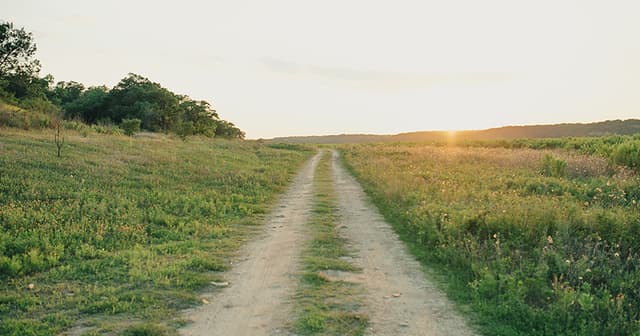
The Road Home

This life was given to me. I never chose to come; by the time I thought to ask, I was already on the road.
When the days get busy, I forget that. There are promises to keep, lists to finish, one more thing not yet in hand. You finish something, feel settled for a while, and the next round begins. Where am I going, and how does it end — those questions get pushed to the back, and I don't think about them for a long time.
Time is gold, people say. But gold can be saved; time cannot. Chinese has a phrase for it — 岁月如梭, the years fly like a shuttle through a loom. And another — 一场春梦, one spring dream: as though a whole life were a single night in spring, a dream, and then you wake and it is morning, and you have already come to the end. Death. And there you find that nothing is left, that it all comes to nothing. "Vanity of vanities," says the Preacher. "All is vanity." (Ecclesiastes 1:2)
For a long time I thought that was all there was.
The Korean poet Cheon Sang-beong wrote that life is only an outing to this beautiful world — a picnic; when it is over, we go home. The difference is not in the world. The difference is whether there is a home. Before I met Him, I was my own master. Then He came into my life and walked with me, kept me company on this long outing, and I know now that He means to bring me back to the Father's house, to live there always. If life is a wedding feast, ours is the one at Cana: the good wine comes out last. Because of the life He has promised, death is no longer the end but the beginning.
No one gets around death, so our days here are a preparation for the world on the other side of it. A little like a child in the womb preparing to be born. The two worlds have nothing in common — one is water, the other air; even breathing has to be learned from scratch. The eyes that child is growing are no use to him yet, and neither are his lungs. He is being formed for a world he has never seen.
I will still grow old, and my body will still fail. And yet, because of Him, though the outward man perishes, the inward man is renewed day by day (2 Corinthians 4:16). In time I will put off this perishable body and move into the house he has prepared for me, not made with hands, eternal in the heavens (2 Corinthians 5:1). The dust returns to the earth, and the spirit returns to God who gave it (Ecclesiastes 12:7). And the man who said everything there is to say about vanity ended his book here: remember your Creator in the days of your youth.
The word behind "redeeming the time" is ἐξαγοραζόμενοι — to buy back. It made my heart sink and comforted me at the same time. Before I believed, I was not living for Him or for His kingdom, and those years simply ran out through my fingers. What the apostle says is: buy them back. By the time He came looking for me, I did not have much left. I expected Him to hand me the bill. He didn't.
Being bought back does not mean cramming more into what remains. It means finally knowing where I am going, and who is waiting on the road. I do not have to stay in my regret. I only have to stop, from today, spending the rest of my days chasing the wind — to let His word be a lamp to my feet and a light to my path (Psalm 119:105), to put off the old self and put on new clothes in Christ, and to spend my years on the one thing that will not rot along with me.
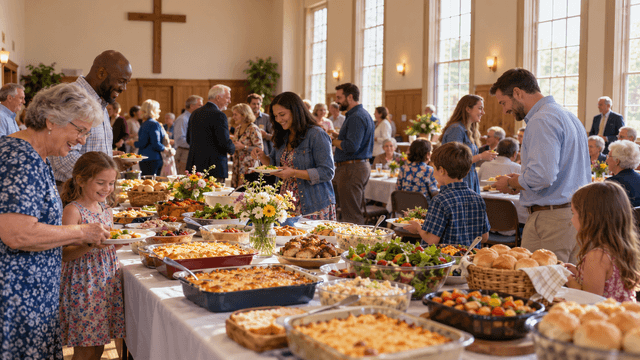
That one thing has a name in the Bible: the kingdom of God. The name is enormous; where it touches the ground it is very small. It begins inside one person and works outward — into a household, into an office, into a shared meal, an act of forgiveness, an honest word you could just as easily have kept to yourself.
If something in you stirred as you read this — you can ask Him now. One sentence is enough: If you are really there, let me know you.
Time goes quickly, so quickly that we often never reach the question that matters most. But as long as today is still called today, there is still time. Come along. Give Him the days you have left, and walk this road home.
A meditation on Ephesians 5:16 — "Redeeming the time, because the days are evil."
Also drawn from Ecclesiastes 1:2, 12:1, 12:7; 2 Corinthians 4:16, 5:1; Psalm 119:105. The wedding at Cana is in John 2:1–10. The image of life as an outing comes from "Back to Heaven," by the Korean poet Cheon Sang-beong. Scripture quotations follow the King James Version.