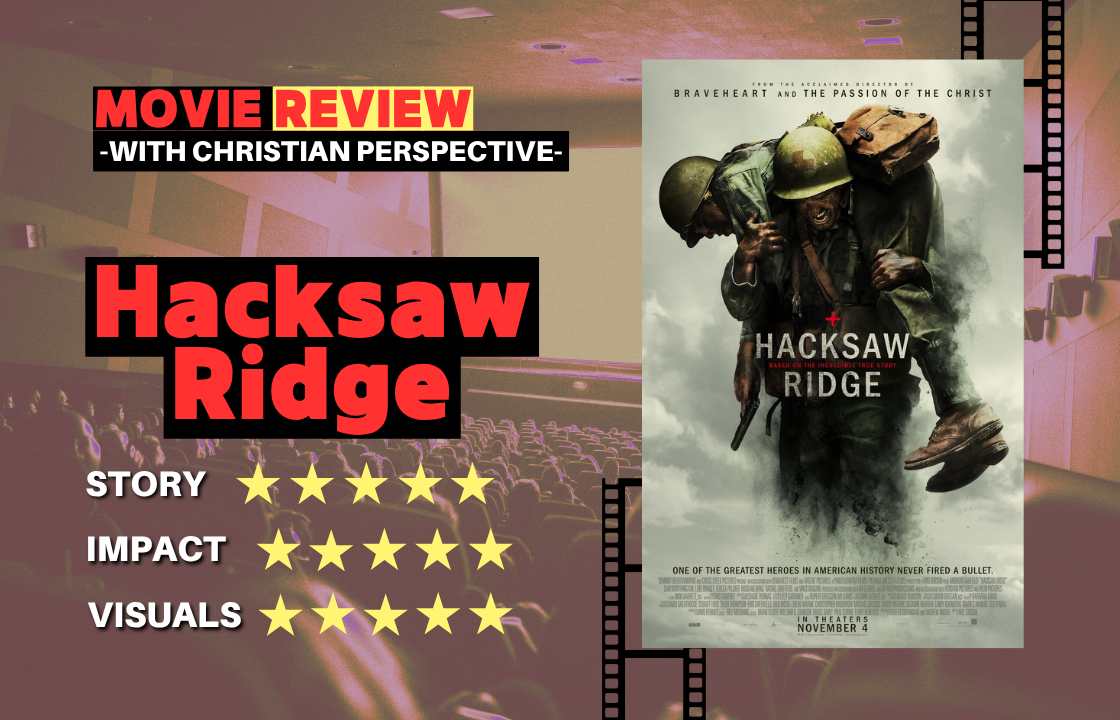
The True Story That Makes Most War Movies Feel Empty, 'Hacksaw Ridge Movie Review
Hacksaw Ridge Review: The Christian War Movie About the Soldier Who Refused to Kill
Can a soldier go to war, refuse to carry a weapon, and still become one of the greatest war heroes in American history?
What makes the story even stranger is this:
He was not drafted.
Nobody forced him to go.
He could have stayed home.
And if he truly believed killing was wrong, he could have avoided the battlefield completely.
But instead, he voluntarily enlisted in the military.
And then told everyone around him:
“I won’t kill anyone.”
Honestly, it sounds almost impossible.
Which is exactly why 《Hacksaw Ridge》 feels so fascinating from the very beginning.
Based on the true story of Desmond Doss, the film follows a Christian combat medic during World War II who refuses to carry a gun because of his faith and convictions. But unlike many faith-based films, Hacksaw Ridge does not feel sanitized or overly safe. Even outside its Christian themes, it is simply an extremely well-made movie.
The directing is intense.
The pacing is sharp.
And the battle scenes are absolutely brutal.
Especially during the Okinawa sequences, the film becomes emotionally exhausting in the best possible way. Explosions, fear, blood, screaming, chaos — the movie does not romanticize war. It forces the audience to sit inside the horror of it.
And right in the middle of that nightmare stands one man without a weapon.
That contrast is what makes 《Hacksaw Ridge》 so memorable.
At first, even the audience struggles to understand Desmond Doss. His fellow soldiers mock him, beat him, and see him as a liability. From their perspective, a soldier refusing to carry a rifle sounds irresponsible, even dangerous.
And honestly, the movie allows that tension to feel real.
It keeps forcing the viewer to ask:
“How is this guy supposed to survive war?”
But then the film slowly changes direction.
As the violence becomes more horrifying, Desmond becomes more courageous.
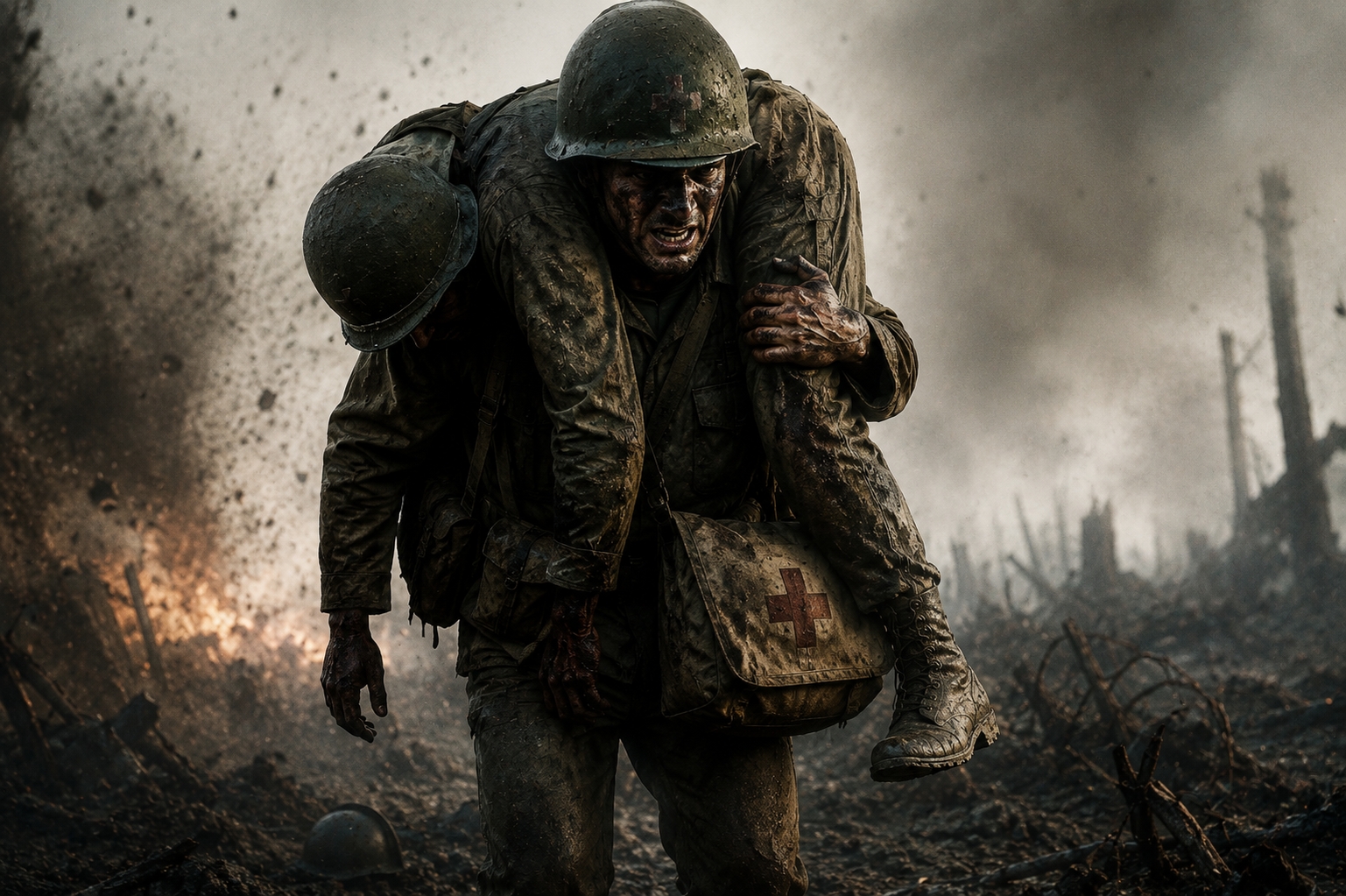
While everyone else is trying to escape the battlefield alive, he keeps running back into it.
Again.
And again.
And again.
And again.
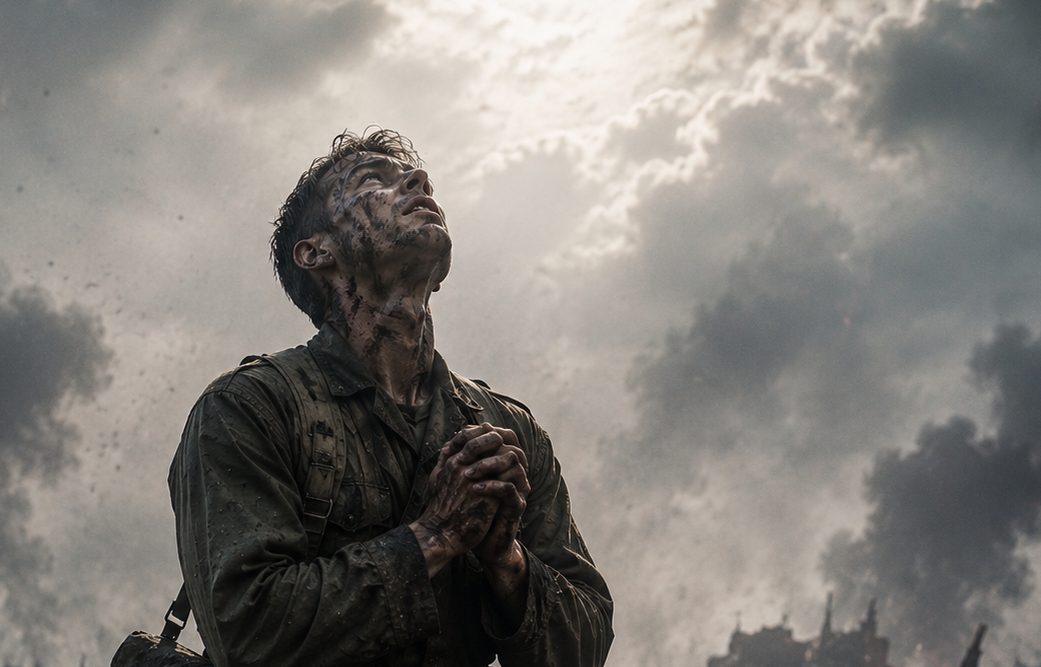
Dragging wounded soldiers to safety one by one while praying:
“Lord… help me get one more.”
That repeated prayer becomes the emotional center of the movie.
And one of the most powerful parts of the story is this:
Desmond Doss does not only help American soldiers.
He even treats wounded enemy soldiers.
That detail changes the entire meaning of the film.
Because suddenly the story is no longer just about bravery or patriotism. It becomes something much deeper — a picture of radical conviction and sacrificial love in the middle of unimaginable violence.
From a biblical perspective, that is what makes 《Hacksaw Ridge》 resonate so strongly with many Christians.
The movie naturally brings to mind Jesus’ words:
“Greater love has no one than this: to lay down one’s life for one’s friends.”
And even more uncomfortably:
“Love your enemies.”
In most war stories, strength is measured by how many enemies someone can destroy.
But Hacksaw Ridge quietly asks a completely different question:
What if true strength looks like refusing to hate?
Of course, the movie is extremely graphic. The violence is intense, realistic, and emotionally heavy. Some viewers expecting a softer inspirational Christian movie may be shocked by how brutal it becomes.
And theologically, Christians may still disagree about pacifism, war, and self-defense. The film does not resolve every ethical question surrounding violence and faith.
But that is not really why the movie stays with people.
What lingers is the uncomfortable challenge underneath it all:
Is your faith only visible when life is easy?
Or would it survive humiliation, fear, suffering, and death?
That is the real power of 《Hacksaw Ridge》.
It is not just a war movie based on a true story.
It is a movie about what faith looks like when everything around it turns into hell.
And maybe the most shocking part of all is this:
While everyone else was carrying weapons to prove they were strong, the only man who refused to carry one became the strongest person on the battlefield.