What Actually Matters — Anna Robertson Brown Lindsay's What Is Worth While?
The coffee is already cold by the time you remember it's there. You've answered four texts, packed a lunch nobody asked for nicely, and you're staring at a calendar so full it doesn't leave room to ask whether any of it matters.
That's the quiet ache underneath a full life — not despair, just a low hum of is this it? You keep moving because stopping feels dangerous, like the whole structure might not hold if you look at it directly. You're productive. You're needed. You're also, some mornings, running on a treadmill you never agreed to.
Living a Life of Purpose Was Never Just a Graduation Speech
In 1893, a young woman named Anna Robertson Brown stood before the Philadelphia branch of the Association of Collegiate Alumnae. She had just become the first woman to earn a doctorate from the University of Pennsylvania, and the talk she gave to that room of newly graduated women wasn't about achievement at all.
She didn't tell them to build careers. She asked them a smaller, harder question: what will you actually do with your one life, hour by hour?
Nothing about her story reads like a crisis. She didn't hit some rock bottom before figuring this out. What changed for her was smaller than that — she started paying attention to different things. Study, still. But also friendship. Patience. The unglamorous work of showing up for people who couldn't repay her for it.
That address became a small book, barely thirty pages, and it kept getting passed along — mother to daughter, teacher to student — for decades. I think it's because most people don't actually sit down and ask themselves that question. She just made them.
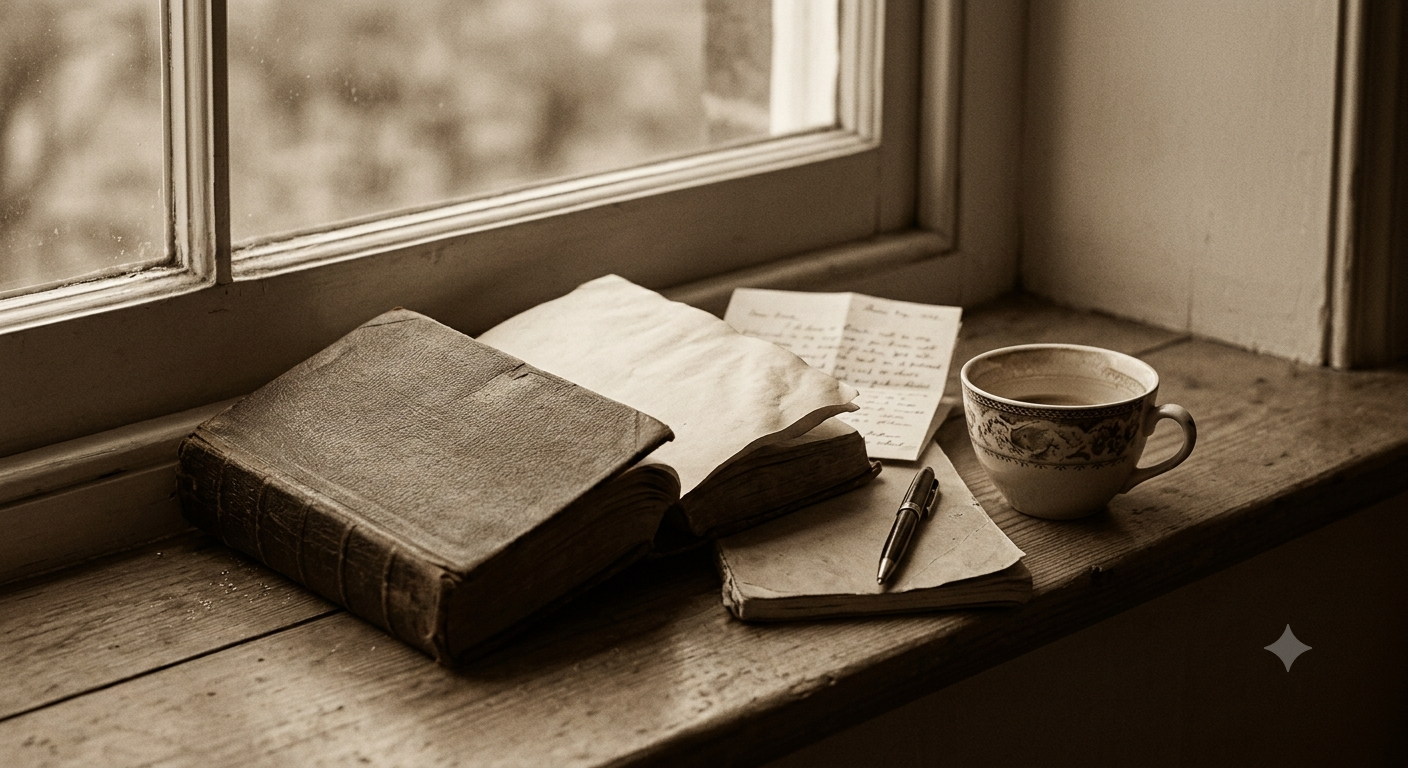 A worn leather-bound book rests open on a sunlit windowsill beside a folded letter, evoking the quiet reflection at the heart of finding what is worth while.
Finding Meaning in Everyday Life Starts With a Smaller Question
Lindsay's answer wasn't complicated, which is almost why it's easy to miss. She's not talking about achievement, and she's not talking about some abstract, churchy version of faith either. She keeps coming back to character — the stuff nobody photographs.
"Only one life to live! We all want to do our best with it."
That's the whole book, really, compressed into one line. Not a formula. A confession, and an invitation.
So here's the question worth sitting with today, not someday: if you looked honestly at how you spent this last week, would you say it was worth while — not impressive, not productive, but worth while?
I don't always like my own answer to that. Some weeks I can tell you exactly how many emails I sent and not one thing I actually gave my full attention to. There's a particular kind of guilt in realizing you were busy all day and present for none of it.
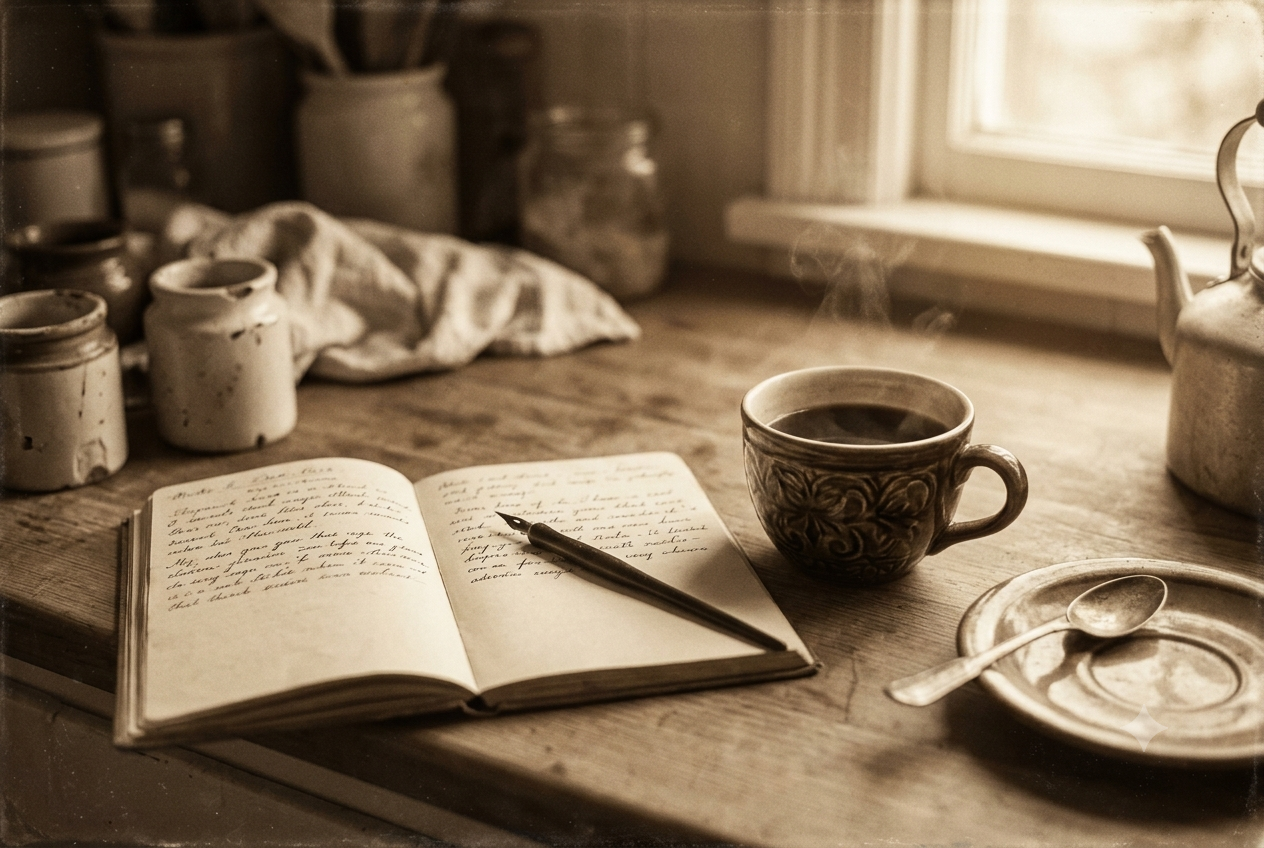 A cup of coffee sits half-finished on a kitchen counter beside an open notebook, the quiet clutter of an ordinary morning.
About the Book
The book itself is short — originally a spoken address, and it still reads like one. It moves in brief, direct sections rather than long theological argument, each one circling back to the same central question before gently pushing the reader forward.
She's interested in friendship that actually costs you something, patience that outlasts irritation, doing decent work when nobody's watching. Somewhere in there she nudges you off the question of what you'll become and onto a harder one — what you're actually doing with today.
She quotes Emerson at one point, Ruskin at another — not as authorities, just people she'd clearly read closely. Scripture shows up too, though she doesn't lean on it to win an argument. Mostly she's drawing on her own life, and you can feel that she was one of very few women in rooms built for men, even if she never says so directly.
This tends to land with people standing at a threshold — graduating, changing jobs, closing out a season of life — who sense the next chapter needs a different measure of success than the one that got them here.
Anna Robertson Brown Lindsay never meant for anyone to file her little book away and move on — What Is Worth While? was written to be reread on the mornings the coffee goes cold and the calendar feels heavier than it should.
If you're curious, it's a short one to keep near your desk: find it here (Affiliate Link)
FAQ
Is What Is Worth While? a religious book?
It has a Christian foundation, but I wouldn't call it a sermon. It reads more like an honest, searching talk from someone who took her own faith seriously enough to ask hard questions about how she was actually living it out.
How long does it take to read?
Not long — it started as a spoken address, so it moves quickly. I read it in one sitting on a slow evening and then found myself rereading sections for weeks after.
Who is this book actually for?
Honestly, anyone at a hinge point. I first picked it up during a season when I felt busy but not sure I was living well, and it met me exactly there.
Does Anna Robertson Brown Lindsay give practical steps?
Not really, no five-step plan here. She's more interested in why you're doing what you're doing than in what exactly you do.
Is the language dated since it was written in 1893?
A little, in phrasing, but the honesty underneath it isn't dated at all. I found the question she's asking felt more current than half of what I read this year.
📚You Might Also Like
The Paradox of Love: Why a "No" is the Kindest "Yes" — Boundaries
The Spear You Don’t Throw Back: A Masterclass in Radical Silence — A Tale of Three Kings
You're Not Too Busy. You're Just Hurrying — The Ruthless Elimination of Hurry