What Would the Deacons of the Early Church Do with Bitcoin?

I spent a summer in seminary studying Acts, and one passage that kept nagging at me wasn't about prayer or preaching. It was Acts 6:1–6 — the moment the early church realized they needed people specifically tasked with managing money and resources well. They didn't just pick anyone. They chose people "known to be full of the Spirit and wisdom."
Spirit and wisdom. Both. Not just piety, not just financial savvy — both together.
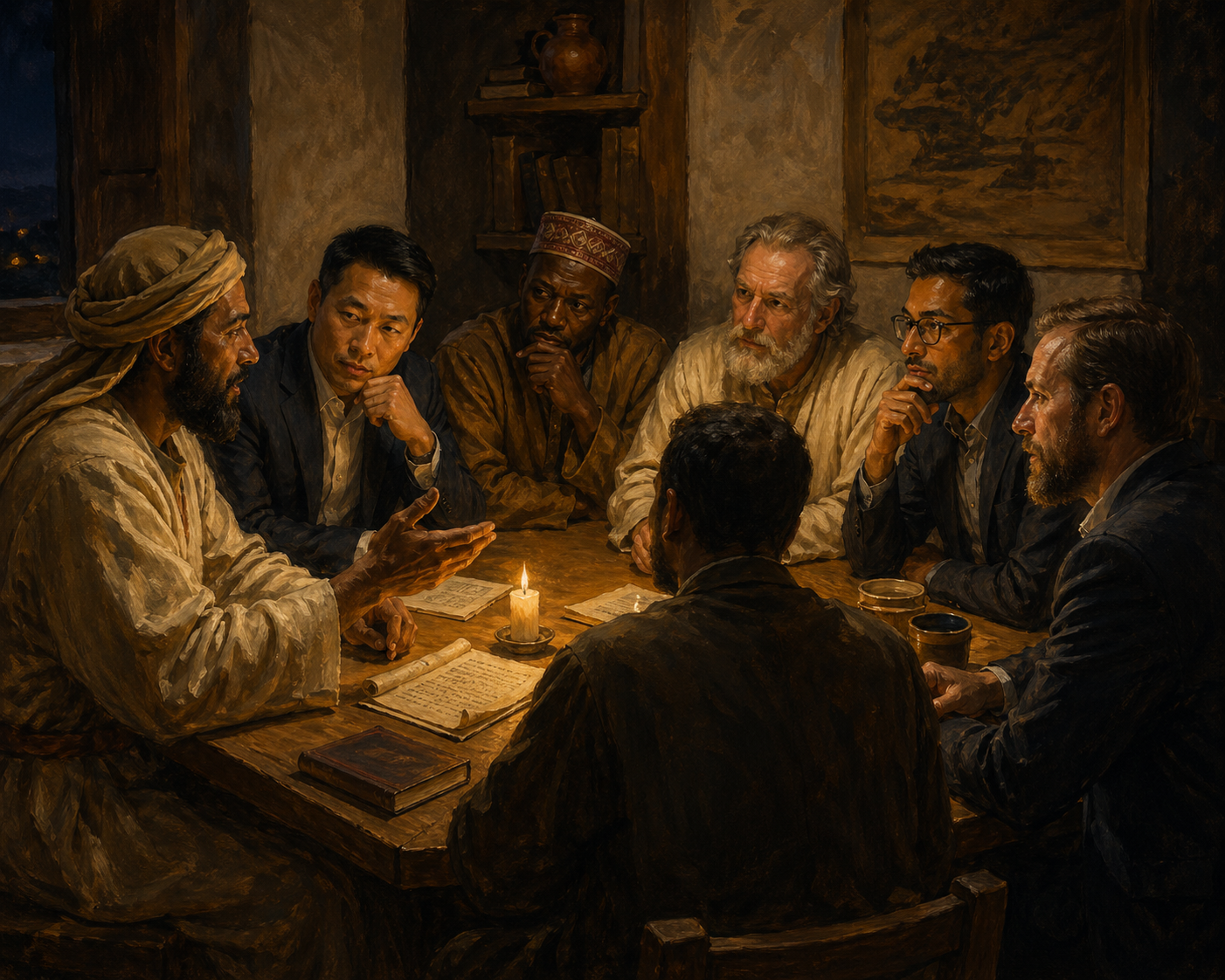
I've thought about that a lot when people ask me about Bitcoin. What would those men — Stephen, Philip, and the others — do if they were alive today and a fellow church member asked them about cryptocurrency?
Here's my honest attempt at an answer.
They would have started by asking: who does this serve?
The early church's entire financial ethic was organized around a central question: how do we care for the vulnerable in our community? The widows in Acts 6. The poor in Jerusalem. The Gentile believers receiving the collection Paul organized in 1 Corinthians 16.
Money wasn't abstract to them. It was always connected to people.
So the first question a good deacon would ask about Bitcoin today isn't "will it go up?" It's "how does my financial life — including any speculative assets — either support or undermine my ability to care for others?"
If Bitcoin profits fund your family's stability and free you to give generously, that's a very different story than Bitcoin profits that feed a lifestyle of accumulation that insulates you from the needs of your community.
They would have been deeply suspicious of hype
The early church had a complex relationship with wealth, largely because they'd seen what it did to people. Acts 5 gives us the haunting story of Ananias and Sapphira — people who pretended to give everything while secretly holding back. The sin wasn't that they kept money. It was that they performed generosity while harboring secret greed.
The crypto world runs largely on hype. On stories of people who became millionaires. On influencers, on FOMO, on the fear of being left behind. A wise deacon of the early church would have recognized that emotional environment immediately. They'd seen it before — just in a different form.
They wouldn't have said "Bitcoin is evil." They would have said "be very careful about the atmosphere surrounding this." Hype is always spiritually dangerous, regardless of the asset.
They would have asked: what is your financial house built on?
The early church leaders were intimate with economic precarity. Many members of the early church were artisans, day laborers, freedmen — people without safety nets. The deacons managed collective resources precisely because individuals couldn't always manage alone.
From that context, they would likely say: before any speculative investment, is your household in order? Are you free from debt? Do you have provision for your family? Are you giving to your church community? If the foundation is solid, then perhaps there's room for a small, considered risk. But you don't speculate on the roof before you've built the floor.
They would have held all of it loosely
This might be the most countercultural thing of all. The early believers "sold property and possessions to give to anyone who had need" (Acts 2:45). That's not a command to all Christians in all times — but it reveals a posture: nothing was so precious it couldn't be given up if the community required it.
A Bitcoin portfolio held with that kind of open hand looks very different from one clutched tightly as a private security hedge. The amount you invest is less important than the posture with which you hold it.
References:
BibleProject — "Money & Possessions" series: https://bibleproject.com/explore/video/gospel-luke-acts/
The Gospel Coalition — "Stewardship in the Early Church": https://www.thegospelcoalition.org
Crossmap - "Kingdom Finances": https://blogs.crossmap.com/kingdomfinances
Coming up in Part 4: "Scripture & the New Money — Bible Verses That Speak Directly Into the Age of Cryptocurrency"