When Chopin Changed the Piano Forever: The Story Behind the Études
Chopin did not simply write music for the piano—he transformed what the instrument could express. Before him, études were mainly exercises for developing technical skills, but he turned the genre into a form of artistic expression, combining brilliance, emotion, and poetic beauty.
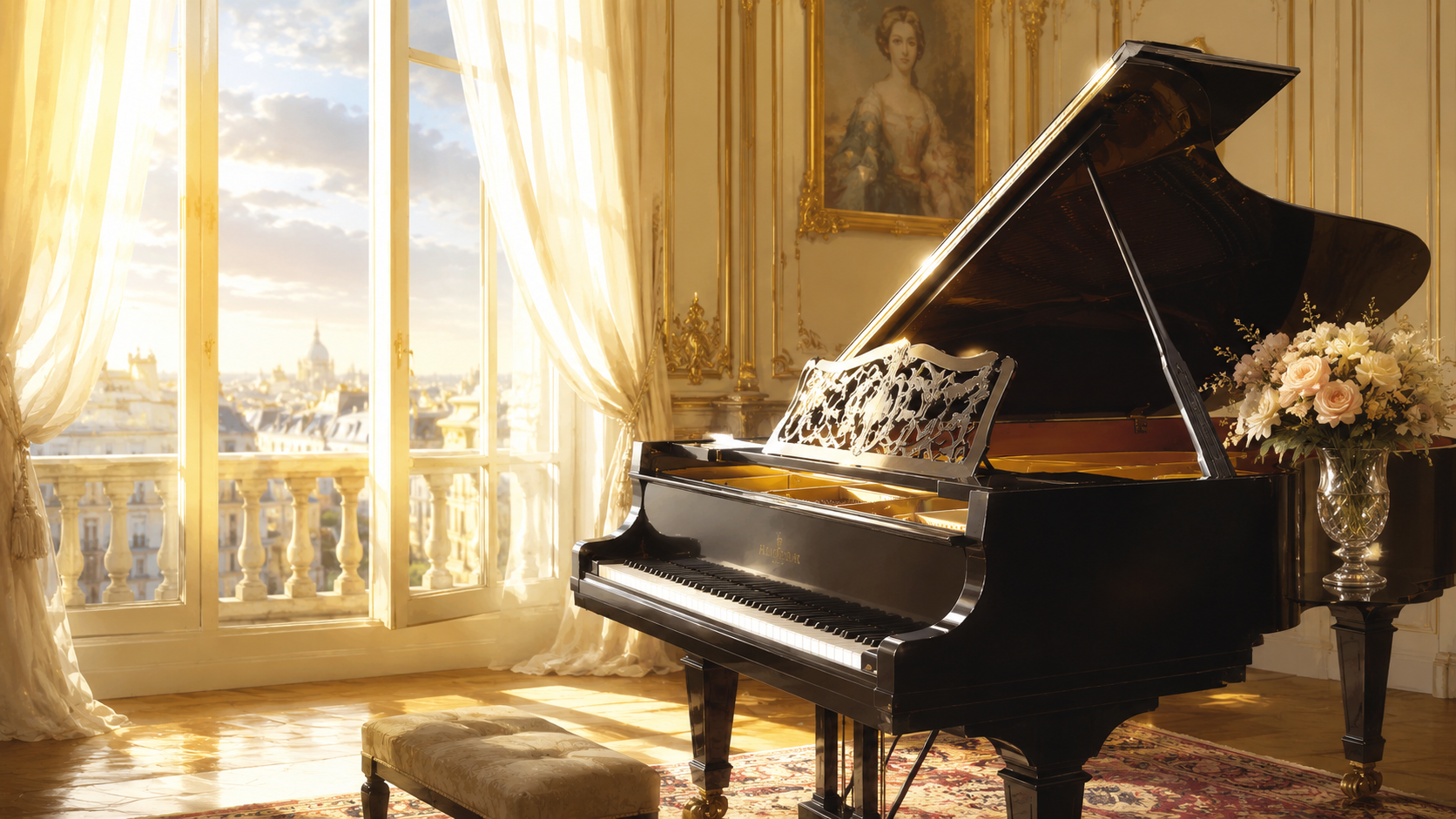
For Chopin, technique was never separate from music. Every movement of the hand and every challenging passage became a way to reveal deeper feelings, showing that the piano could be more than an instrument of precision—it could become a voice for the deepest emotions of the human heart.
Beyond Technical Exercises
Chopin’s Études introduced a new vision of piano playing by bringing together technical mastery and emotional depth. Through singing melodies inspired by the human voice, innovative harmony, rhythm, and piano technique, he expanded the expressive possibilities of the instrument.
His approach influenced generations of pianists and composers, including Franz Liszt, Claude Debussy, and Sergei Rachmaninoff, who continued to explore the piano’s artistic potential.
Étude in C Minor, Op. 10 No. 12 “Revolutionary”
Written after Chopin left Poland, the piece is filled with intense emotion. Its storm-like left-hand movement reflects a sense of struggle and urgency, and many listeners connect its passion with Chopin’s sorrow for his homeland after the failed November Uprising, an unsuccessful Polish revolt against Russian rule.
Often known as the “Revolutionary” Étude, this title was not given by Chopin himself but was added later because of the work’s dramatic and powerful character.
Étude in E Major, Op. 10 No. 3 “Tristesse”
This Étude reveals Chopin’s gift for making the piano sing through a simple yet deeply expressive melody. Unlike the dramatic energy of the “Revolutionary” Étude, the work shows the quiet and personal side of his music, where delicate phrasing becomes a language of emotion.
The nickname “Tristesse,” meaning “sadness,” was also added later rather than chosen by Chopin.
The Piano Reimagined
Through his Études, Chopin proved that technical brilliance and artistic expression could exist together. He did not merely create difficult works for pianists to master—he transformed the very language of the piano.
His music reminds us that creativity is a gift that allows us to discover and share beauty. Chopin did not simply master the piano; he revealed new possibilities hidden within the instrument.
Explore Chopin’s complete Études collection here. (affiliate link)
Read previous: When Chopin Suffered: Illness, Isolation, and the Story Behind the Preludes