Beets: The Red Vegetable Worth Adding to Your Table
From Vascular Health to Exercise Energy — What Beets Offer
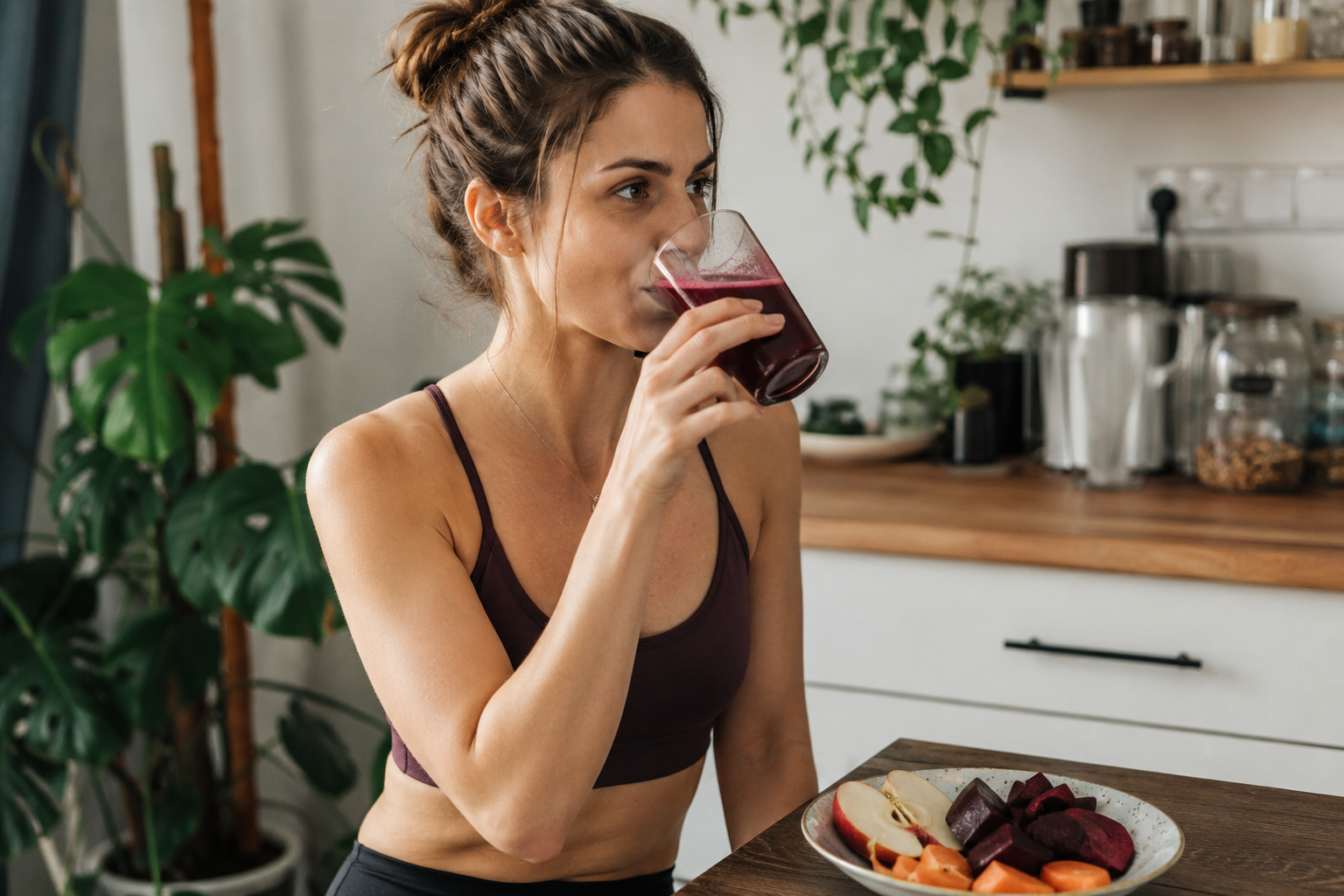 Enjoying a glass of beet juice is a small reminder that caring for the body God has entrusted to us can begin with simple, wholesome choices each day.
Among vegetables that have drawn serious research attention in recent years, beets stand out. The deep crimson color catches the eye in salads and juices, but what's inside is just as interesting: dietary nitrate, betalain pigments, betaine, and fiber — compounds connected to vascular health, exercise efficiency, antioxidant activity, and gut health.
From a Christian perspective, health isn't simply about living longer. Our bodies are a gift entrusted to us, and we're called to care for them so we can love God and serve others well.
"What? know ye not that your body is the temple of the Holy Ghost which is in you, which ye have of God, and ye are not your own?" (1 Corinthians 6:19, KJV)
That's not an invitation to make health an obsession — it's a steward's reminder. And since we're talking about a vegetable, one more thing worth saying upfront: beets aren't medicine. They don't treat or replace treatment for any disease. What they are is one good, natural food worth including in a thoughtful diet.
How Beets Work: The Nitrate-to-Nitric Oxide Pathway
The most studied benefit of beets comes from their high dietary nitrate content. The conversion to nitric oxide happens in two steps worth understanding. When you chew beets, bacteria in the mouth convert dietary nitrate (NO₃⁻) into nitrite (NO₂⁻). That nitrite then travels to the stomach and tissues, where it's further reduced to nitric oxide (NO) — a signaling molecule that relaxes blood vessels, improves blood flow, and helps lower blood pressure.
What makes this pathway particularly relevant for exercise is where it becomes most active: in conditions of low oxygen and high acidity — precisely the environment of hard-working muscles. In other words, the pathway delivers nitric oxide most efficiently exactly where and when the body needs it most during physical effort. This single mechanism explains why beets show up in research on blood pressure, exercise endurance, and even cognitive function (improved cerebral blood flow has been observed in older adults in nitrate studies).
For blood pressure and vascular support, the benefits tend to build over one to four weeks of consistent intake rather than appearing after a single serving. For exercise performance, the peak nitric oxide window occurs roughly two to three hours after consumption — which is why that timing is most studied for pre-workout use. And importantly, beetroot doesn't appear to cause dangerous blood pressure drops in people with normal readings.
Vascular health affects everything: the heart, brain, muscles, and organs all depend on blood flow. As we get older, blood vessels tend to lose some of their flexibility. Pairing beets with an overall healthy diet, regular movement, and adequate sleep is a thoughtful way to tend to that.
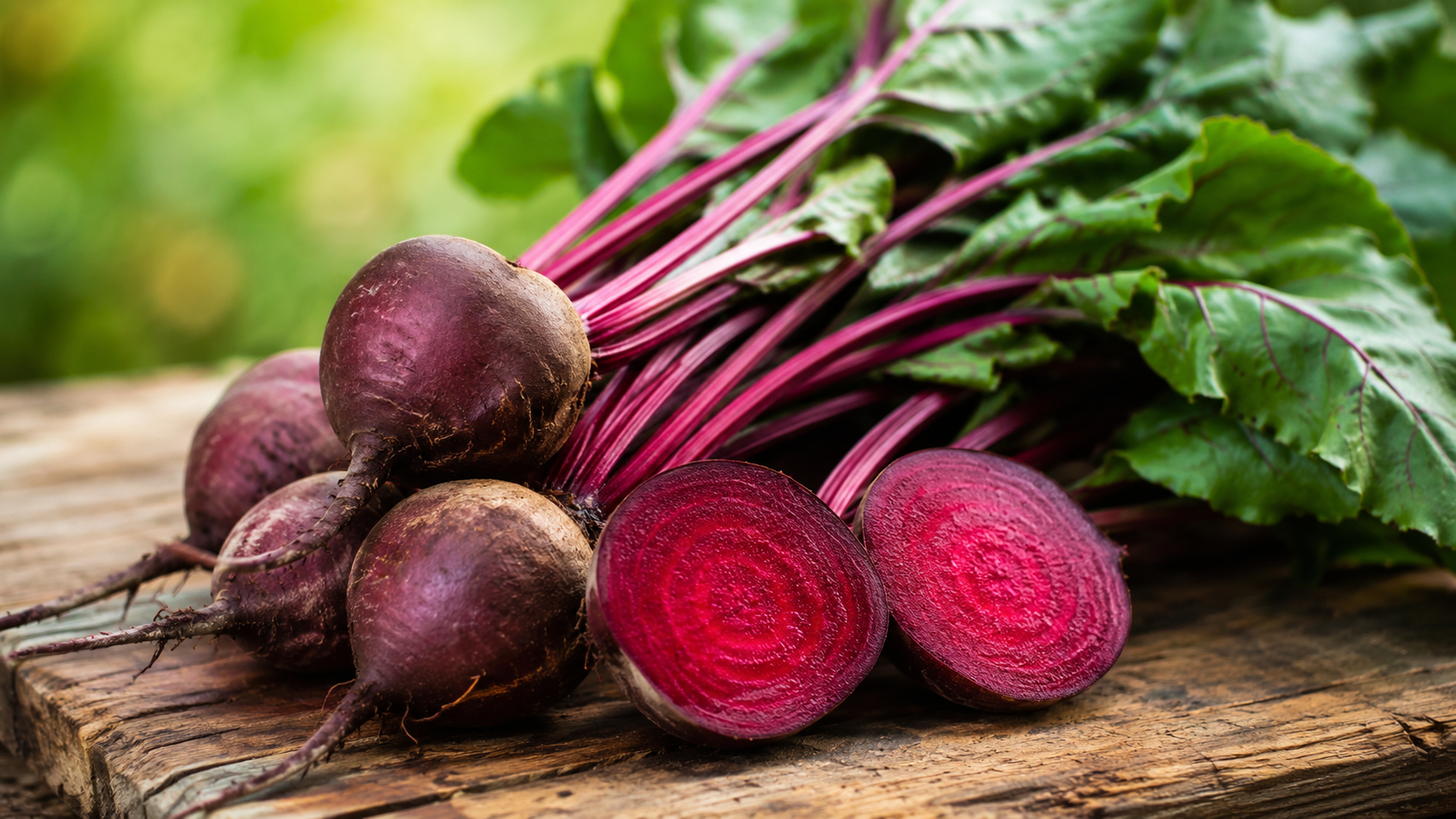 Fresh beets remind us that healthy living often begins with simple gifts from the ground. Rich in color and naturally nourishing, beets can be a beautiful addition to a balanced, wholesome diet.
Betalains, Betaine, and Gut Health
The deep red color of beets comes from betalains — a class of pigments that are worth distinguishing from the better-known anthocyanins found in blueberries and grapes. Betalains are nitrogen-containing pigments unique to a small group of plants, and they've shown antioxidant and anti-inflammatory activity in laboratory studies. A 2021 review in Nutrients highlighted betalains as potent natural protectors against oxidative cell damage. That said, the human clinical evidence for betalains specifically is less developed than the evidence for dietary nitrate — so it's worth keeping this benefit in perspective rather than overstating it.
Beets also contain betaine (trimethylglycine), a compound studied in connection with liver metabolism and the processing of homocysteine. And their fiber content supports digestion, regular bowel habits, and a healthier gut environment. Modern eating patterns often run lower in fiber than is ideal — a diet leaning on processed food and convenience meals naturally crowds out vegetables. Adding beets in any form is a simple way to shift that.
A Few Things Worth Knowing Before You Start
Beets are safe for most people, but a few cautions apply.
After eating beets, urine and stool may turn pink or red — a harmless phenomenon known as beeturia, caused by betalain pigments. It affects roughly 10 to 14% of people and has no health significance, but it can look alarming if you're not expecting it; it's worth distinguishing from actual blood in urine, and if you're unsure, checking with a doctor is sensible.
People managing diabetes should watch portion sizes, since beets do contain natural sugars. Those with low blood pressure should be mindful about large amounts. Anyone with a history of kidney stones should be cautious about oxalate content. And if you're taking blood pressure medication or anticoagulants, a conversation with your doctor before significantly changing your diet is the wisest starting point.
As with all food: more isn't automatically better.
How to Enjoy Beets
Beets are versatile. Slice them thin into a salad, blend them with apple and carrot for juice, roast or steam them as a side dish, or add a small amount to a smoothie for color and nutrition. If the earthy flavor is new to you, combining beets with apple, lemon, or carrot softens it considerably. Start with a modest amount and build from there — the goal is consistency over time, not large doses occasionally.
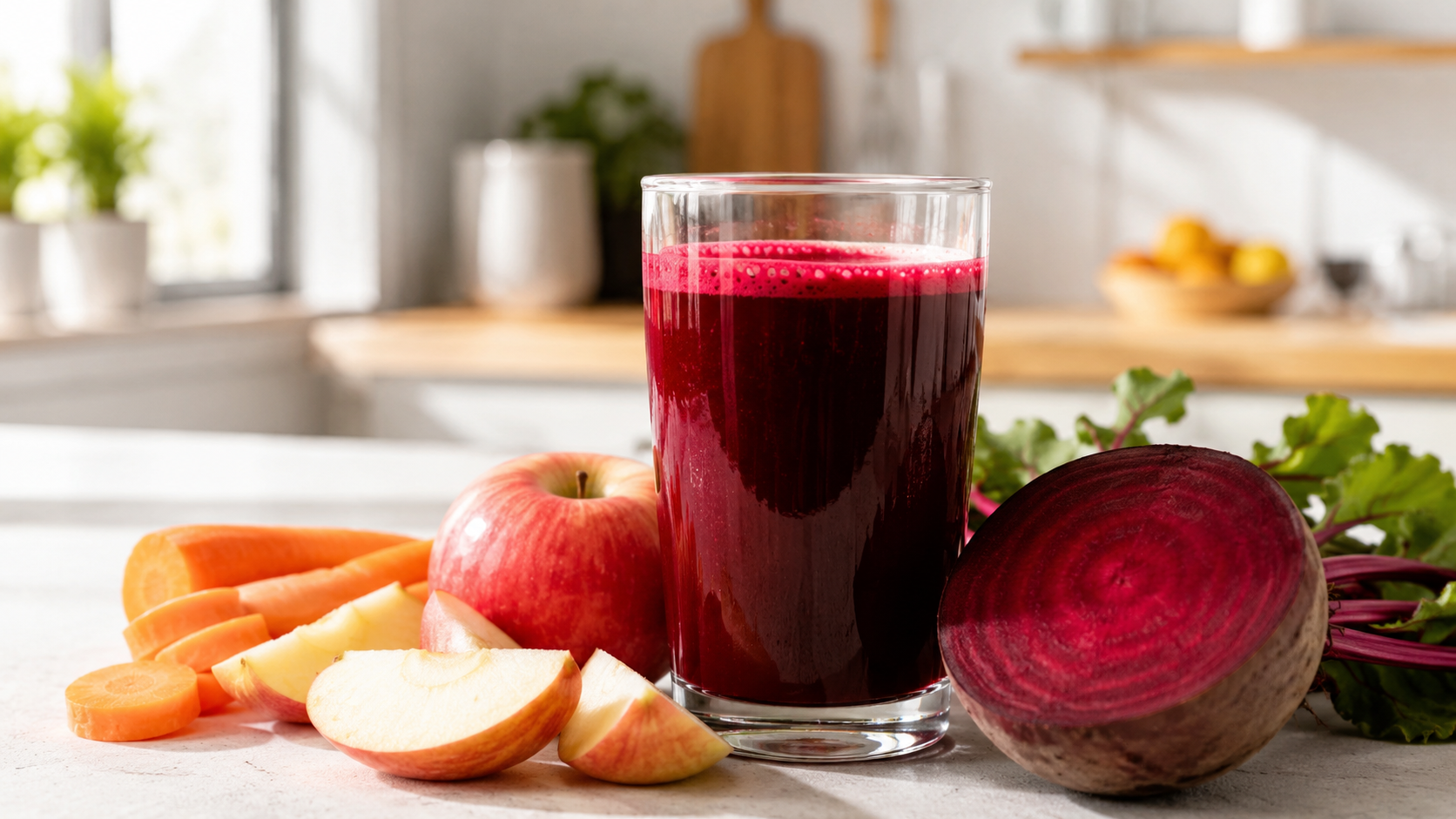 A fresh glass of beet juice with apple and carrot reminds us that healthy choices can begin with simple, nourishing ingredients from God’s creation. Bright, natural, and full of color, this drink brings wholesome energy to the start of the day.
A Closing Thought
Beets bring together dietary nitrate (vascular and exercise benefits), betalain pigments (antioxidant support), betaine (liver metabolism), and fiber (gut health) in one vegetable. But no single food completes the picture — what matters most is the overall pattern: a balanced diet, regular movement, adequate sleep, and a life lived with some intentionality about the body God has given you.
Caring for the body is part of stewarding the life we've been entrusted with. Adding a red vegetable to today's table is a small thing — but small, repeated choices are how healthy habits are actually built.
Note: This article is for general informational purposes. Beets are not medicine and cannot treat or replace treatment for any disease. If you have high blood pressure, diabetes, kidney disease, cardiovascular conditions, or take medication, please consult a healthcare professional before making significant dietary changes.
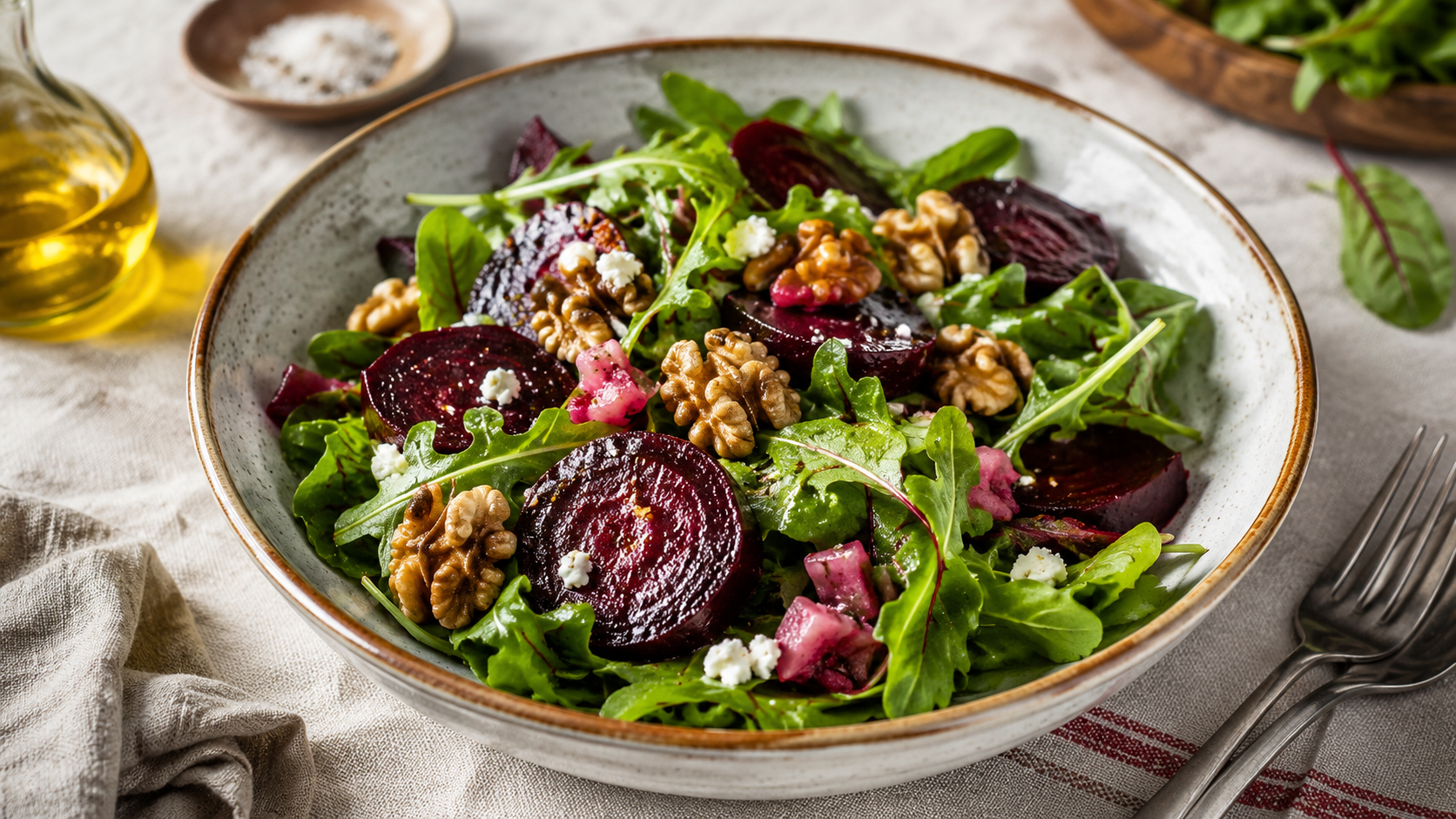 A vibrant beet salad with leafy greens, walnuts, and a drizzle of olive oil brings together fresh Mediterranean flavor and wholesome nourishment in one beautiful bowl.