Before the Piano (3): The Recorder
A First Encounter
Before the piano took center stage, music was carried by many different voices—some delicate, some bright, some quietly expressive. The recorder is one of them.
In my first semester studying piano performance at a conservatory, I took a class on Renaissance music. On the first day, a classmate introduced himself as a “recorder major,” which surprised me—I hadn’t realized my school had an early music program.
After class, he showed me his instrument. It was my first time seeing a real recorder up close—not the plastic kind from school, but a carefully crafted wooden one. He played briefly.
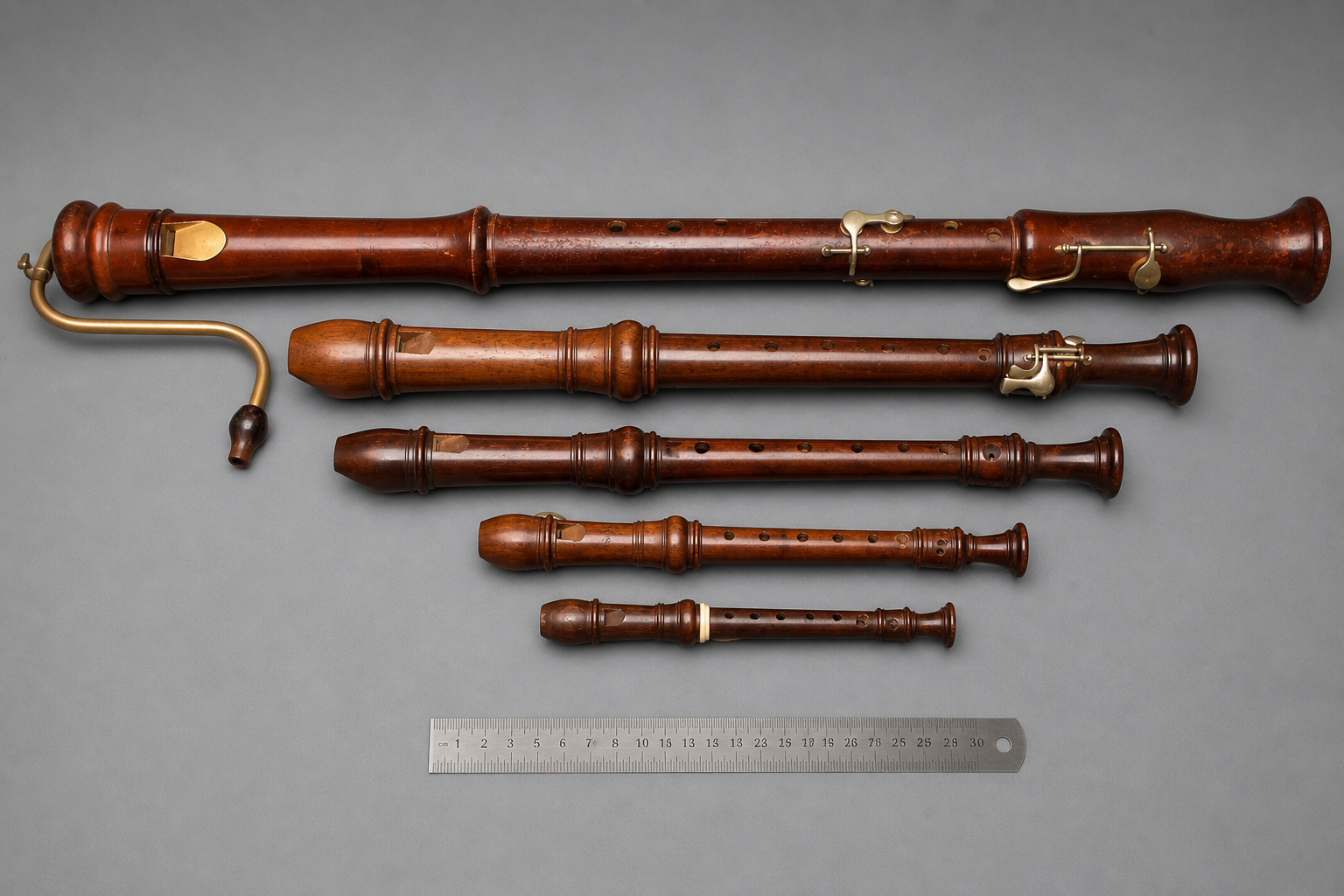 Recorders of different sizes, from sopranino to bass
The Sound
When he began to play, the sound immediately caught my attention. It had a warm, woody quality, but felt more intimate, almost vocal. The tone was soft yet clear, and the ornamentation flowed naturally, without force. This sound reflects how the recorder was often used in its time.
In the Renaissance and Baroque
The recorder was widely used during the Renaissance and Baroque periods. It comes in a range of sizes—from small, high-pitched instruments to larger, deeper ones—and was often played in consorts (ensembles of different sizes), creating a soft, blended sound that fills a space without overpowering it.
Explore the sound world of the recorder through the videos below.
Previously: [Before the Piano (2): The Harpsichord]