Before the Piano (5): The Clavichord
The final chapter of this series leads us to the clavichord—the most intimate and, in many ways, the most modern of early keyboard instruments.
While the harpsichord filled grand halls, the clavichord—too quiet for such spaces—belonged to the private room, the practice space, and the study.
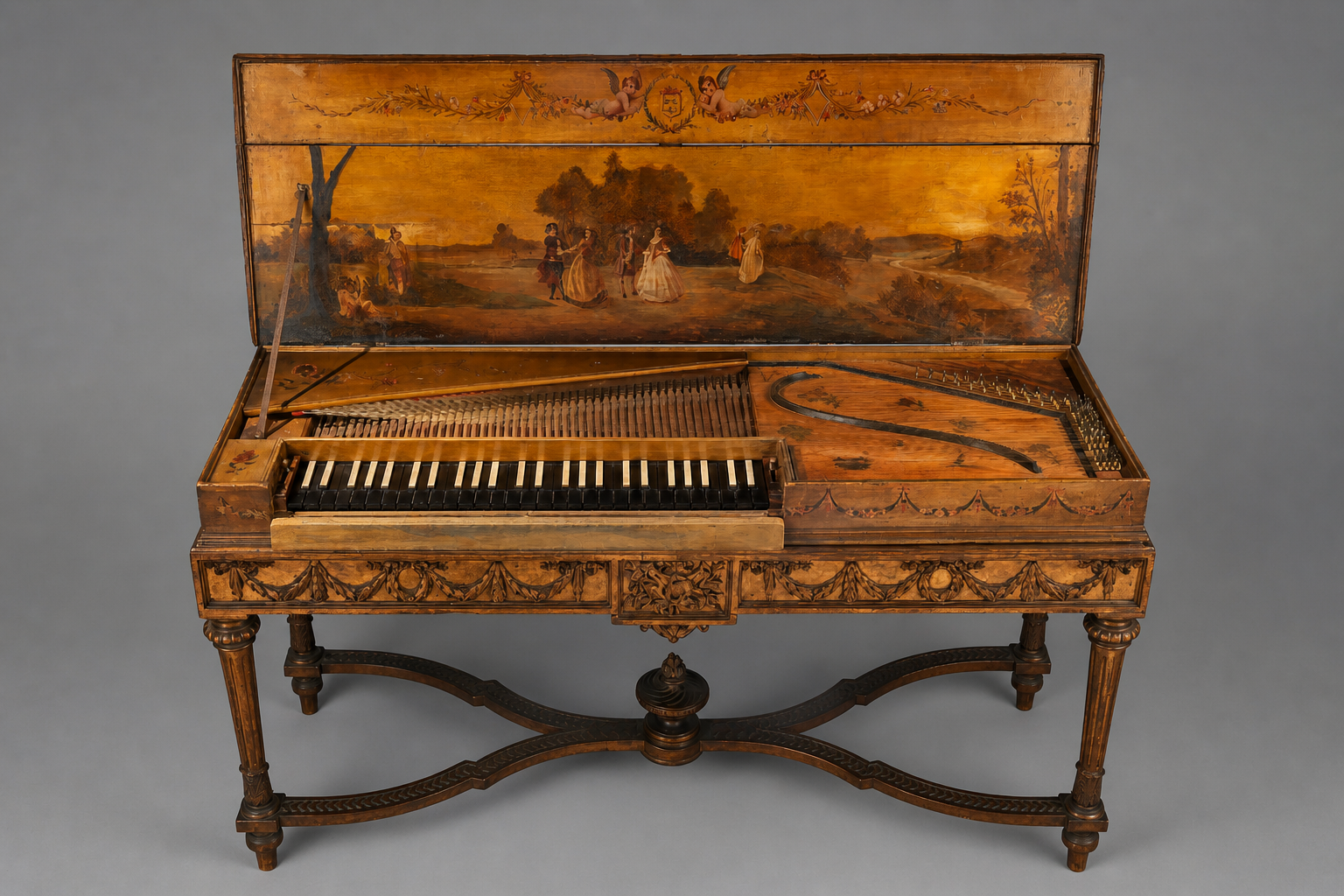 Clavichord, German, attributed to Christian Kintzing (MET, 1986.239a-b)
How It Works
Unlike the harpsichord, which plucks its strings, the clavichord strikes them with a small metal blade called a tangent. This direct contact—remaining on the string as long as the key is held—is the basic idea behind the piano’s later hammer action.
Why It’s Closest to the Piano
For the first time, the player can control the sound after the note begins—shaping it with touch, from soft to loud (around 1:50 in the video above), and even adding a gentle vibrato called bebung (2:20), a slight “wobble” in the sound made by gently moving the finger on the key.
Bebung—a German word meaning “trembling”—is something no other keyboard instrument could produce, not even the modern piano.
The Beginning of the Piano
The essential idea of the piano is already here: a keyboard that responds to touch, letting you shape each note directly through your fingers.
In Italian, piano means “soft” and forte means “loud”—hence the name pianoforte, later shortened to piano. The modern instrument expands this idea, bringing it into larger spaces and making it strong enough for the concert hall.
In the clavichord, that idea feels especially intimate—quiet, close, and almost as if meant for one person, in one room.
Maybe that is where the piano truly begins: not in volume, but in touch.
Previously: [Before the Piano (4): The Viola da Gamba]