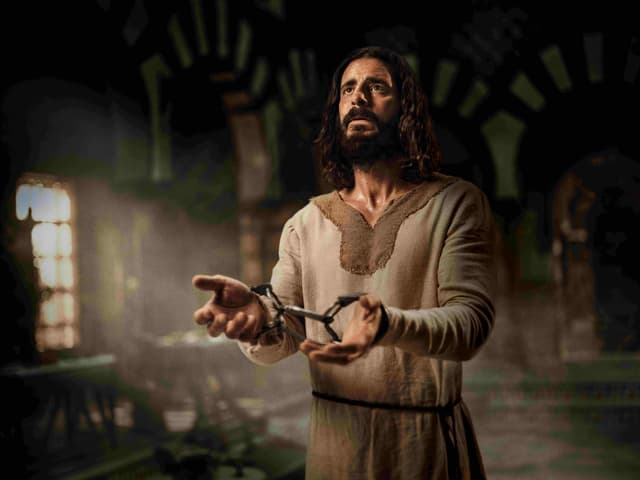
Behind the Betrayal: Luke Dimyan on Bringing Judas to Life in Season 6 of 'The Chosen'
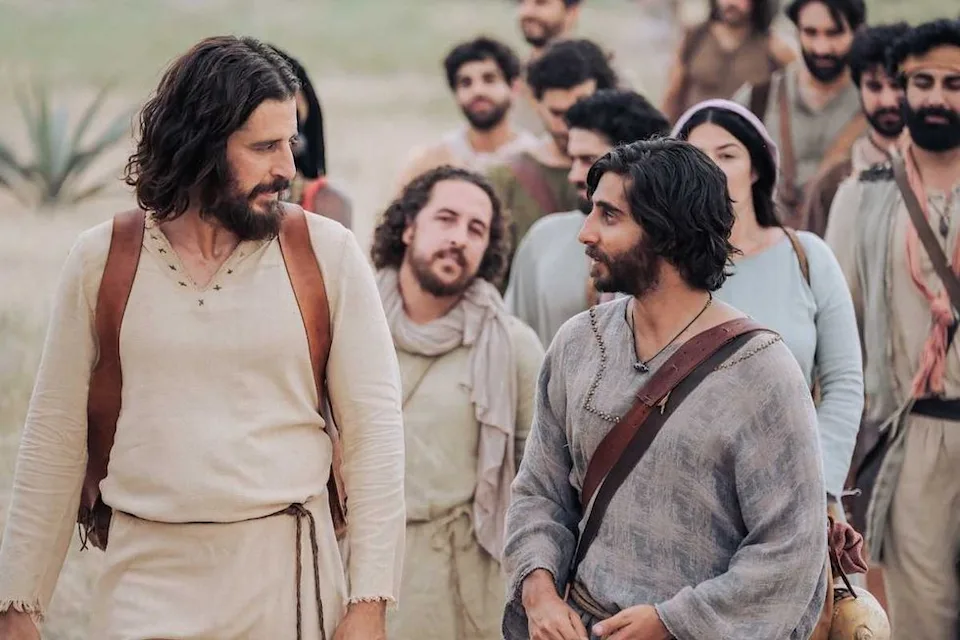 Jonathan Roumie, Luke Dimyan in 'The Chosen' | Photo image courtesy 5&2 Studios
Few roles in the Passion story carry the weight of Judas, the disciple whose betrayal set the events of Jesus’ final hours in motion.
For actor Luke Dimyan, bringing this infamous figure to life in Season Six of The Chosen (now streaming on Prime Video) was a particularly difficult challenge, requiring him to step into the shoes of the story’s most notorious traitor and villain.
Covering the final 24 hours of Jesus’ life—from His arrest and trial to His crucifixion—the new season explores these pivotal events through the eyes of His followers, His accusers, and the Roman authorities.
I recently sat down with Dimyan to discuss his reflections on the emotional and spiritual complexities of portraying Judas and the challenges of telling one of history’s most consequential stories from the perspective of the man who betrayed Jesus.
Judas' betrayal of Jesus is one of the most consequential acts in human history. As you approached Season Six, how did you prepare to portray a character whose decisions will ultimately lead to the death of someone he has followed and known intimately?
Honestly, when it comes to prep, I always try to just keep it as honest as I can on the page, trying to represent what the writers intended as much as I can with maybe a splash of artistic imagination. Maybe I can add something within reason, within the text, trying to embolden that as much as I can. It's interesting because I'll have to remove my hindsight because in Judas' perspective, he doesn't know how it ends, but the betrayal and everything that leads to it, as controversial as it is, really leads to everybody's benefit in a way. It's very hard to look at him, at least in my eyes, without so much judgment and controversy. Through his eyes, it's a tragedy and a loss, but even through Christ's eyes, it's just like a necessary next step to saving humanity.
It’s an interesting situation that even Judas isn't privy to. And I have to play a bit of that, with ignorance. As an actor it's like, oh, that's right. You don't know there's a happy ending. You just think it ruined everything as far as it goes. They all do. Everyone thinks they've lost both Jesus and, and hope for a better future.
One of the most fascinating aspects of Judas is the question of motivation. Does he believe he is acting out of frustration, disillusionment, ambition, political conviction, or some combination of these? With director Dallas Jenkins, how did you explore his motivations?
I think Dallas had more of a definitive decision in that but he was very patient with me. Whenever I'd come in asking for more, especially from my background in theater and performing arts. I am loving this character. I remember in high school, I was aware of Stephen Adly Guirgis' play, The Last Days of Judas Iscariot, and the way that in a more secular form, people delve and view his story as fascinating. They see the conjecture. They see the conflict that comes within someone who is so faithful, but then can betray their own faith for the sake of something, whether it be doubt or something else. But at the end of the day, I think it really comes to perspective. You, as either the reader of the Bible, or of the creator of a show, need from Judas. Whether you need the revolutionary, then that's exactly what it will be. If you need a proponent of greed and a lesson in self-indulgence, that is exactly what he is. But if you also need a young, naive man who hoped for the best, lost in himself for something good, but can't see it all the way through, that is there too. Judas is first to always be trapped to his tragedy, but also at the whim of whatever motivation people need from him.
Judas is often portrayed simply as the villain of the Passion story. Did Season Six give you opportunities to reveal aspects of his humanity that might challenge audiences' assumptions about him?
Oh, absolutely. You see him almost after he does the betrayal, and he's immediately thrown to the wayside. Everybody who's making the decisions now has the plan in place and it's already on its way. You watch Judas feel powerless trying to claim some sort of agency back to even defend Jesus in some instances. He can't because they're done with him. They’re done with whatever villainy he could account for or conspire with. He's left with none of it. It's just him and he's alone. And so it's hard to see him as this conniving winner when he's losing so much this season. Not only his rabbi, but his own conviction with himself.
What’s your greatest hope for Season 6 of The Chosen?
My greatest hope is that people recognize the amazing work that people have done. I want recognition for all of my amazing castmates and the production that went into making this show possible. Especially with Season 6, the culmination of not only Jesus' story, but all of our journeys. I hope and pray that it gets appreciated and the love it deserves, especially for the amount of effort that people put into it.
Season 6 of 'The Chosen' is now streaming on Prime Video.
WATCH A TRAILER FOR SEASON 6 OF 'THE CHOSEN":