Blood Pressure Health: Small Habits That Start With Caring for the Body God Entrusted to You
As we get older, there's one number on a health checkup that naturally draws our attention: blood pressure.
A stressful lifestyle, salty food, lack of exercise, and poor sleep can add up quietly, until one day you notice your blood pressure sitting higher than it used to. Especially past your 40s and 50s, managing blood pressure stops being just about a number — it becomes an important habit for protecting your heart and blood vessels over the long run.
For a Christian, caring for your health can carry a slightly different meaning.
Scripture teaches us to see our bodies not as something to use up however we please, but as something precious, received from God.
"What? know ye not that your body is the temple of the Holy Ghost which is in you, which ye have of God, and ye are not your own?" (1 Corinthians 6:19, KJV)
There's no need to worry excessively about health, or to treat health itself as life's ultimate purpose. But caring well for the body God has entrusted to us can genuinely be seen as one of our everyday responsibilities of stewardship.
So what can we actually do in daily life to manage blood pressure?
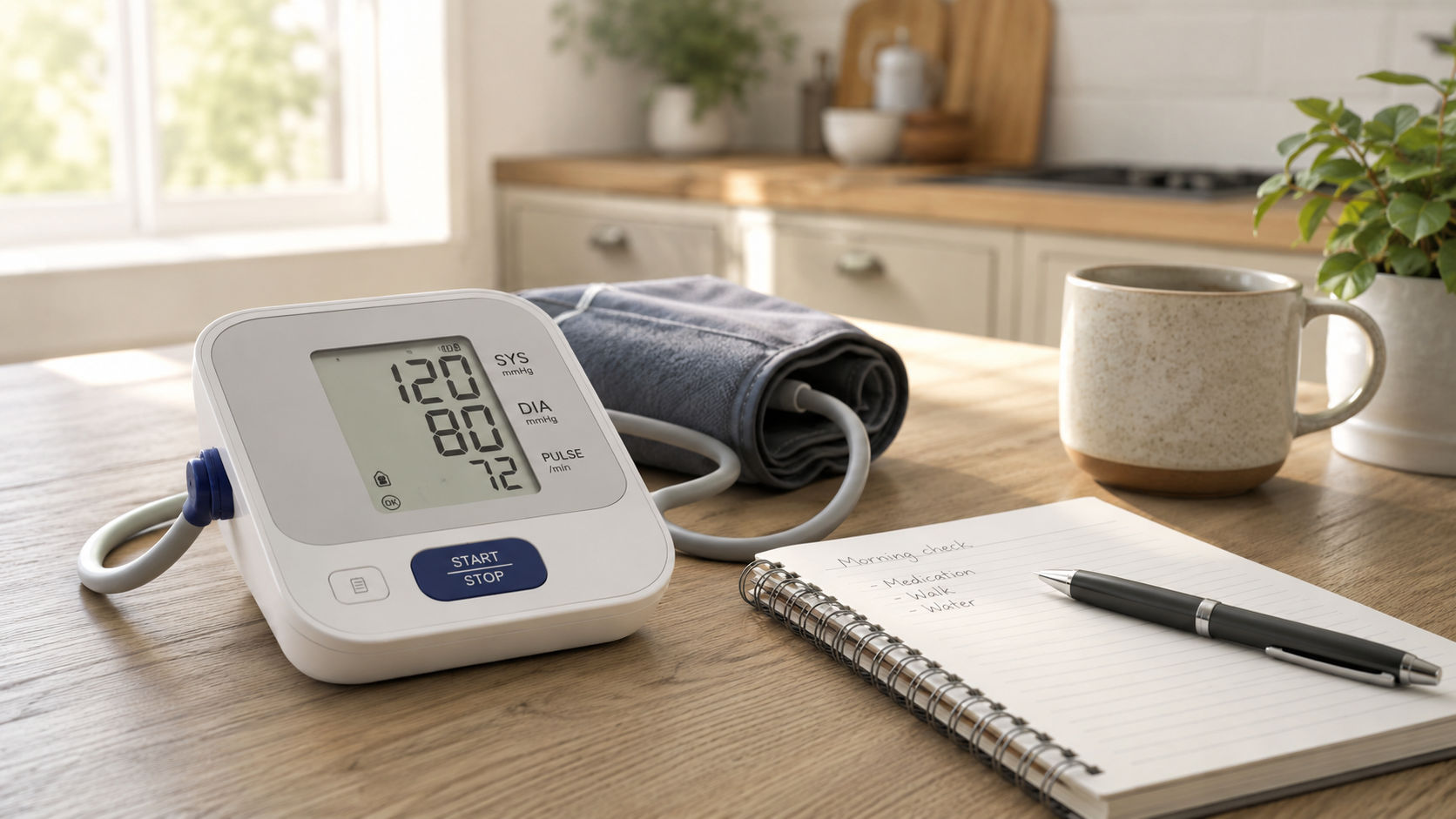 Regularly checking and recording blood pressure at home can help you better understand your cardiovascular health and notice changes over time.
Managing Blood Pressure Starts With Habits, Not Supplements
When blood pressure starts becoming a concern, a lot of people reach first for supplements or natural ingredients. Magnesium, potassium, garlic extract, and olive leaf extract come up often in that conversation.
But the first thing worth remembering is this: supplements don't replace treatment, and the foundation of blood pressure management is lifestyle.
The basics: cutting back on salt, eating enough vegetables and fruit, getting regular exercise suited to your own health, sleeping enough, and managing your weight and stress.
Often, the small choices repeated every day matter more for your health than any special trick.
Just as a life of faith doesn't deepen overnight, health is built from small habits accumulated over a long time.
Try Magnesium and Potassium Through Food First
Two nutrients that come up often in blood pressure discussions are magnesium and potassium.
Magnesium is needed for normal muscle and nerve function, and potassium plays an important role in balancing sodium in the body and maintaining normal blood pressure. A 2025 meta-analysis of 38 randomized controlled trials found that magnesium supplementation modestly but significantly reduced systolic blood pressure by roughly 2–3 mmHg, with a stronger effect in people who were actually deficient. Potassium has shown a similar modest benefit across a review of 23 studies.
So rather than reaching for a supplement first, it's better to get enough magnesium and potassium through a genuine variety of natural foods — vegetables, fruit, legumes, and nuts.
That said, if you have kidney disease or are on certain medications, you shouldn't take potassium supplements on your own. Even a nutrient widely known to be beneficial isn't equally beneficial for everyone.
Caring wisely for your body isn't about eating a lot of something — it's closer to knowing your own body's condition and choosing what it actually needs, in an appropriate amount.
Garlic — Familiar, But Worth a Second Look
Garlic is a very familiar ingredient at any Korean table.
It contains various sulfur compounds and has been studied consistently in relation to cardiovascular health. Some research suggests certain garlic preparations may offer some benefit for blood pressure — one review of 12 studies found garlic supplements reduced systolic and diastolic blood pressure by an average of 8.3 and 5.5 mmHg, respectively. That said, garlic research shows more variability than potassium or magnesium studies, partly because its active compound, allicin, is unstable and product quality varies significantly between brands.
Eating a lot of garlic or garlic extract isn't a substitute for blood pressure medication, though.
In particular, if you're on medication that affects blood clotting, or have surgery coming up, it's worth being cautious about high-dose garlic supplements.
Even an ordinary food is worth eating in a balanced way, with gratitude.
What About Hawthorn Berry and Olive Leaf Extract?
In the world of natural health, hawthorn berry and olive leaf extract are often introduced as ingredients that may support cardiovascular health.
Hawthorn has a long history of traditional use, and olive leaves contain polyphenol compounds like oleuropein. A meta-analysis of randomized controlled trials found olive leaf extract supplementation reduced systolic blood pressure by an average of nearly 4 mmHg overall, with a larger effect (close to 5 mmHg) specifically in people with hypertension.
Still, these ingredients don't replace blood pressure treatment, and results genuinely vary depending on the specific compound, dosage, and the population studied.
If you're on blood pressure medication or heart medication in particular, don't assume something is automatically safe just because it's labeled "natural."
"It came from nature" and "it's safe for everyone" are not the same statement.
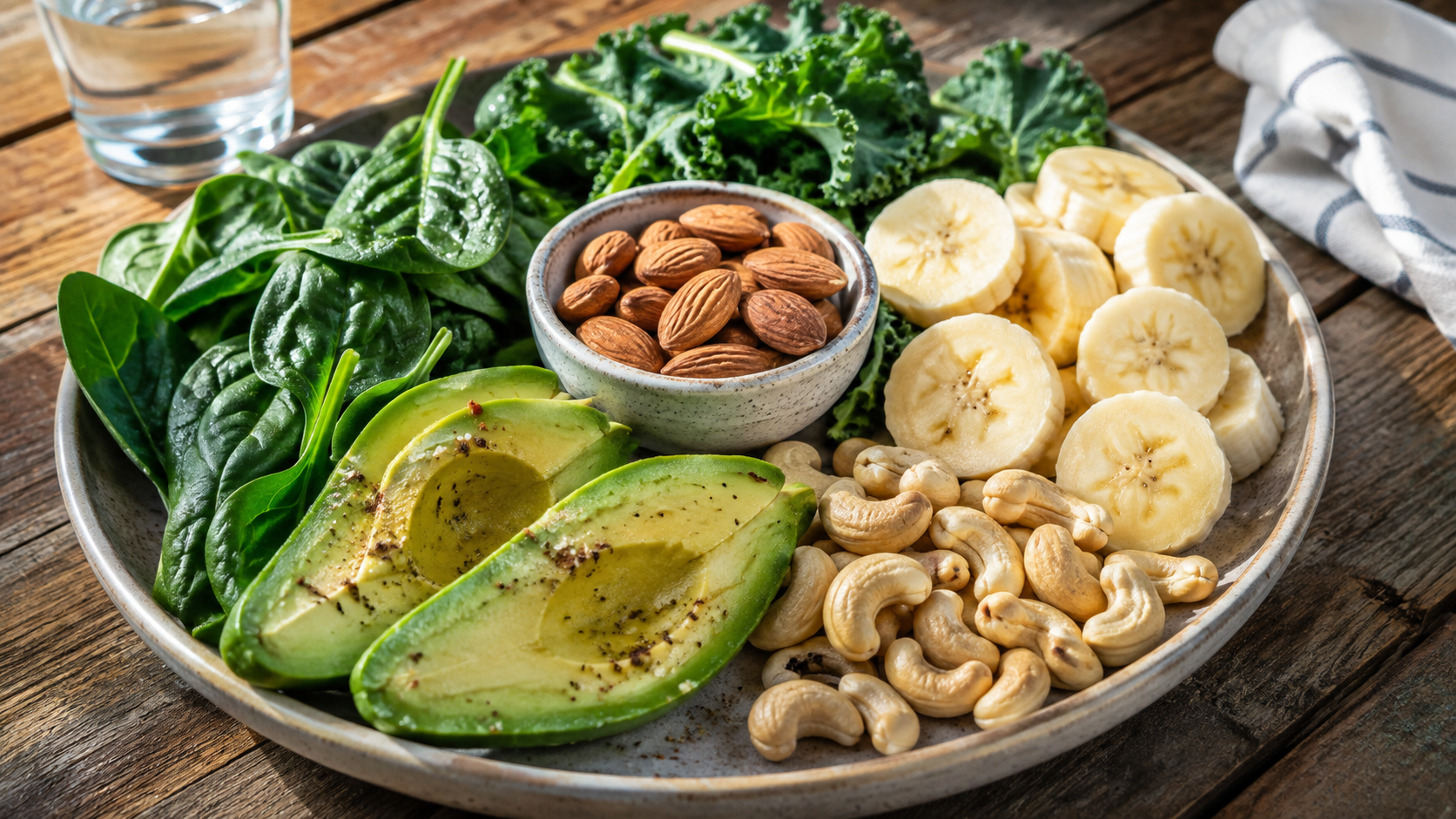 Leafy greens, bananas, avocados, and nuts provide nutrients such as magnesium and potassium that can support a balanced, heart-healthy diet.
What Believers Should Remember When Worried About Health
Health concerns tend to make the heart anxious pretty easily.
Even a slightly elevated reading on a blood pressure monitor can send someone straight to the internet, imagining various illnesses. But caring for your health and being gripped by fear about your health are two different things.
It's worth doing what's actually within your control faithfully, while also becoming a bit freer from the idea that you can control everything.
Checking your blood pressure regularly, seeing a doctor when it's needed, not stopping a prescribed medication on your own, and gradually improving your diet and exercise.
These ordinary actions can also be a way of treasuring the life God has allowed us.
Scripture offers this counsel:
"Be careful for nothing; but in every thing by prayer and supplication with thanksgiving let your requests be made known unto God." (Philippians 4:6, KJV)
Praying doesn't mean health management becomes unnecessary, and diligently managing your health doesn't mean you no longer need to depend on God.
Prayer and responsible action can genuinely go together.
Small Habits You Can Start Today for Your Blood Pressure
There's no need to start with something dramatic.
You can begin with drinking a little less of that salty broth, walking a bit more each day, cutting back on late-night phone scrolling, or adding one more serving of vegetables and fruit to a meal.
If you measure your blood pressure at home, tracking it consistently under similar conditions and times can help too. [A reliable home blood pressure monitor like this OMRON model] makes it easy to build that habit (affiliate link — I may earn a small commission at no extra cost to you).
And if your blood pressure keeps reading high repeatedly, or you've already been diagnosed with hypertension, the priority is talking with a doctor to build an appropriate management plan — not relying on supplements.
Using the Body God Entrusted to You Well, for a Long Time
Health was never proof of some flawless state we get to boast about.
Illness can show up no matter how carefully we manage things, and it's entirely natural for the body to change as we age.
Even so, we can care for the body we've been given today.
Checking your blood pressure, eating a bit less salt, moving a bit more, getting the treatment you need, and approaching your table with gratitude — these small choices, stacked together, sustain your life.
The purpose of caring for your body was never simply to hold onto health itself for as long as possible.
It's so we can love our family, serve our neighbors, carry out what we've been entrusted with, and faithfully live out the day God has given us.
One small health habit today can be preparation to love and serve more strongly tomorrow.
May today be a day of caring for your health with gratitude and wisdom, rather than fear.
 Regular walking is a simple way to stay active, manage stress, and support overall heart and blood pressure health as we age.
This article is intended as general health information and is not a substitute for individual diagnosis or treatment. If you have hypertension, kidney or heart disease, or are taking blood pressure medication or other prescription drugs, please consult a doctor or pharmacist before taking any supplement.