Colorful Hymns: Practical Piano Tips for Smarter Practice
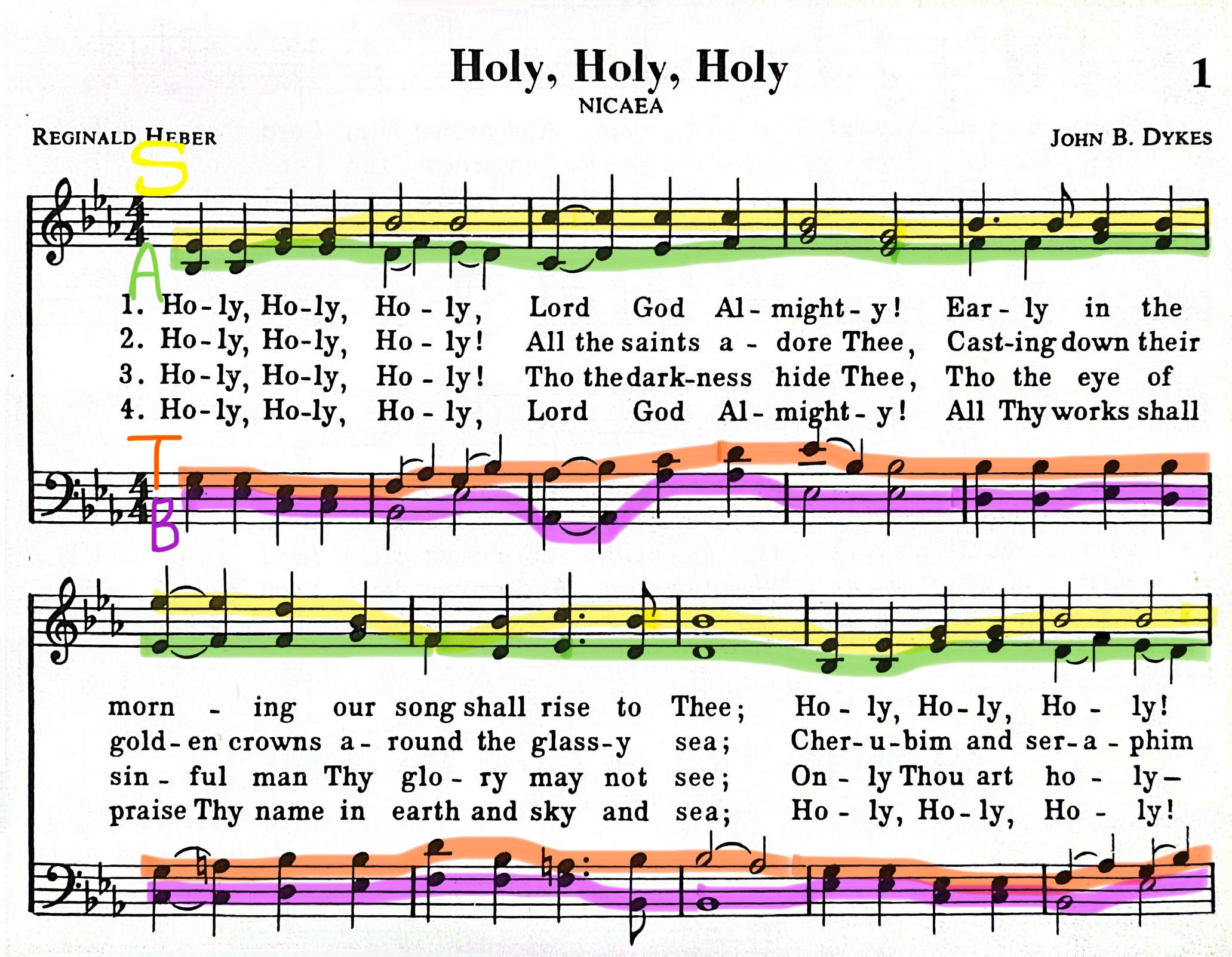
In the previous post, we explored why hymnals are one of the best tools for learning harmony and sight-reading. Now the question is: how should you actually practice them at the piano?
One of the most effective methods is what I like to call “colorful hymns.”
1. Color Each Voice
Hymns are written in four parts: Soprano, Alto, Tenor, and Bass. Instead of seeing them as a dense block of notes, try assigning each voice a different color.
Lightly mark each line in your score. This simple step helps your eyes instantly separate the voices, making the music much easier to read and understand.
2. Plan Your Fingering First
Before you begin practicing, take a moment to write in your fingerings as specifically as possible using a pencil.
At first, following your written fingerings—especially in single-voice, two-voice, or three-voice practice—may feel awkward or unnatural. But sticking to them from the very beginning is actually the fastest way to improve.
You’re not just practicing notes—you’re building muscle memory. And consistent fingering is what makes that possible.
3. Practice in Combinations
Instead of always playing all four voices together, break them into smaller parts. This is where real learning happens.
Start with one voice at a time (and follow your written fingerings carefully):
- Soprano only
- Alto only
- Tenor only
- Bass only
Then move to combinations:
- Soprano + Bass (outer voices)
- Alto + Tenor (inner voices)
Expand further:
- Soprano + Alto
- Soprano + Tenor
- Alto + Bass
- Tenor + Bass
Next level:
- Soprano + Alto + Tenor
- Soprano + Alto + Bass
- Soprano + Tenor + Bass
- Alto + Tenor + Bass
Yes—all combinations.
This may feel repetitive at first, but it trains your brain to hear and control each voice independently while still understanding the harmony as a whole.
4. Bring It All Together
After practicing the combinations, play all four voices together. This time, focus on bringing out the melody, which is usually in the top voice (soprano). Let it sing clearly above the others, while the inner voices stay softer and supportive.
If you stick with this “colorful hymns” approach, you’ll not only improve your technique—you’ll also develop a more sensitive ear and begin to experience the beauty of harmony in a much more vivid and personal way.
Here’s a helpful video demonstrating effective hymn piano practice.
You can check it out here if you’re interested in slightly arranged hymn settings for piano. Before purchasing, be sure to check the “Read Sample” to see if the level fits you. (affiliate link)
Previously: [Why Hymnals Are the Best Tool for Learning Harmony and Sight-Reading]