Why Hymnals Are the Best Tool for Learning Harmony and Sight-Reading
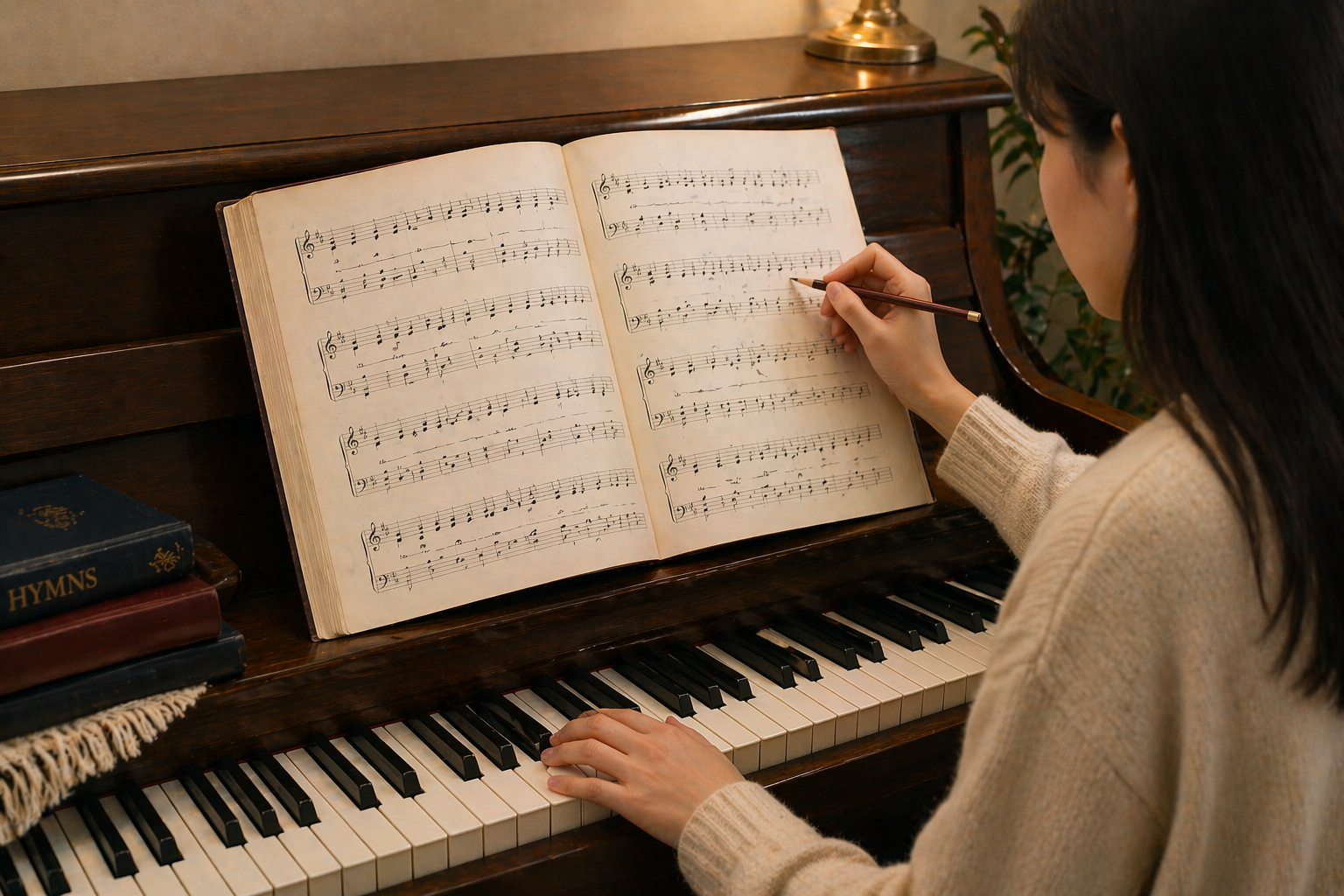
Often overlooked, hymnals are one of the most powerful tools for learning Western music. They don’t just contain songs—they train your ears, eyes, and hands all at once.
1. Learn Harmony the Practical Way
Most hymns are written in four parts (Soprano, Alto, Tenor, Bass). This is the foundation of classical harmony.
Instead of just studying theory, you actually hear how chords move and resolve. You also develop a natural understanding of voice leading—how each line connects smoothly.
2. Improve Sight-Reading Faster
Hymns train you to read music both horizontally and vertically.
Horizontal reading means following each individual line (like a melody moving forward). Vertical reading means seeing all the notes stacked together as a chord at one moment.
Hymns require you to do both at the same time—you track each voice while also recognizing the full chord shape.
This helps you:
• Recognize chord shapes quickly
• Anticipate common progressions
• Read ahead and process music more efficiently
3. Build Real Piano Skills
Hymns may look simple, but they require control and precision.
You’ll naturally develop:
• Smooth legato playing (even without pedal)
• The ability to control your fingers both vertically (chords) and horizontally (independent lines) at the same time
• The ability to bring out melody while balancing inner voices
These are the same skills needed for advanced classical repertoire.
A hymnal goes far beyond its role in worship—it’s one of the most effective, all-in-one practice books for harmony, sight-reading, and technique. With regular practice, you’ll find your reading, coordination, and musical understanding becoming clearer and more confident.
Below are just two examples among countless hymn performances.
Previously: [A Quiet Breath in Bach: Arioso from Cantata BWV 156]