Courageous Movie Review: A Christian Movie About Fatherhood That Hits Harder Than Expected
 Courageous explores fatherhood, responsibility, faith, and spiritual leadership in a way
that challenged many Christian families long after the movie ended.
Courageous is often described as “a movie about dads.”
That description is technically true.
But it is also incomplete.
Because *Courageous* is not really about fatherhood in the casual, modern sense of the word. It is about responsibility. Leadership. Spiritual passivity. Regret. And the terrifying realization that many men wake up too late to understand what their children actually needed from them.
That is why this movie hit so many Christian families emotionally.
Not because it was subtle.
Because it was painfully direct.
What Is Courageous About?
The film follows several law enforcement officers whose personal lives begin unraveling in different ways.
Adam Mitchell appears responsible on the surface:
he works hard,
provides financially,
and loves his family.
But after a devastating tragedy, he realizes he has been physically present while spiritually absent.
That realization becomes the emotional center of the movie.
As Adam and his friends wrestle with fatherhood, integrity, temptation, discipline, and faith, they eventually make a public commitment called “The Resolution” — a promise to lead their families according to biblical principles.
On paper, that premise sounds simple.
In execution, Courageous becomes surprisingly heavy emotionally.
Why Courageous Connected So Deeply With Christian Men
Many Christian movies focus mainly on romance, forgiveness, or personal inspiration.
Courageous targeted something different:
Male spiritual responsibility.
And honestly, that topic makes many people uncomfortable.
The movie repeatedly asks difficult questions:
- What does it actually mean to lead a family spiritually?
- Is financial provision enough?
- What happens when fathers become emotionally passive?
- Can children feel loved if they rarely receive intentional attention?
Those questions hit hard because they reflect reality.
A lot of fathers are not intentionally cruel.
They are simply distracted.
Work.
Exhaustion.
Phones.
Entertainment.
Endless responsibilities.
The film argues that passive fatherhood can still create deep emotional damage even without obvious abuse.
That message resonated with many viewers because they recognized themselves in it.
The Most Powerful Theme Is Not Masculinity — It Is Repentance
One reason Courageous worked better than many expected is because it avoids portraying men as flawless heroes.
The fathers in this movie fail repeatedly.
Some struggle with:
anger,
emotional distance,
dishonesty,
temptation,
or neglect.
The film’s core message is not:
“Real men are naturally strong.”
Its message is closer to:
“Real men take responsibility when they fail.”
That distinction matters.
Biblically, the movie reflects themes found in:
- Ephesians 6:4 — “Bring them up in the training and instruction of the Lord.”
- Joshua 24:15 — “As for me and my house, we will serve the Lord.”
- Proverbs 20:7 — “The righteous lead blameless lives; blessed are their children after them.”
The movie repeatedly emphasizes that leadership is not domination.
It is sacrificial responsibility.
That idea feels increasingly countercultural today.
Courageous Understands Something Modern Culture Often Misses
Modern culture frequently reduces fatherhood to:
paying bills,
being “nice,”
attending events,
or occasionally giving advice.
But *Courageous* argues that biblical fatherhood requires intentional spiritual leadership.
Not perfection.
Presence.
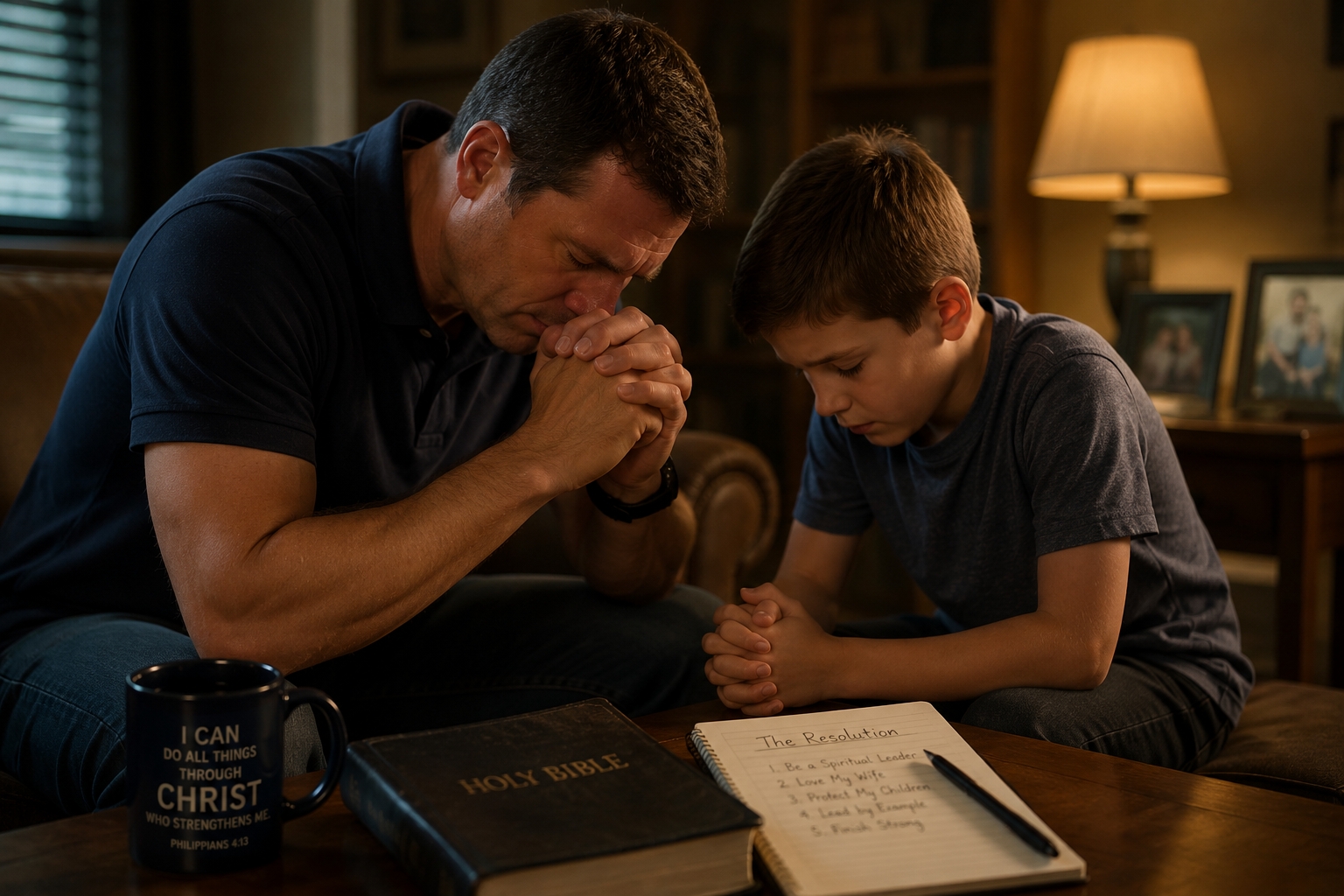
The movie suggests children are shaped not only by what fathers say, but by:
what they prioritize,
how they handle failure,
how they treat their spouse,
and whether their faith feels authentic at home.
That message explains why so many fathers found the movie uncomfortable in a good way.
It forces self-examination.
The Emotional Weight of Courageous Feels Real
Some Christian films struggle to create believable emotional stakes.
Courageous actually succeeds in several key scenes because it understands grief, regret, and guilt surprisingly well.
The movie’s emotional turning points feel effective because they are rooted in ordinary family life.
Not every scene is subtle. Some dialogue is clearly designed to deliver a message.
But emotionally, many moments still feel authentic.
Especially for parents.
There is a particular fear the movie taps into:
realizing too late that time with your children was limited all along.
That idea alone is enough to make many viewers emotional.
The Christian Message Is Extremely Direct
Unlike some faith-based films that keep spirituality vague, *Courageous* is unapologetically Christian.
Prayer, Scripture, repentance, discipleship, and biblical leadership are central to the story.
For Christian audiences, that directness is often the movie’s greatest strength.
For secular viewers, it may feel overly explicit at times.
But the movie was never trying to hide its worldview.
Its central argument is clear:
Families become stronger when fathers take spiritual responsibility seriously.
Whether viewers agree with that message or not, the film commits fully to it.
Weaknesses Worth Mentioning
The movie is not flawless.
Some weaknesses include:
occasional overly scripted dialogue,
uneven acting performances,
comedic moments that do not always land,
and certain scenes that feel more like sermons than natural conversation.
The pacing can also feel long in the middle sections.
However, many viewers overlook those issues because the emotional and spiritual themes resonate strongly enough to carry the film.
In other words:
People rarely remember Courageous because of cinematic perfection.
They remember it because it challenged them personally.
Why Courageous Still Matters in 2026
Ironically, the themes of *Courageous* may be even more relevant today than when the film first released.
Modern families face:
digital distraction,
emotional disconnection,
collapsing attention spans,
identity confusion,
and increasing isolation.
Many children grow up with fathers who are physically nearby but emotionally unavailable.
Courageous pushes directly against passive parenting culture.
It argues that fathers matter deeply — not only financially, but spiritually and emotionally.
That message remains powerful because many people still hunger for stable leadership, intentional parenting, and authentic faith inside the home.
Final Verdict
Courageous is not simply a movie about being a better dad.
It is a movie about responsibility before God.
That is why the film connected so deeply with Christian audiences.
It challenges viewers to ask uncomfortable questions:
Am I spiritually present for my family?
Do my children see authentic faith in me?
Am I leading intentionally or simply reacting to life?
Those questions stay with people long after the credits end.
If you are looking for:
a Christian movie about fatherhood,
a biblically grounded family drama,
or a faith-based film that actually confronts modern passivity,
Courageous is still worth watching.
Not because it is perfect.
But because it reminds people that courage is often quieter than the world expects.
Sometimes courage looks like repentance, consistency, responsibility, and showing up every day for the people God entrusted to you.