Did These Old Instruments Disappear?
After looking at instruments like the lute, harpsichord, and recorder, a natural question comes up:
If they were so widely loved, why did they disappear?
The short answer—they didn’t. Their role simply shifted as the world around them changed.
Changing Spaces, Changing Sounds
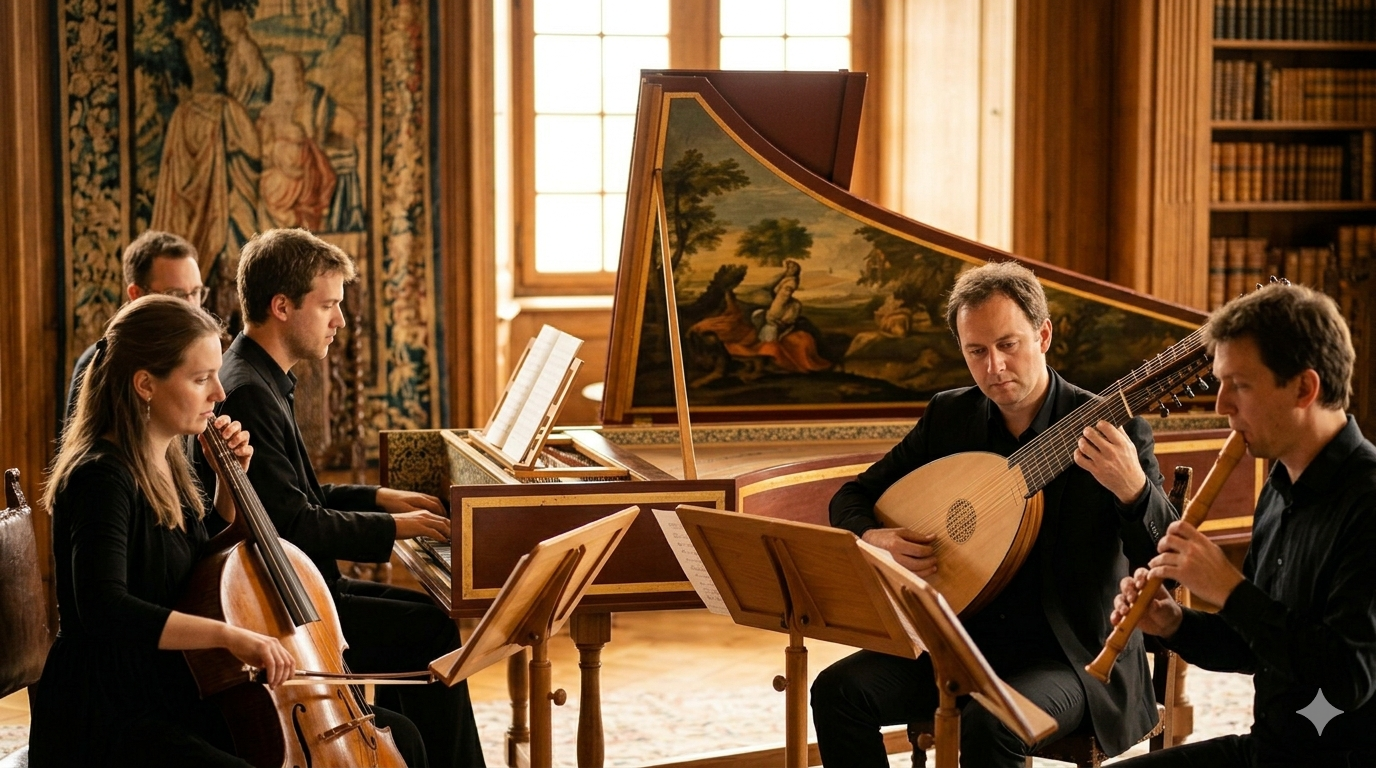
Early instruments were built for small spaces—homes, small gatherings, churches. They are expressive, but very quiet.
As music moved into larger concert halls in the 18th and 19th centuries, sound had to grow with it, and louder instruments naturally took over.
A Shift in Taste
It wasn’t just about volume. Earlier music favored subtle textures and color. Later music leaned into contrast and drama.
In that shift, instruments like the harpsichord gave way to the piano—not because they were inferior, but because they belonged to a different musical language.
Listening With Fresh Ears
Thankfully, that “old” way of listening is making a quiet comeback.
Since the mid-20th century, musicians have returned to these instruments to rediscover their original sound.
One piece that first drew me into this world is Brandenburg Concerto No. 5 by Johann Sebastian Bach.
Listen for the clarity and lightness of the sound—and if you can, don’t miss the harpsichord’s painted lid (0:18, 6:53). These instruments were meant to be seen as well as heard.
To hear all six Brandenburg Concertos, here's a recommended recording. (Affiliate link)
Previously: [Before the Piano (3): The Recorder]