Does Peppermint Tea Actually Help? A Light Kind of Rest for a Busy Day
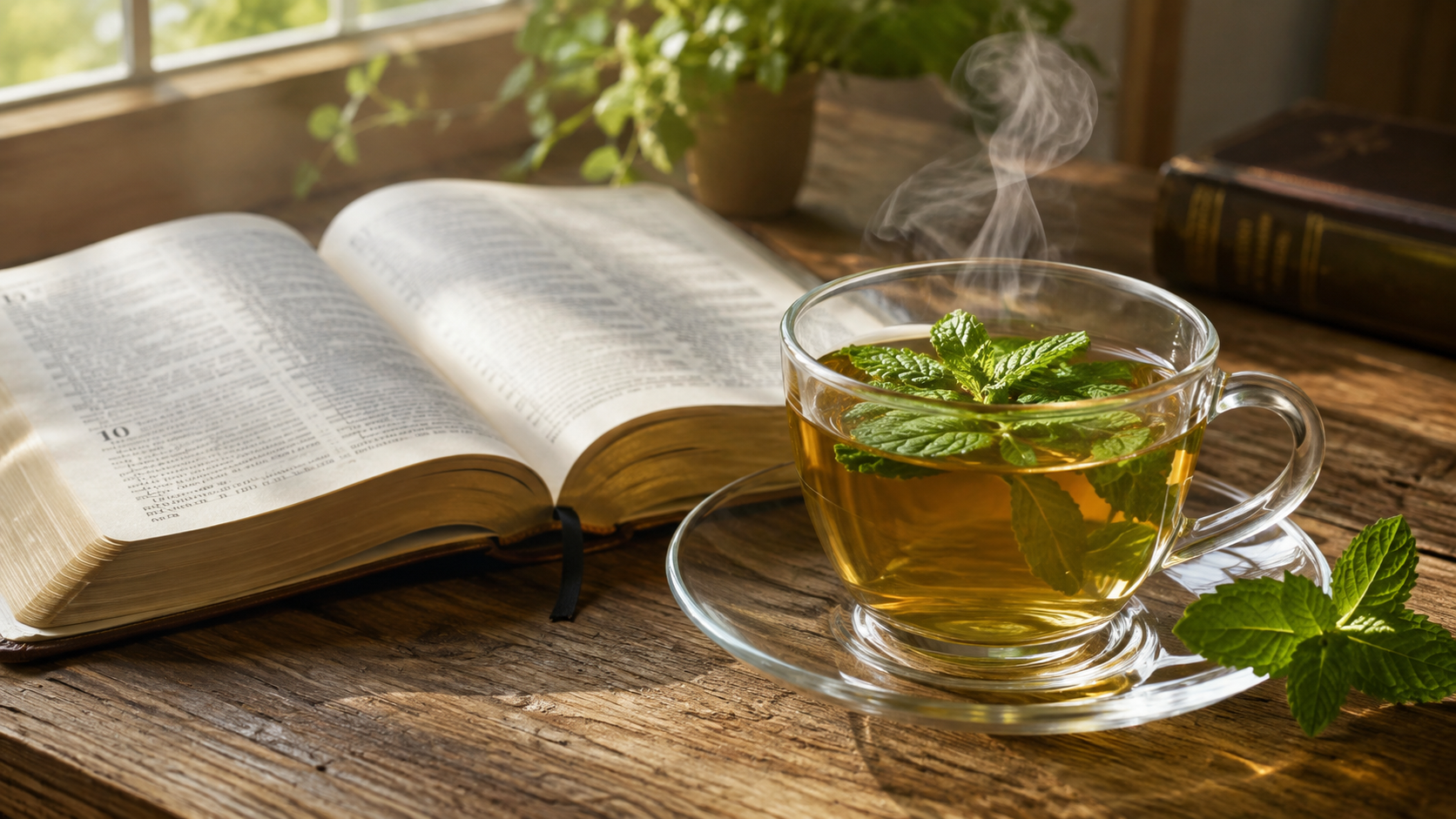 A warm cup of peppermint tea beside an open Bible creates a peaceful moment of rest, reflection, and quiet comfort.
There are moments in a hectic day when a warm cup of tea just sounds right. Too late for coffee, or trying to cut back on caffeine — that's usually when people reach for an herbal tea instead.
One of the more familiar options is peppermint tea.
That cool, distinctive peppermint scent has a way of clearing a stuffy mood, and it leaves your mouth feeling fresh after a meal. Even the simple act of slowly drinking a warm cup can become a moment to slow down and actually check in with your body and mind.
That said, peppermint tea isn't a cure-all for every digestive issue, and it's not going to transform your health dramatically. Current research suggests peppermint oil capsules may help with some symptoms of irritable bowel syndrome — but research on peppermint leaf or tea itself is still pretty limited.
It makes more sense to think of peppermint tea as an everyday, low-stakes drink rather than a medicine.
What Exactly Is Peppermint Tea?
Peppermint tea is an herbal infusion made by steeping dried peppermint leaves in hot water.
Pure peppermint tea, without any added tea leaves or caffeine, is naturally caffeine-free — a good fit for anyone looking for a warm drink instead of coffee.
That said, some blended products mix in green or black tea, so it's worth checking the ingredient list if you're specifically trying to avoid caffeine.
The real appeal of peppermint tea probably isn't dramatic health benefits — it's more about everyday things like: the fresh feeling it leaves after a meal, the cool sensation that clears a stuffy mood, the chance to slow down over a warm drink, and having an alternative to coffee or sugary beverages.
If you'd like to try it, [a simple, caffeine-free pure peppermint tea like this one] is an easy, no-frills way to start (affiliate link — I may earn a small commission at no extra cost to you).
Does It Help With Post-Meal Bloating?
Peppermint has a long history of use for digestion-related purposes.
Research has particularly focused on its ability to relax intestinal muscle, and enteric-coated peppermint oil capsules may help reduce abdominal pain or bloating in some people with irritable bowel syndrome over the short term. But it's a mistake to extend those findings directly to peppermint tea.
Some people genuinely feel a bit more comfortable after drinking peppermint tea. That could be a real personal experience — but there isn't enough evidence yet to say peppermint tea treats indigestion.
So it's more accurate to think of peppermint tea after a meal as:
Not "medicine that treats digestion," but
"a warm drink to slowly notice how your body is responding after eating."
If indigestion lasts more than two weeks, or comes with severe pain, vomiting, weight loss, or black stool, that's not something to manage with tea — see a doctor.
Does It Actually Relieve Tension?
Breathing in that cool peppermint scent can genuinely feel clarifying or mood-lifting in the moment.
But there isn't enough evidence to say peppermint tea treats stress, anxiety, or insomnia. Part of why a warm cup before bed feels calming might have less to do with peppermint specifically, and more to do with the act of slowly drinking something warm while actually stopping the day's activity.
What matters more is turning the act of drinking tea into an intentional moment of rest.
Try putting your phone down for a minute, wrapping both hands around the warm cup, and slowing your breathing. A short, quiet prayer — setting down whatever's been occupying your mind — can be part of that too.
Jesus said to His own tired disciples:
"Come with me by yourselves to a quiet place and get some rest." (Mark 6:31)
Rest isn't laziness. It's time spent caring again for the body and mind God entrusted to you.
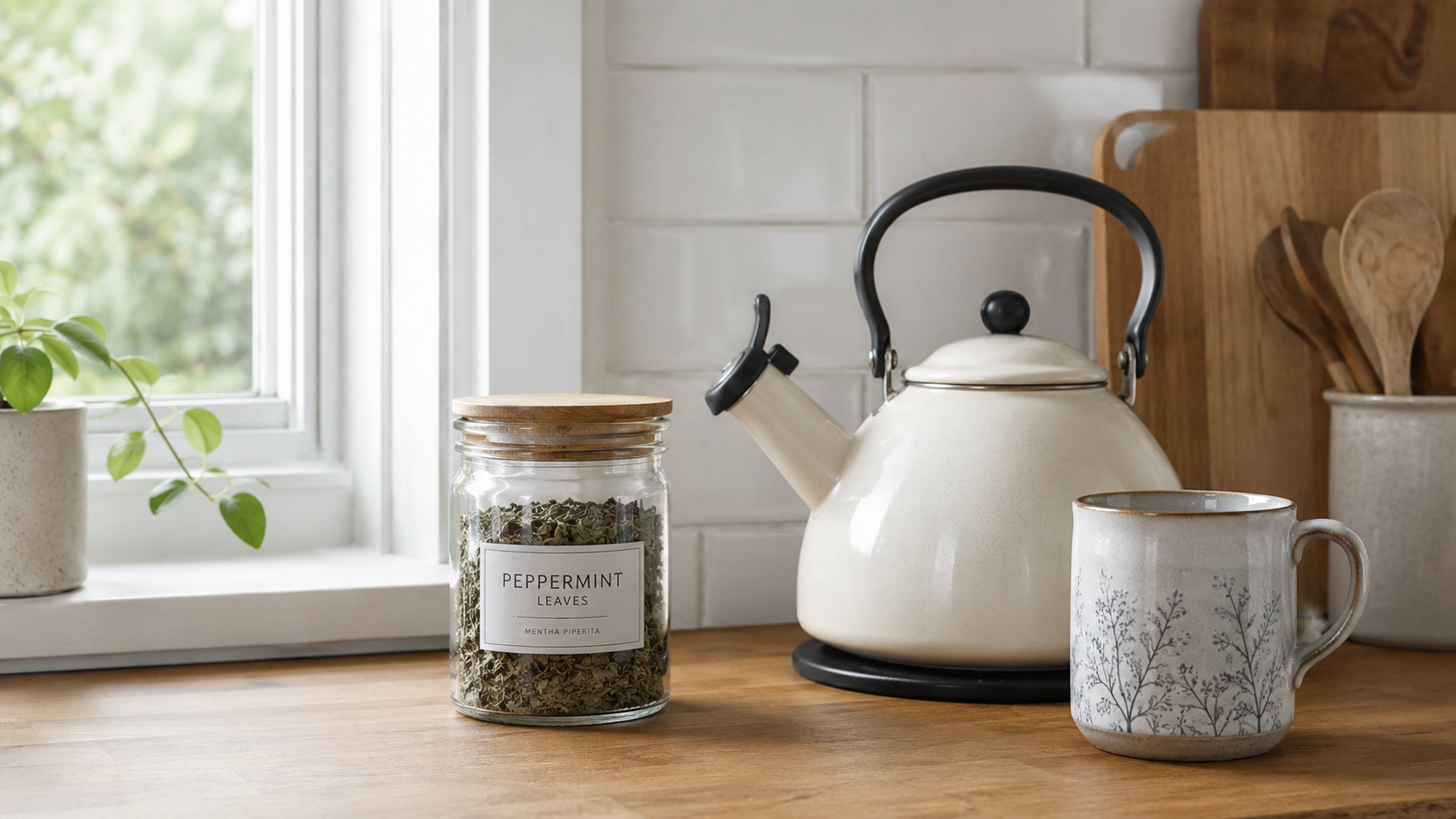 A calming kitchen scene with peppermint tea ingredients highlights the simple preparation of a soothing herbal drink.
What a Cup of Tea Can Teach About Gratitude and Restraint
Scripture teaches us to receive what God has given with gratitude, rather than turning food into an idol or an object of fear.
"For everything God created is good, and nothing is to be rejected if it is received with thanksgiving." (1 Timothy 4:4)
The same applies to peppermint tea.
One cup isn't going to erase every source of fatigue or worry. Health was never decided by one single food or drink — a balanced diet, reasonable exercise, enough sleep, healthy relationships, and medical care when needed all matter together.
Even so, the small habit of gratefully drinking a warm cup of tea can help you notice the everyday grace you've already been given.
The scent and warmth of today's cup, the moment you get to sit and rest, the fact that you might have someone to share it with — none of that was ever guaranteed or owed to you.
When to Be Cautious
If you have acid reflux or heartburn. Peppermint can worsen heartburn or acid reflux in some people. The National Center for Complementary and Integrative Health notes that heartburn and indigestion are known side effects of peppermint oil, and recommends caution for people with reflux disease.
If you already deal with any of the following, pay attention to how your body responds after drinking peppermint tea: a burning sensation in the chest or throat, acid coming back up, frequent belching, or reflux symptoms that worsen when lying down.
If symptoms get worse, it's better to stop drinking it.
If you drink a lot, over a long period. Ordinary peppermint tea is generally considered safe, but there isn't enough information about the safety of consuming large amounts of peppermint leaf over an extended period.
If you're new to it, start with a weaker single cup rather than several strong ones, and pay attention to how your body responds.
Don't confuse peppermint tea with peppermint essential oil. Peppermint tea and highly concentrated peppermint essential oil are completely different things.
Never add essential oil to water and drink it the way you would tea. Concentrated oil can be dangerous if swallowed in any real quantity — don't consume it unless it's a product specifically manufactured for ingestion, used under professional guidance.
If you're pregnant, breastfeeding, managing a chronic condition, or taking regular medication, it's worth checking with a doctor before making an herbal product a habitual part of your routine.
How to Enjoy Peppermint Tea Comfortably
Nothing complicated is required.
Steep peppermint leaves or a tea bag in hot water for a reasonable amount of time, then sip it slowly once it's cooled to a comfortable temperature.
There's no need to brew it extra strong or drink large amounts chasing a bigger health benefit. It matters more to notice whether you get heartburn or stomach discomfort afterward.
A few ways to build this into your day: after a meal, instead of rushing to the next task, sip a warm cup and notice how your body feels; during an afternoon break, choose peppermint tea over coffee or a sugary drink and look away from a screen for a minute; at the end of the day, dim the lights, drink slowly, and think of one thing you're grateful for — and if something's been weighing on you, hand it over to God in a short prayer.
Caring for Your Body Is Part of Faith Too
Christian health management was never a competition to build a flawless body.
Our bodies are tools for the life God entrusted to us — a gift worth caring for so we can love, serve, and work. Not pushing your body past its limits, resting when you're tired, getting proper treatment when you're sick, and practicing restraint with food and drink — all of it connects to a genuine sense of faith-based responsibility.
One cup of peppermint tea isn't going to transform your health.
But during that one cup, you can slow your breathing, thank God, and take an honest look at your own body and mind.
The Takeaway
Peppermint tea isn't medicine, and it's not a miracle health food.
There's some research on peppermint oil's digestive effects, but not enough on peppermint tea itself to confirm a clinical benefit. Rather than claiming it "helps digestion" or "eliminates stress," it's most realistic to treat it as an easygoing herbal tea for everyday life.
That said, anyone with acid reflux or heartburn should pay attention, since symptoms can worsen.
The biggest benefit of peppermint tea probably isn't some dramatic healing power — it's the simple fact that it gives you a reason to pause in the middle of a busy day.
Sit with a warm cup and look back on the grace you've received today. And before worrying about tomorrow, trust the God who is caring for you even in this very moment.
Peppermint tea isn't some special medicine that changes your health.
It's a simple, humble cup that lets you gratefully care for the body and life God gave you, and rest for just a moment.
 Holding a warm mug in the evening light captures the simple comfort of slowing down and resting at the end of the day.
This article is intended as general health information and is not medical advice for diagnosing or treating any condition.