Fasting or Intermittent Fasting? (1) My personal story...
In recent years, intermittent fasting has become widely popular. Many people practice it to improve their health, manage weight, or reset their metabolism. At first glance, it may seem like a modern trend. But when we look more closely, it begins to resemble something much older—Christian fasting.
I practice it at least once a week, following a pattern that closely resembles traditional fasting. I usually begin fasting after dinner, around 6–7 p.m., and continue until noon the next day. During that time, I only drink water—no coffee (which is honestly the hardest part for me!) and no tea. It usually ends up being an 18:6 intermittent fasting pattern.
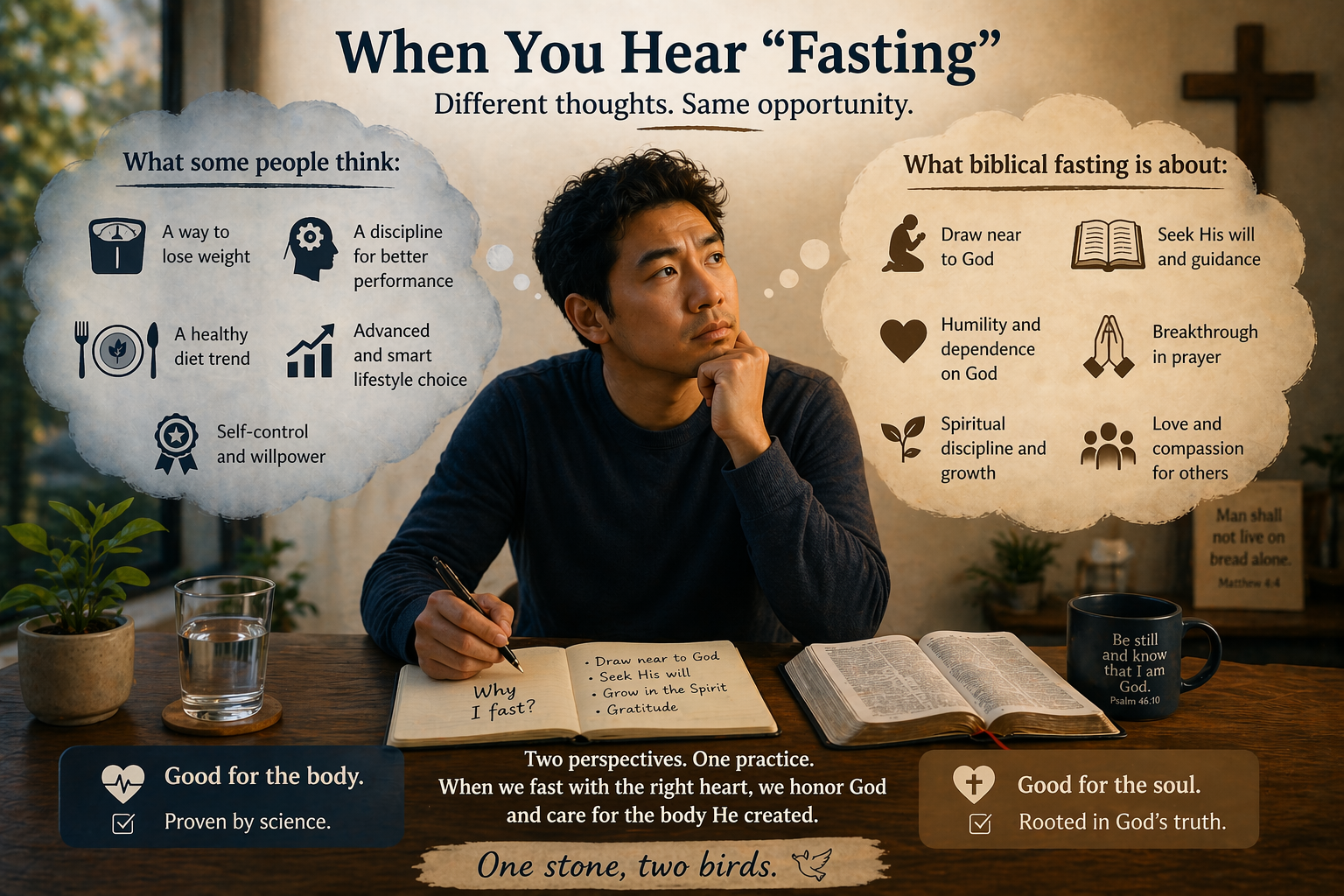
But when I practice it together with spiritual discipline, something deeper happens. I empty, and at the same time, I am filled.
I empty my stomach, yes—but I also begin to empty other things. The overwhelming emotions. The tangled relationships. The complicated thoughts. And most of all, I try to empty my spirit.
Then comes the filling.
I fill myself with gratitude. I become more aware of how thankful I am—for food, shelter, clothes, water, health, and so much more that I often take for granted. I am also reminded of God’s saving grace, and the community I have to share that grace with. And most of all, I pray that my spirit would be filled with the Spirit of God.
At the beginning, I definitely feel hungry. My body speaks loudly. It tells me I need to eat so I can function better, serve better, and stay productive. That voice can be very convincing.
I also don’t usually tell people that I’m fasting. Part of it is fear—fear that I might seem “too rigid,” “too spiritual,” or even “performative.” But when I say I’m doing “intermittent fasting,” the reaction is completely different. Suddenly, people see me as “disciplined,” “wise” (though not quite the same as biblical wisdom), or “health-conscious.”
To be honest, that difference in response makes me a little sad.
Intermittent fasting feels new and impressive to many people, but fasting itself is not new to Christians at all. It has always been part of our spiritual life. Yet somehow, the two are now seen as completely different practices.
That’s why I want to talk about both—their similarities and their differences.
I believe both are worth practicing regularly. And if you are a Christian, I would gently encourage you to try fasting with a biblical heart and attitude, while also embracing the health benefits that science and medicine have confirmed through intermittent fasting.
In a way, it becomes one practice with two dimensions.
One simple act—yet it shapes both body and soul.