Foods for High Cholesterol — Does Changing What You Eat Actually Make a Difference?
Hearing "your cholesterol is high" at a checkup sends your mind in a few different directions.
I'm probably not at the medication stage yet, right?
Would cutting back on greasy food be enough?
Am I stuck eating salad for the rest of my life?
Living in the U.S. can make changing your diet feel especially hard. Bacon and eggs for breakfast, a burger or pizza for lunch, steak and fries for dinner — that's an easy default. Grocery stores are full of processed food, and restaurant portions aren't small either.
But managing high cholesterol doesn't really start with finding some special health food. It starts with gradually changing the choices you repeat every day.
Food alone can't solve every cholesterol issue — genetics, age, weight, activity level, diabetes, thyroid disease, and smoking all play a role too. But cutting back on saturated fat and building meals around vegetables, fruit, whole grains, legumes, nuts, and fish is a genuinely important way to manage LDL cholesterol.
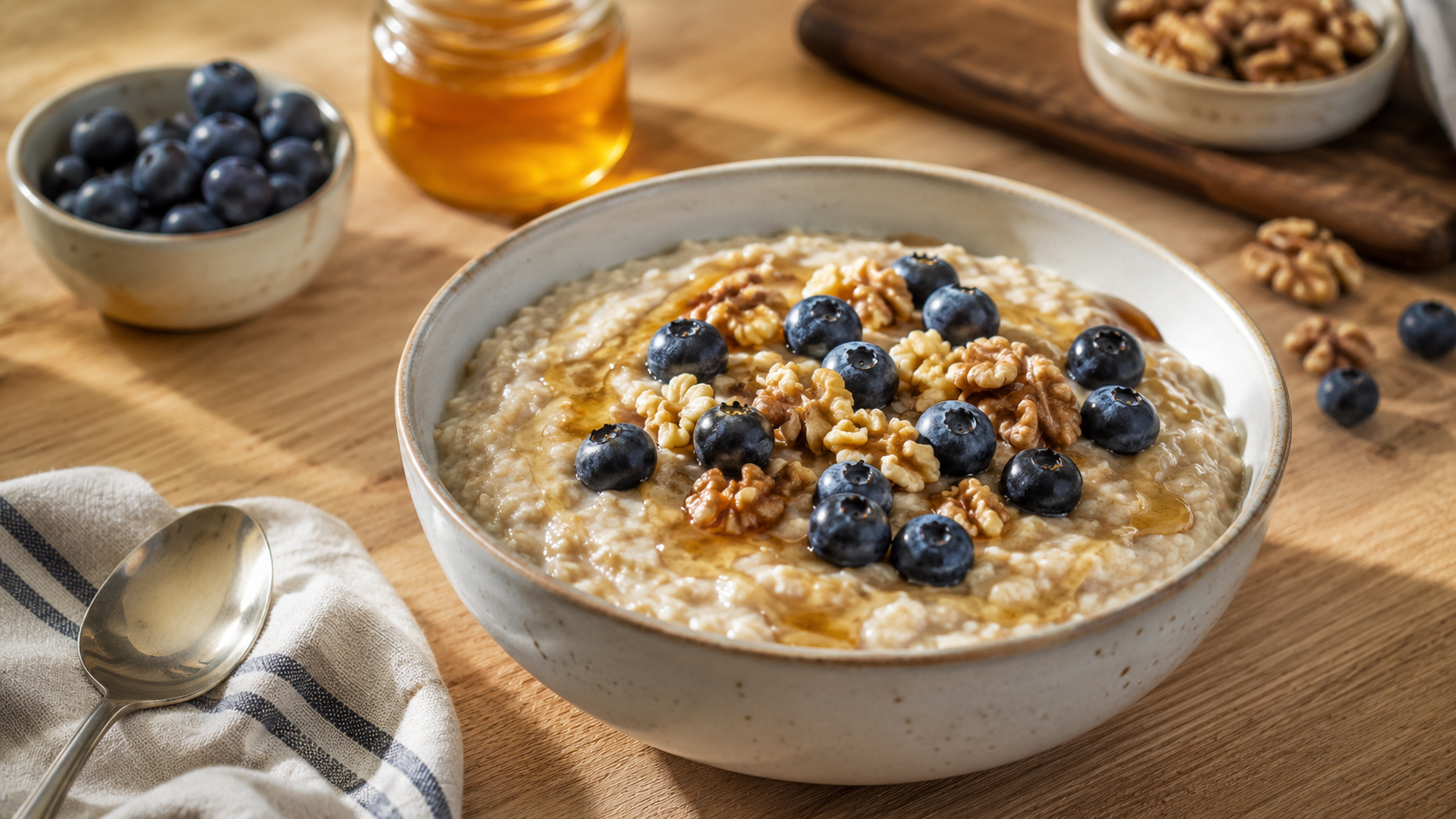 A heart-healthy breakfast of oatmeal, blueberries, and walnuts provides soluble fiber and unsaturated fats that can support healthy cholesterol management.
Is High Cholesterol Really Just About Eating Too Much Fat?
When LDL cholesterol — what we usually call "bad" cholesterol — runs high, fatty deposits are more likely to build up along artery walls. Left unchecked over time, that's connected to heart disease and stroke risk.
That doesn't mean fat itself needs to be avoided entirely, though.
What actually matters is **which fat, and how much**. Saturated fat — found in fatty red meat, butter, whole milk, cheese, cream, and some desserts — can raise LDL cholesterol. Unsaturated fat, on the other hand — found in olive oil, nuts, and fish — is a better choice for heart health specifically when it replaces saturated fat rather than adding to it.
So the core of a cholesterol-friendly diet really comes down to two sentences:
Eat a bit less of what's high in saturated fat, and a bit more of what's rich in fiber and healthy fat.
Building this habit consistently matters more than assembling a perfect meal plan overnight.
Foods Worth Swapping First in a Typical American Diet
Swap bacon and sausage for oatmeal. American breakfasts often feature bacon, sausage, buttered biscuits, and sweet pastries — foods that can carry a lot of saturated fat, sodium, or added sugar.
If overhauling breakfast entirely feels like too much, try swapping in oatmeal just a few times a week.
The soluble fiber in oatmeal helps reduce how much cholesterol and fat get absorbed in the gut. The National Heart, Lung, and Blood Institute (NHLBI) specifically recommends increasing soluble fiber intake as part of managing cholesterol.
A bowl of oatmeal becomes a full meal with a few simple additions: blueberries or strawberries, half a banana, walnuts or almonds, unsweetened soy milk or low-fat milk, and a pinch of cinnamon.
Go for unsweetened oatmeal rather than instant packets loaded with sugar and syrup.
Swap white bread for whole grain bread. If sandwiches are a regular part of your diet, the bread matters as much as what's inside it.
Instead of white bread or a refined bagel, check the label for "100% whole wheat" or "whole grain." The American Heart Association recommends choosing whole grains over refined ones, and including products with a genuinely high whole-grain content.
A whole grain sandwich built around turkey breast or grilled chicken, tomato and leafy greens, avocado, mustard, and an apple on the side makes for an easy American lunch.
Watch the sodium in deli meats like turkey ham, though — check the label, and go for freshly grilled chicken or a lower-sodium option when you can.
Swap steak for salmon and other fish. You don't have to give up red meat entirely. But if fatty steak, ribs, or burgers are a frequent habit, it's worth adjusting frequency and portion size.
Try swapping in salmon, trout, sardines, or tuna once or twice a week. The American Heart Association recommends a variety of protein sources in a heart-healthy diet, including fish and seafood, plant-based protein, nuts, and legumes.
Cooking method matters too. Instead of fried fish, try baking it in the oven, using an air fryer with minimal oil, pan-searing with a small amount of olive oil, or seasoning with lemon and herbs.
Pairing fish with fries and cream sauce cancels out a lot of the benefit — try roasted vegetables, brown rice, quinoa, or a salad instead.
Swap burger patties for beans and lentils. Beans genuinely fit into an American diet. Black beans, chickpeas, lentils, and kidney beans all provide fiber and plant protein together, and fiber-rich foods like these are a key part of a cholesterol-friendly diet.
Try replacing half the beef in a chili with beans, swapping ground meat for black beans in tacos, adding chickpeas to a salad, making lentil soup, or choosing a bean burger instead of a beef one.
Swapping half of one meal for beans is a lot more realistic than giving up meat entirely.
Swap butter and cream sauce for olive oil and avocado. Butter, lard, cream sauce, and coconut oil can all carry a lot of saturated fat. Olive oil, avocado, and nuts are solid sources of unsaturated fat to use instead.
Avocado in particular offers both soluble fiber and unsaturated fat, making it a good substitute for animal fat or tropical oils. Try mashed avocado on toast instead of butter, olive oil and vinegar instead of creamy dressing on a salad, plain Greek yogurt instead of sour cream on a potato, and avocado or hummus instead of a heavy hand with mayo.
That said, healthy fats are still calorie-dense. "Good fat" doesn't mean unlimited fat — portion still matters.
Beyond food swaps, plant stanols — found naturally in small amounts in vegetable oils, nuts, and whole grains — are recognized by NHLBI as another way to help block cholesterol absorption in the gut. [Plant stanol soft chews like these] offer a convenient way to add more of that specific mechanism to a daily routine, though they work best as one part of an overall pattern rather than a stand-alone fix (affiliate link — I may earn a small commission at no extra cost to you).
Swap chips and desserts for unsalted nuts. When afternoon hunger hits, reach for a small portion of unsalted almonds or walnuts instead of chips, cookies, donuts, or a candy bar.
Nuts provide unsaturated fat and fiber, and NHLBI also recommends including a variety of nuts as part of a cholesterol-conscious diet.
Nuts are calorie-dense too, though — portion out a small amount ahead of time rather than eating straight from a large bag.
If you want something sweet, try an apple with unsweetened peanut butter, berries with plain Greek yogurt, banana with walnuts, or a small amount of dark chocolate with almonds.
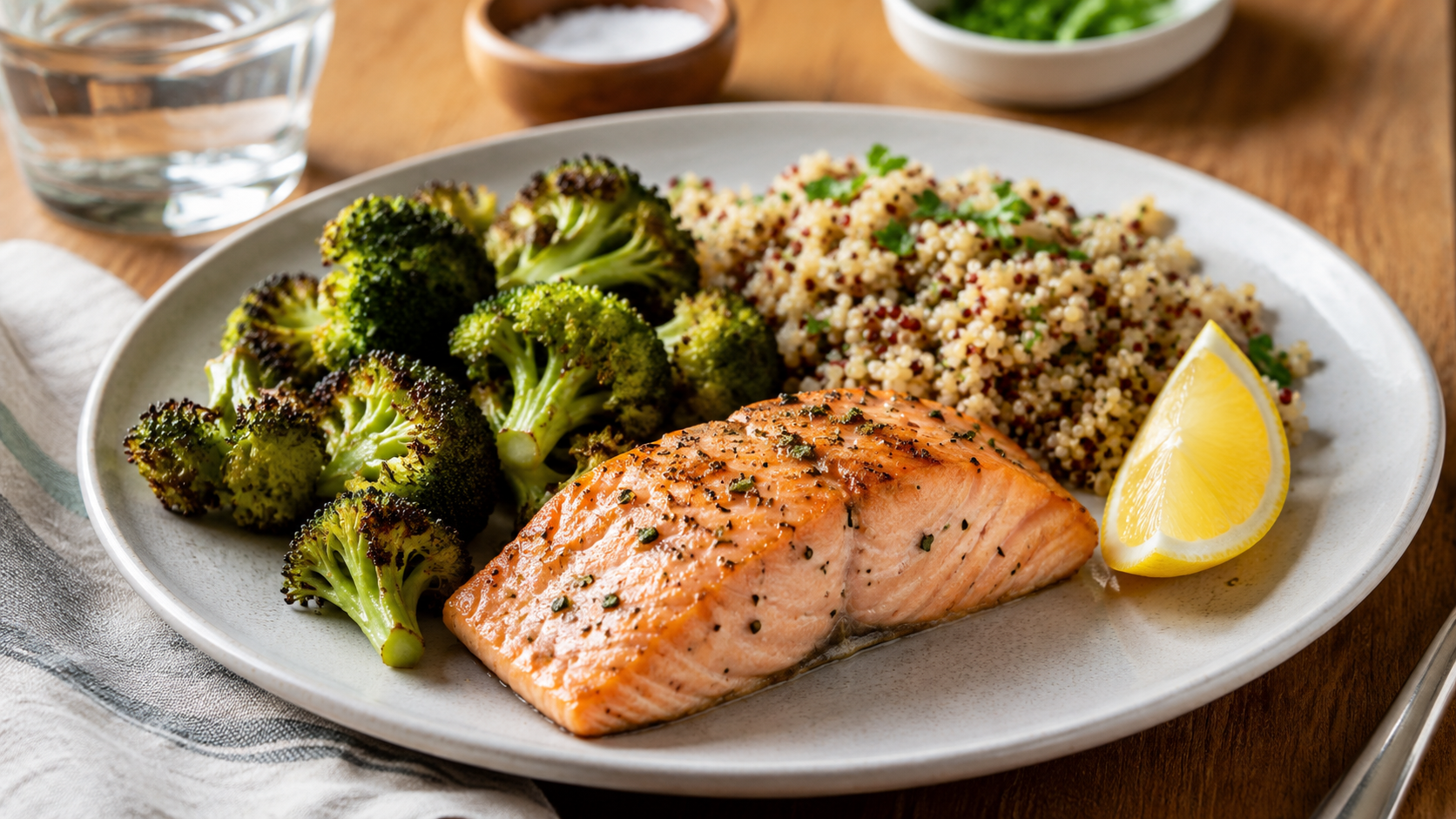 Oven-baked salmon paired with roasted broccoli and quinoa offers a balanced combination of protein, fiber, whole grains, and heart-healthy fats.
What to Order When Eating Out
Avoiding restaurants entirely isn't realistic in American life — church gatherings, work events, and family meals all happen at restaurants regularly.
You don't need to overhaul the whole meal. Adjusting one or two things is enough.
At a burger place: single patty instead of double, salad or fruit instead of fries, less mayo and cheese, grilled chicken or a bean burger, water or unsweetened tea instead of soda.
At a Mexican restaurant: soft tacos instead of fried ones, sour cream and cheese in moderation, add black beans and vegetables, brown rice if it's an option, and only take as many chips as you'll actually eat.
At an Italian restaurant: tomato sauce instead of cream sauce, grilled chicken or fish instead of fried chicken parmesan, smaller pasta portion with added vegetables, and don't mindlessly keep eating bread and butter.
At a steakhouse: a smaller, leaner cut, roasted vegetables instead of a buttered potato, salad instead of cream soup, sauces and dressings on the side, and box up half for the next meal.
How much you eat matters just as much as what you eat.
A Sample Day of Eating
Breakfast: unsweetened oatmeal, blueberries or banana, a small portion of walnuts, unsweetened soy milk or low-fat milk.
Lunch: grilled chicken sandwich on whole grain bread, tomato and greens, an apple or orange, water or unsweetened tea.
Snack: a small portion of unsalted almonds, or plain Greek yogurt with berries.
Dinner: oven-baked salmon, broccoli and carrots, brown rice or quinoa, a salad dressed with olive oil and lemon.
On a non-fish day: lentil soup, black bean tacos, tofu and vegetable stir-fry, or a chickpea salad.
You don't have to follow this exact plan. What matters is adapting it to your own budget, cultural background, health situation, and family's eating habits.
If Your Triglycerides Are High, Watch Alcohol and Sugar Too
High cholesterol often gets reduced to "too much fat" in people's minds, but if triglycerides specifically are elevated, alcohol, added sugar, and refined carbohydrates matter just as much.
Sugary soda, energy drinks, sugar-loaded coffee drinks, cookies and cake, white bread, and heavy alcohol use can all work against triglyceride management.
If quitting alcohol entirely isn't realistic right away, start by simply tracking frequency and amount. That said, if triglycerides are very high, or you're dealing with liver disease, diabetes, or certain medications, full abstinence may actually be necessary — that's worth discussing with a doctor.
"Just eat nuts instead of drinking" isn't really the full picture. If triglycerides are high, diet, alcohol use, weight, blood sugar, and exercise habits all need attention together.
If You're Already on Medication, Does Diet Still Matter?
Taking cholesterol medication doesn't make diet and exercise unnecessary.
The reverse is true too — managing your diet is never a reason to reduce or stop prescribed medication on your own. If cardiovascular risk is high, or LDL cholesterol is very elevated, lifestyle changes alone may not be enough to control it.
NHLBI recommends discussing your specific cholesterol numbers and cardiovascular risk with a healthcare provider, and combining lifestyle management with medication when it's actually needed.
Medication isn't a sign of failure. Getting the treatment you actually need is also a responsible way of caring for your health.
How Should Christians Think About Health?
Scripture doesn't tell us to boast about our bodies or make an idol of them. But it doesn't tell us to neglect them either.
Our bodies are the means by which we live out the life God entrusted to us. Loving family, serving neighbors, and carrying out whatever calling we've been given all call for caring wisely for the body, as much as we're able.
"So whether you eat or drink or whatever you do, do it all for the glory of God." (1 Corinthians 10:31)
This verse was never about labeling certain foods as more or less faithful. We shouldn't judge or condemn anyone based on what they eat.
It's closer to an invitation to notice what we choose each day, and to approach the table with self-control and gratitude.
The purpose of caring for your health was never just to look thinner or outlive someone else. It's about caring for your body so you can live out the days God has given you faithfully.
Grace matters in this process too.
Don't give up just because you had one burger. Don't spiral into guilt over one slice of cake at a church gathering. Just start making a good choice again at the next meal.
Healthy eating isn't a competition for perfection — it's closer to repeated, small acts of obedience.
Small Changes You Can Start This Week
Trying to change everything at once rarely lasts. Pick just one thing to start with this week: cutting bacon at breakfast to twice a week, switching to whole grain bread, eating fish once this week, swapping part of a burger patty for beans, choosing water over soda, choosing fruit and nuts over cookies, or taking a 20-minute walk after dinner.
Don't dismiss a small change as insignificant. A single day's choice looks small, but repeated enough times, it becomes a way of life.
Does Changing What You Eat Really Make a Difference?
The degree varies by person, but diet genuinely plays a significant role in managing cholesterol. A diet that cuts saturated fat while increasing soluble fiber, whole grains, legumes, nuts, vegetables, fruit, and fish is a well-established lifestyle approach for lowering LDL cholesterol.
That said, no single food is going to clean out your arteries or cure high cholesterol on its own.
Alongside diet, several other things matter too: regular physical activity, maintaining a healthy weight, not smoking, adequate sleep, managing blood pressure and blood sugar, taking prescribed medication when needed, and regular blood testing.
If a checkup flagged an issue, don't just change your diet and wait indefinitely — get retested at the interval your doctor actually recommends.
A Life of Stewardship, Starting at the Table
High cholesterol usually isn't the result of one single meal on one single day. It builds from years of repeated habits, genetics, age, and overall health working together.
So the solution doesn't need to come from extreme fasting or the latest trending health food either.
It can start with swapping this morning's bacon for oatmeal, swapping lunch's fries for a salad, or trimming tonight's steak portion and adding more vegetables.
Eating itself can be a place to practice gratitude and self-control.
Care for the body God gave you, without being consumed by fear about your health. Do what's within your control faithfully, leave the outcome to God, and get the medical help you actually need — that's a genuinely balanced posture.
Today's small choice doesn't guarantee tomorrow's blood vessels will be perfectly healthy. But it can be a meaningful first step toward living more fully and faithfully.
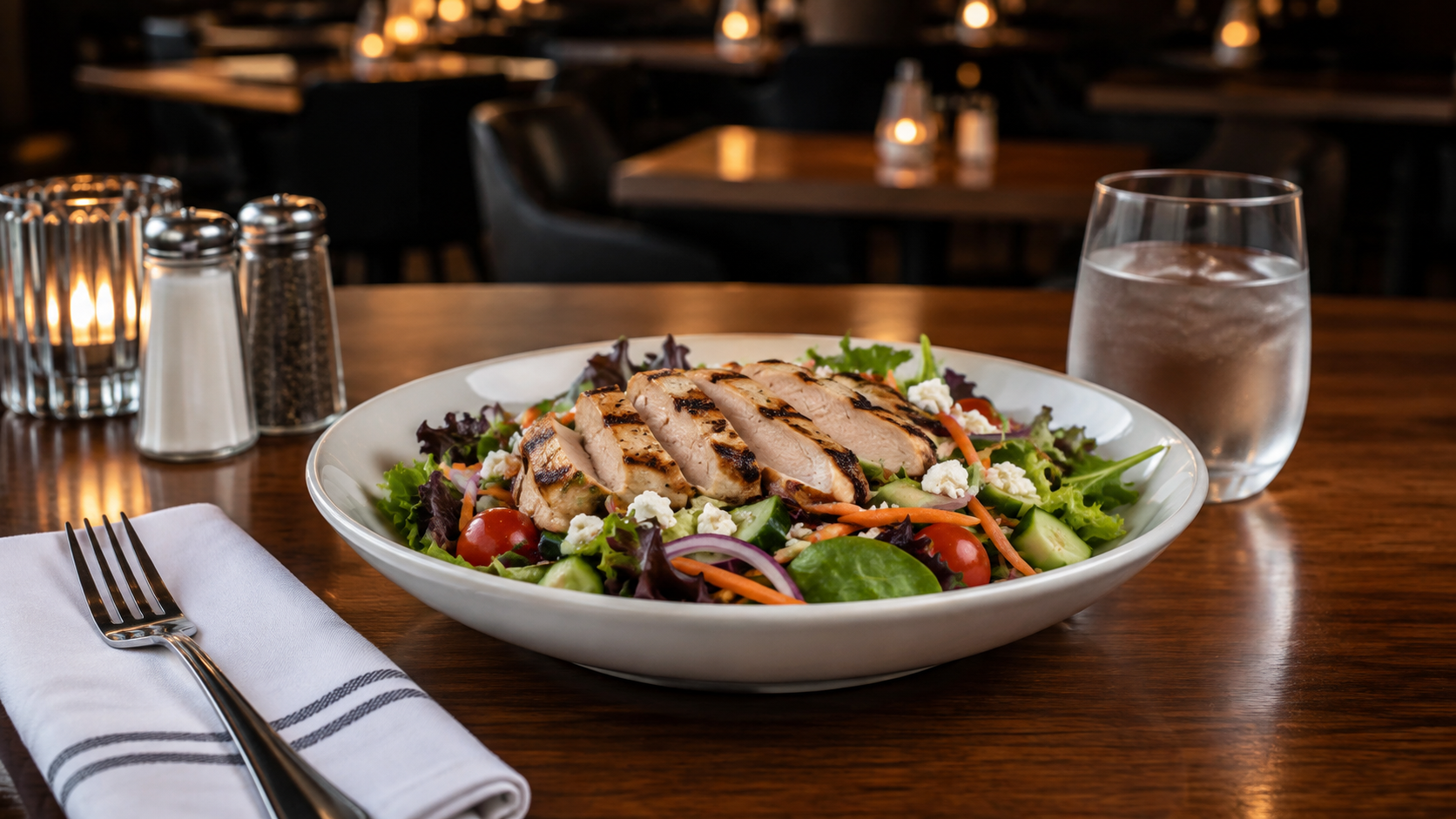 Choosing a grilled chicken salad and water instead of fried foods and sugary drinks is a practical way to make a more heart-conscious choice when dining out.
This article is intended as general health information. Cholesterol levels and cardiovascular risk vary by individual, so any decision about medication or diet changes should be made in consultation with your healthcare provider.