How to Practice Music Effectively (and Why Some Practice Leads to Real Growth)
Practice is often treated like a simple equation: more hours = more progress. But anyone who has studied an instrument seriously knows it doesn’t work that way.
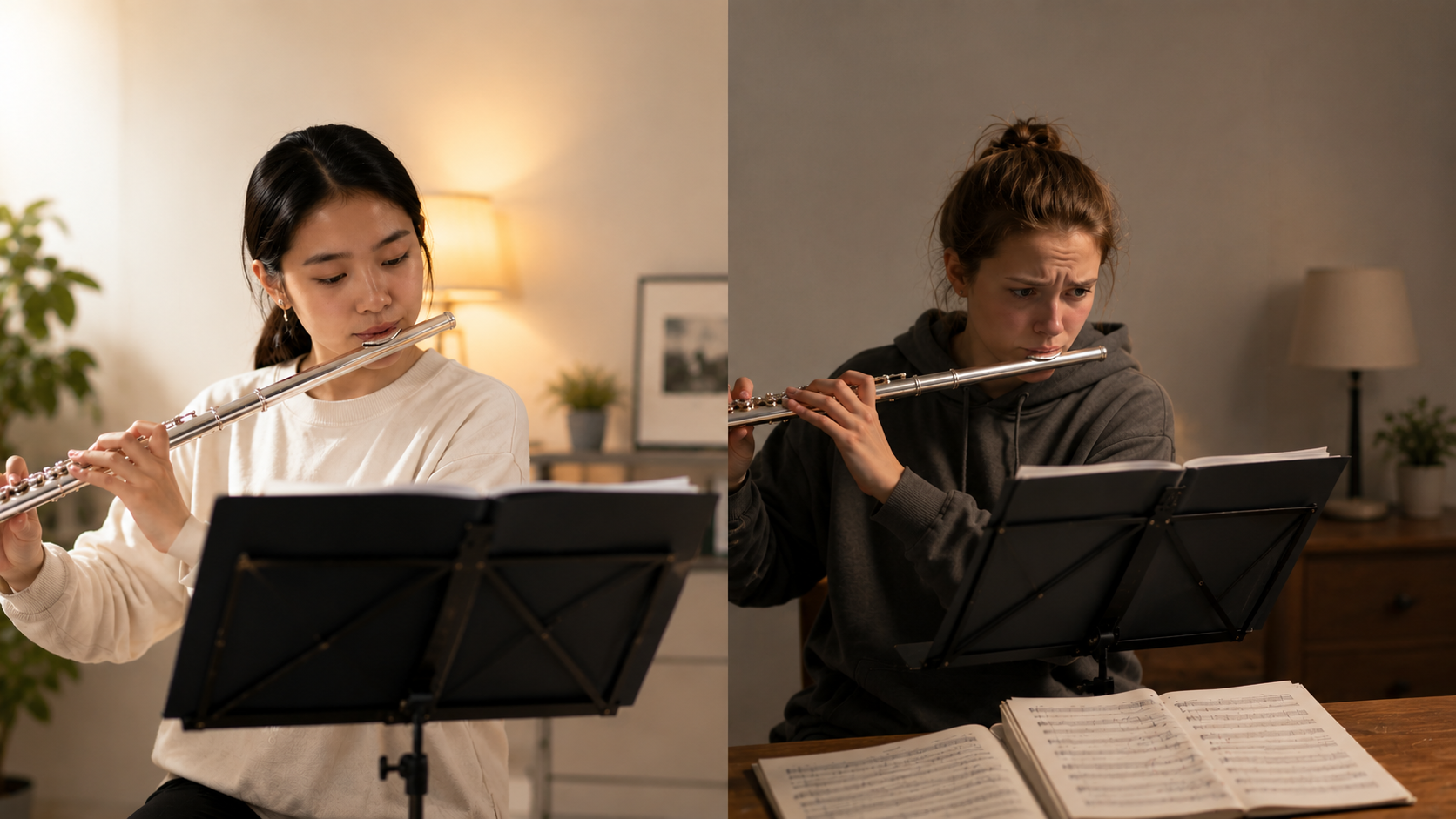
Two students can practice the same amount and improve very differently. The difference is rarely effort—it is attention.
The Myth of More Practice Time
A common belief around the “10,000-hour rule” is that mastery comes from repetition—that if you keep doing something long enough, it will eventually lead to improvement.
But time alone doesn't teach. Without attention, repetition doesn't build skill — it builds habit. And if the habit is wrong, more practice just makes it more permanent.
Zooming In on the Problem
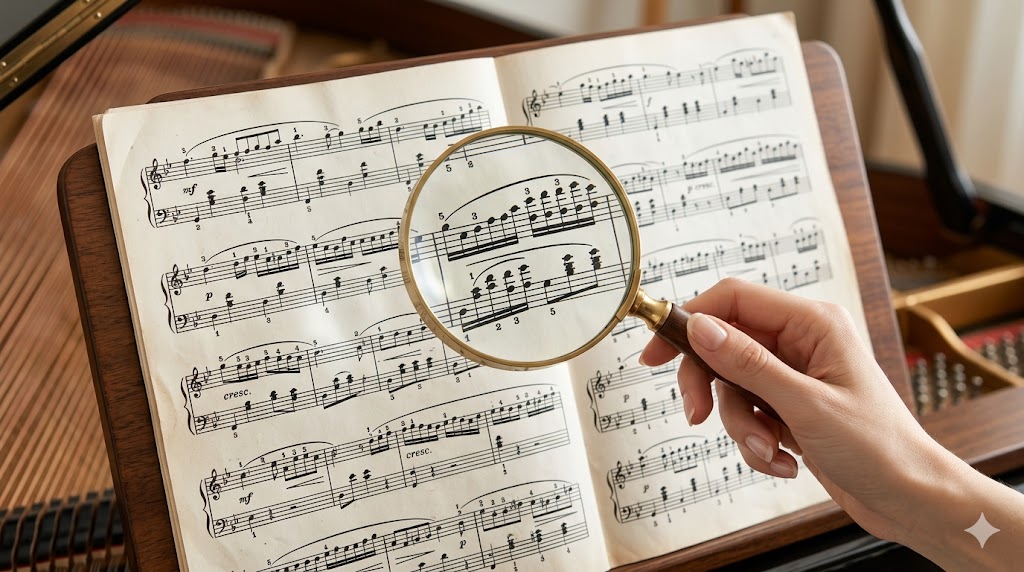
I often think of this like using a magnifying glass. Instead of repeating the whole piece, we zoom in on the exact point where things fall apart—sometimes as small as the transition between just two notes.
Then we ask a better question: not just “this is hard,” but why it is hard. Is it a difficult leap, an inefficient fingering, or an awkward bow change? Naming the cause turns vague frustration into a solvable problem.
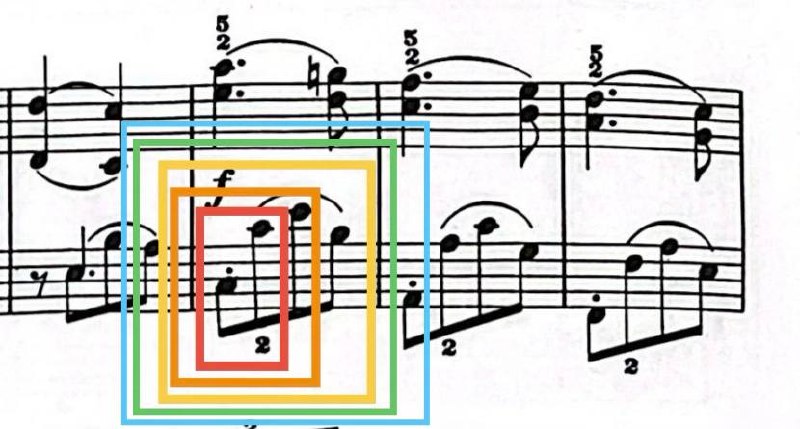 Mozart – Piano Sonata K.310, III. Presto
For example, in the score above, the red box marks a leap between two notes. We first isolate and work only on the red zone, then gradually expand into the orange and yellow areas as we zoom out.
Only after each stage—red, orange, and yellow—has been played correctly three times in a row, even at the slowest tempo, do we expand outward and reintegrate it into the full phrase.
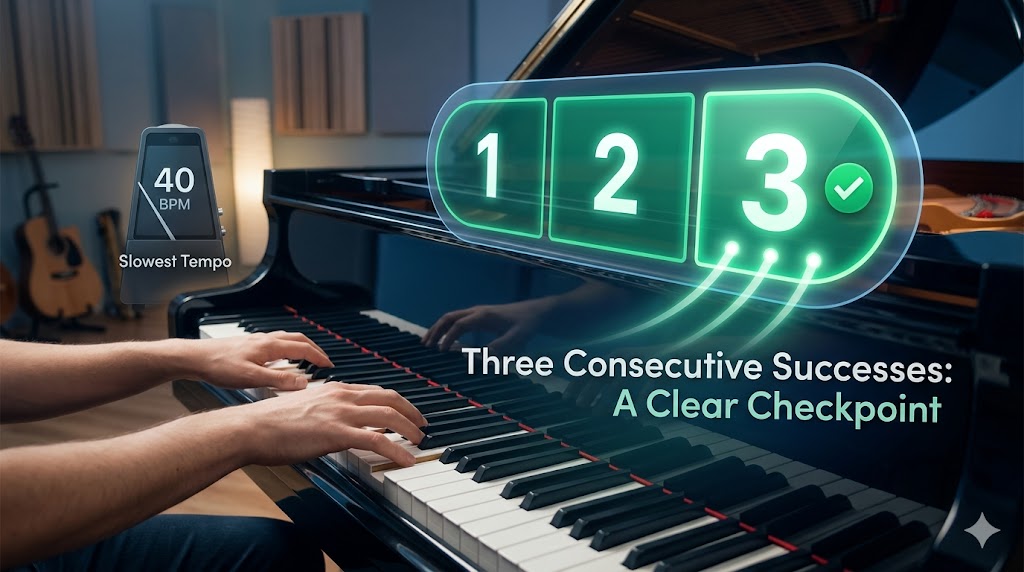
It feels slow, but it is often the fastest way forward—because it builds muscle memory around success, not mistakes.
Stop measuring practice by hours. Start measuring it by what actually changes—even ten minutes of practice should have a specific goal.
For Christians, this kind of practice can also be understood as faithful stewardship: receiving the gift of time and attention and using it with care, presence, and intention.
Read previous: How a Good Music Lesson Trains You to Listen Better (Not Just Play Better)